Key Takeaways
- World’s largest spider web discovered in Albania-Greece border cave
- Massive 100 sq meter structure hosts 111,000 spiders from two species
- First documented case of different spider species cohabiting in a single web
- Both species are normally solitary but evolved unique cave adaptation
Scientists have uncovered what may be the largest spider web ever recorded – a sprawling “arachnid megacity” housing over 111,000 spiders in a cave spanning the Albania-Greece border.
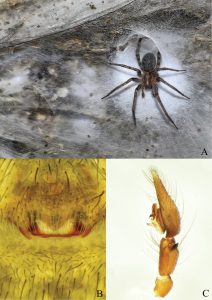
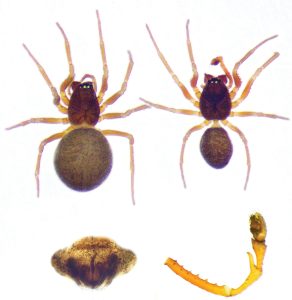
The colossal web spans 100 square meters and hosts an unprecedented mixed colony of 69,000 domestic house spiders (Tegenaria domestica) and 42,000 Prinerigone vagans sheet weavers.
Unprecedented Interspecies Cooperation
While social spiders sometimes form communal webs, this discovery marks the first documented case of two different spider species cohabiting and cooperating in a single massive structure.
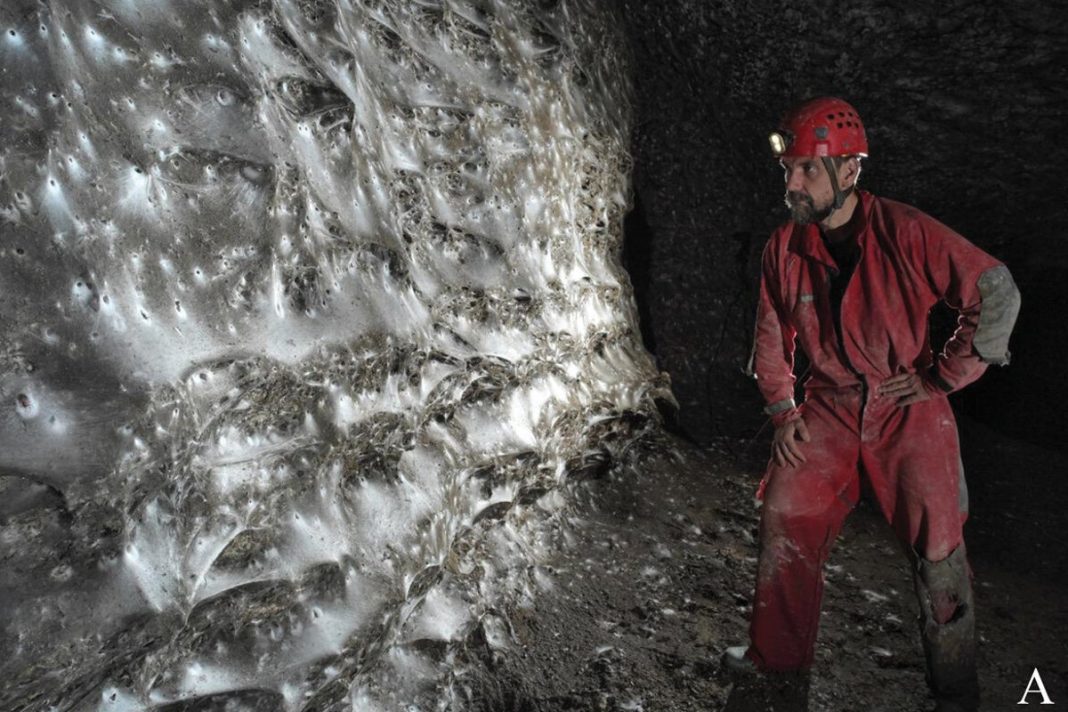
Explorers initially spotted the web during a 2022 underground wildlife survey. Researchers conducted multiple follow-up visits to study the cave system, which has its entrance in Greece and extends deep into Albanian territory.
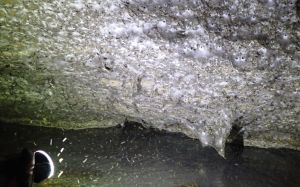
“The most impressive occurrence in this cave is a large colonial spider web that covers an estimated 100 sq metres of cave wall and hosts 69,000 specimens of T domestica and 42,000 specimens of P vagans,” they wrote in a study published in Subterranean Biology.
Solitary Species Breaking All Rules
DNA analysis confirmed both spider species are typically solitary and have never been observed forming colonies before.
“These are both surface species that have never been reported to form colonies,” they noted, “and molecular evidence suggests the Sulfur Cave population doesn’t exchange individuals with the surface.”
Survival in Extreme Conditions
The cave presents harsh conditions with complete darkness and high concentrations of toxic hydrogen sulfide gas. Researchers discovered the spiders survive through a unique food chain.
Microbes thriving in the cave system feed tiny midges, which then become trapped in the giant web, providing abundant nourishment for the spider colony.
“The colonisation of Sulfur Cave by T domestica was most likely driven by abundant food resources represented by the dense swarm of chironomids thriving in the cave,” scientists wrote.
Evolutionary Adaptation
Genetic analysis revealed the cave spiders have become distinct from their surface-dwelling relatives, indicating they’ve adapted to the unique cave environment over time.
Scientists believe the perpetual darkness allows the smaller P vagans species to live inconspicuously among the larger barn funnel spiders, enabling this unprecedented interspecies cohabitation.