
Key Takeaways
- China’s Chang’e-6 mission discovered rare CI chondrite meteorite fragments in lunar soil
- These carbon-rich meteorites contain water and organic materials from the outer Solar System
- Finding suggests outer Solar System material can migrate inward to Moon and Earth
Chinese scientists have made a groundbreaking discovery while analyzing lunar soil samples from the Chang’e-6 mission. They identified rare CI chondrite fragments – carbon-rich meteorites packed with water and organic materials that typically originate from the outer Solar System.
The research, published in the Proceedings of the National Academy of Sciences, indicates that material from distant Solar System regions can travel inward, potentially impacting both the Moon and Earth.
Moon’s Pristine Preservation
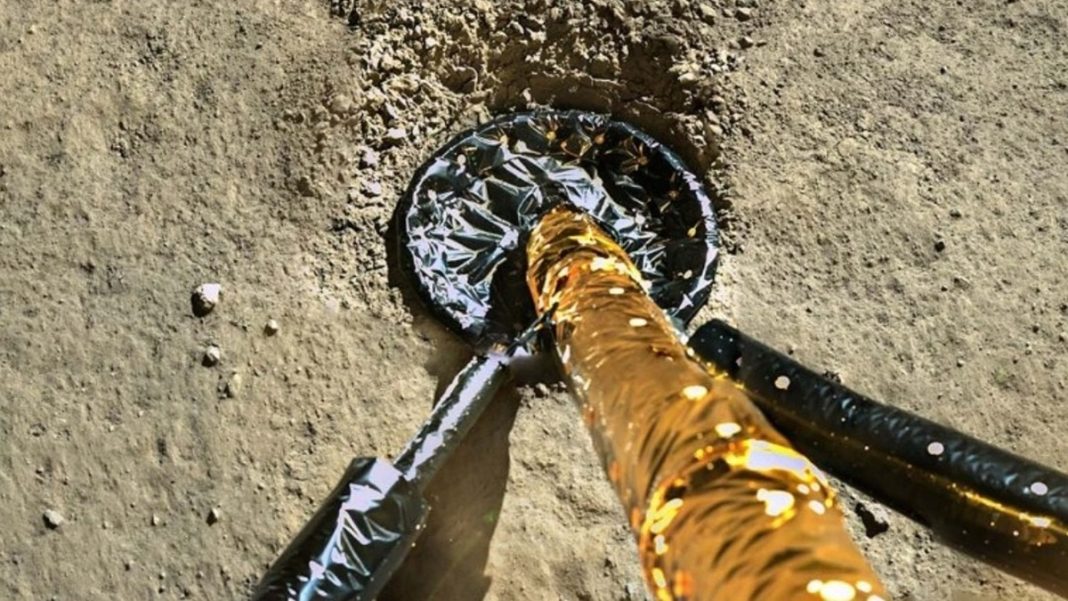
The Chang’e-6 mission collected nearly two kilograms of soil from the Moon’s South Pole-Aitken Basin, the largest and oldest impact crater on the lunar far side. Unlike Earth, the Moon’s lack of atmosphere and geological activity preserves these ancient meteorite fragments in virtually unchanged condition.
This makes the Moon a unique natural archive of the early Solar System’s history, offering scientists an unprecedented window into our cosmic past.
Rare Meteorite Confirmation
Using advanced microscopy and isotopic analysis, researchers confirmed the fragments matched CI chondrite composition and isotope signatures. These meteorites are exceptionally fragile and rare on Earth, representing less than 1% of known meteorites.
The presence of water-rich minerals provides crucial insights into how water and organic compounds may have been delivered to the Moon – and potentially to Earth – via carbonaceous asteroids billions of years ago.
Implications for Early Solar System
Scientists now believe the Earth-Moon system experienced more frequent collisions from water-bearing meteorites than previously estimated. This discovery offers new directions for understanding lunar water resources and the early chemical evolution of our planetary neighborhood.
The finding challenges existing assumptions and could reshape current models of how life-essential ingredients were distributed across the inner Solar System during its formative periods.
This revelation solidifies the Moon’s role as an invaluable repository of extraterrestrial material originating far beyond the inner planets, significantly expanding our understanding of the Solar System’s genesis and evolution.