
The closure of the Strait of Hormuz has caused oil prices to reach $100 per barrel and disrupted gas supplies. The current crisis in West Asia serves as both a warning and an opportunity. We must not treat this only as a crisis management exercise. In the past, notably during Covid-19 and in the past year, we have used moments of external stress to accelerate internal transformation.
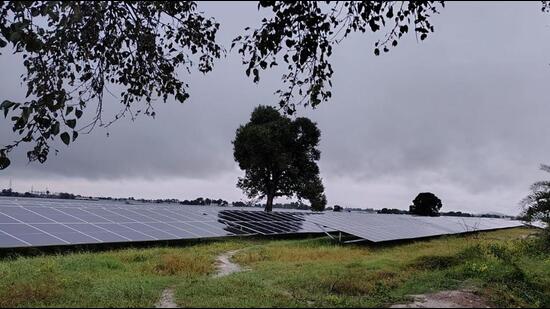
First, India must treat energy sovereignty as a core national mission. For too long, the country’s macroeconomic stability has depended on geopolitics and its impact on global energy markets. Over the past decade, we have laid a strong foundation for energy sovereignty. As of November 2025, non-fossil installed capacity had reached 262.7 GW, with renewable energy capacity at 254 GW. Solar, wind, storage, transmission, offshore wind, and pumped hydro — all of which can be harnessed domestically — must now expand in a coordinated and integrated manner.
Unlike fossil fuels, where we remain import dependent, India is climatically blessed with solar, onshore wind and offshore wind as fully domestic resources. Our climate conditions are far superior to those of China, giving us a natural advantage in these renewables. Yet, in 2025, while China added 430 GW of solar capacity, India added just 50 GW. We should raise our 2030 target for non-fossil power from 500 GW to 1,500 GW. Only at this scale can we decisively reduce our dependence on fossil fuels.
Second, India must build the industrial base for the energy transition. The National Green Hydrogen Mission is designed precisely for this purpose. India already has incentive frameworks for advanced chemistry cell battery storage — which has not taken off — and high-efficiency solar PV manufacturing, alongside a Clean Tech Manufacturing Mission. India must manufacture, at scale, the entire clean-tech stack: Electrolysers, advanced chemistry cells, solar modules, grid-scale batteries, motors, controllers, and high-voltage transmission equipment.
With these missions, their budgets, and structures in place, we must now ensure rapid execution. India must think beyond merely surviving oil shocks; it should aim to build the world’s most competitive clean-energy system.
In the interim, we must strengthen our buffer stocks. We have built strong economic buffers — reserves, a low current account deficit, moderate inflation, and ongoing fiscal consolidation. Our oil buffers are robust as well, but this crisis is a reminder that we must not be complacent. While the Essential Commodities Act (ECA) has been invoked for natural gas, buffers for natural gas must be expanded now. Current incidents underscore the need to strengthen buffers based on projected demand, not today’s.
Third, India needs to stop outsourcing its aviation geography. With West Asian airspace closed, global air traffic has been severely disrupted, creating an opportunity for India to position itself as an aviation hub. According to the International Air Transport Association (IATA), India is now the world’s third-largest air transport market, with around 174 million passengers travelling to, from, and within India in 2024. Government data show that total air passenger traffic at Indian airports reached 37.6 crore in FY24. India must now develop genuine transfer hubs of its own.
Every successful aviation hub is anchored by strong home carriers based at world-class airports. Dubai with Emirates, Abu Dhabi with Etihad, and Singapore Airlines with Changi Airport are instructive examples. All these airlines operate wide-bodied aircraft, which our national carriers currently lack. Policy changes are, therefore, needed to make our airlines globally competitive.
Aviation hubs flourish because they host a complete ecosystem. To make India a true transfer hub, its aviation services ecosystem must also be strengthened. With new airports coming up in Jewar and Navi Mumbai, India should seize this moment to become Asia’s preferred destination for aviation services and maintenance. A competitive group of Indian carriers, backed by modern hub airports and seamless transfer infrastructure and a smooth, efficient, digitised visa system, can capture a much larger share of global transit traffic.
Fourth, our aspiration to become a high-income country requires globally competitive cities. We still face a significant investment gap in solid waste management, water supply, and affordable housing. Relaxing floor space index (FSI) and floor area ratio (FAR) norms in select areas, combined with density-linked incentives, can expand the supply of affordable housing. The Cabinet has approved the Urban Challenge Fund, with a strong emphasis on reforms and a credit repayment guarantee to instill confidence in financial markets. States must now take the lead in implementing urban governance and planning reforms. Most importantly, we must clean our cities’ air. Electrifying public transport, together with strict enforcement of construction norms, will measurably improve air quality. Parallelly, we should develop five truly global cities, each specialising in an area such as finance, technology, manufacturing, trade, or arbitration.
Fifth, this is also the time to go big on tourism. We now need an innovative, digital-first version of the Incredible India marketing campaign that leverages modern platforms, compelling storytelling, and strategic partnerships to firmly establish India as one of the world’s most attractive destinations. Tourism infrastructure must also be expanded. Today, complex approvals, excessive licensing, and regulatory delays make tourism investments slow and expensive. Unlocking this sector requires mission-mode deregulation, faster clearances, and strong private investment in hotels, eco-resorts, homestays, and adventure tourism.
The war in West Asia is a stark reminder that economic resilience can be tested at any time. India has repeatedly demonstrated an ability to act decisively during moments of disruption. This crisis, too, should be viewed not merely as a challenge to manage but as an opportunity to accelerate India’s journey towards becoming a confident, competitive, and truly global economy.
Amitabh Kant is chairperson, Fairfax Centre for Free Enterprise, India’s former G20 Sherpa, and ex-CEO, NITI Aayog. The views expressed are personal


