When headlines mention Iran alongside Saudi Arabia or the UAE, many assume they are all Arab nations. The geography seems similar. The religion, largely Islam, appears similar too. So the assumption feels natural.
But Iran is not an Arab country.
To understand why, you have to travel back far beyond modern politics, past oil wealth and recent wars, into the age of ancient empires carved in stone.
BEFORE THERE WERE ARABS OR IRAN
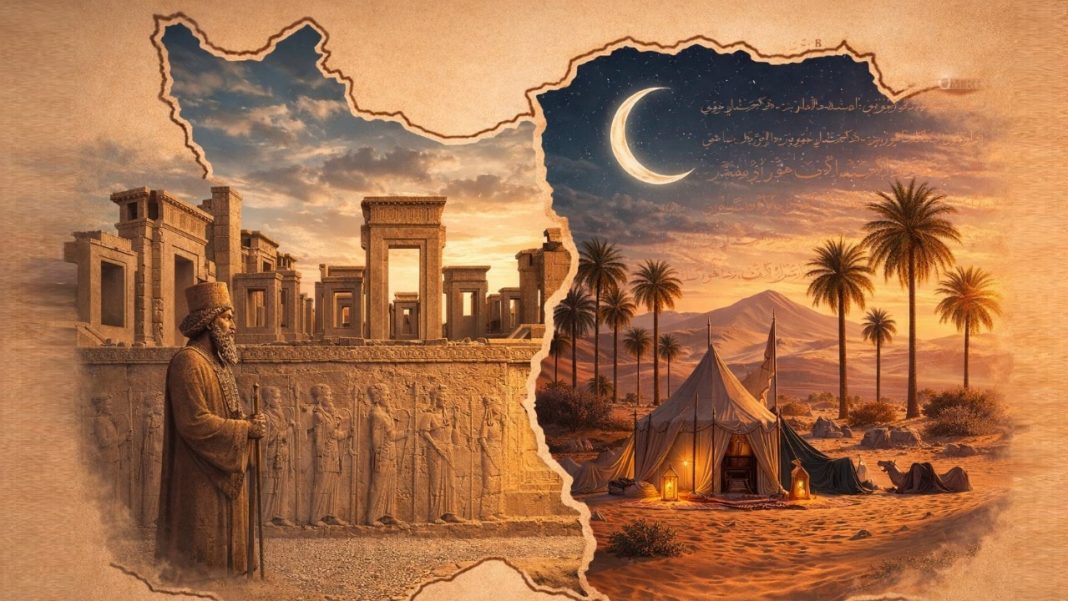
Long before Islam spread across the region, there was Persia. The mighty Achaemenid Empire, founded by Cyrus the Great in the 6th century BCE, ruled lands stretching from the Indus Valley to the Mediterranean.
Persepolis rose from the desert as a ceremonial capital. The name “Iran” itself comes from an ancient word meaning “Land of the Aryans”.
This civilisation was Persian.
Meanwhile, Arab identity developed in the Arabian Peninsula. Arab tribes spoke Arabic and lived across what is now Saudi Arabia, Yemen, Jordan and beyond.
The Arab world expanded rapidly after the rise of Islam in the 7th century, spreading Arabic language and culture across North Africa and West Asia.
Persia was conquered by Arab Muslim armies in the 7th century. Islam took root. But Persian identity did not disappear. It adapted, absorbed and endured.
LANGUAGE TELLS THE STORY
The clearest difference lies in language.
Arabic belongs to the Semitic language family. Farsi, spoken in Iran, belongs to the Indo-European family, the same broad family as English, Hindi and French. Although modern Persian uses a script based on Arabic letters, the vocabulary and grammar are distinct.
An Arabic speaker cannot automatically understand Farsi. The two languages sound and function differently.
That linguistic divide marks a deeper cultural one.
PERSIAN AND ARAB: NOT THE SAME THING
Ethnicity is not religion. Most Iranians are Muslim, but they are ethnically Persian or from other Iranian groups such as Kurds or Azeris. Only a small percentage of Iran’s population identifies as Arab.
Arab identity, on the other hand, is linked to Arabic language and heritage. Countries such as Saudi Arabia and Egypt are considered Arab because Arabic is their primary language and cultural backbone.
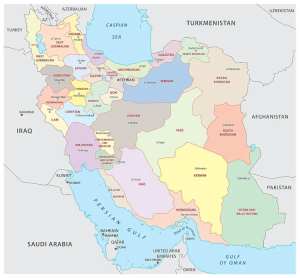
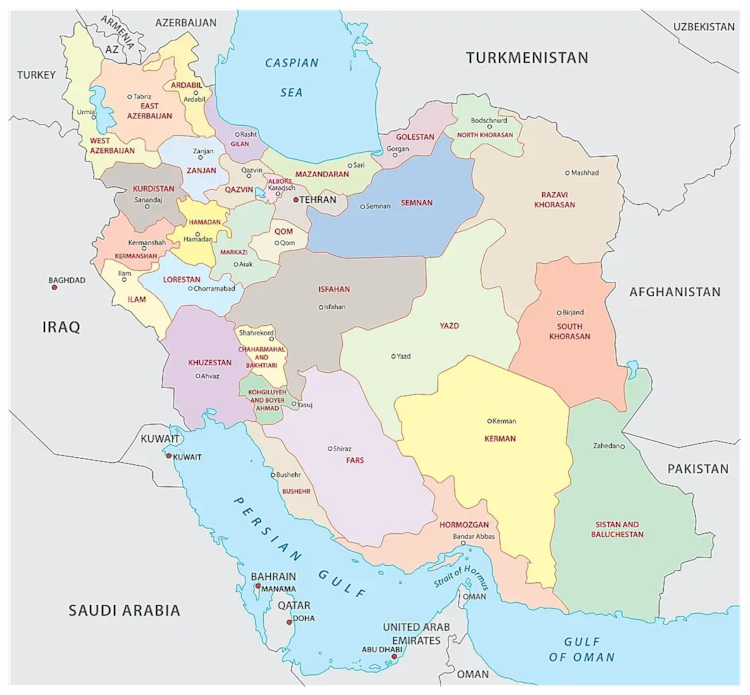
Iran sits within the Middle East geographically, yet its historical roots, language and cultural memory are Persian.
That distinction matters. It shapes politics, alliances and how people see themselves.
So the next time someone casually refers to Iran as an Arab nation, pause for a moment. Behind that single word lies a civilisation that has carried its own name for over two thousand years.