
Bengaluru fitness coach reveals the truth about pink salt: Is it better for you or secretly ruining your health?

With people becoming more health-conscious, they are taking a closer look at their dietary choices and opting for supposedly healthier alternatives that promise more nutrients. Table salt is increasingly being replaced by pink salt for its perceived mineral content, but this common misconception and oversight may come at a cost to your health.

Bengaluru-based fitness coach Ralston D’Souza recently brought this concern to light in his latest post on February 20, cautioning against the growing habit of replacing iodised salt with non-iodised varieties for everyday use.

View this post on Instagram

Not enough mineral content

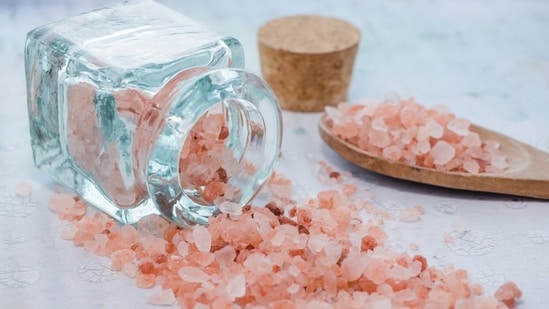
Pink salt is chosen for its perceived mineral content, but this switch may be misguided. The coach pointed out that the trace minerals in pink salt exist in negligible amounts, and to gain any meaningful benefit from them, one would need to consume unrealistically large quantities, which is neither practical nor healthy.
As a result, the advantage people associate with pink salt is predominantly smart marketing rather than actual scientific value. Relying on it as a ‘healthier; altenative may also create a false sense of nutritional security, that you are getting more of the minerals, but actually it replaces one of the essential components required for supporting thyroid health: iodine. The other obvious disadvantage is the price, as pink salt is double the price.

The iodine crisis

Because of the growing popularity of fancy salts, concerns about iodine deficiency are resurfacing, which may be contributing to a rise in thyroid-related cases.

The coach alarmed, “Regular table salt is iodised to prevent iodine deficiency disorders. In the 1960s, iodine deficiency was a serious public health problem. It caused thyroid dysfunction, pregnancy complications and impaired brain development in children.”

It reminds us that iodised salt is not just a basic kitchen staple, but a major public health intervention. The coach noted that in India, the iodisation of regular salt was made mandatory, and cases of iodine deficiency significantly declined after the universal iodisation of salt began in the 1960s.

These mineral salts may cater to different dietary preferences, and with the surge of various diet trends, they may seem appealing. However, completely replacing iodised salt with sea salt, pink salt, or other non-iodised varieties may unintentionally lower iodine intake. Iodine plays a key role in supporting thyroid function and helping reduce the risk of thyroid disorders.
For better practicality purposes, iodised salt makes more sense, as it is affordable, widely available and nutritionally reliable.

Note to readers: This report is based on user-generated content from social media. HT.com has not independently verified the claims and does not endorse them.


Latest

My child has cold, is it safe to give her bananas? Expert says…

Experts say that the belief that bananas worsen cold and cough likely stems from their soft texture and the perception that they may increase mucus production.

New COVID variant ‘Cicada’ spreading in US: Is it a new threat? Check symptoms and state-wise details

A new COVID-19 variant called ‘Cicada’ (BA.3.2) is spreading across more than half of US states, according to health officials. While it shows immune-evadin

Brown Sugar or honey – which is better for weight loss? Expert highlights myths vs facts

Weight loss: With white sugar being often seen as the key contributor to weight gain, many fitness enthusiasts - inspired by social media - go in search of a be

Health Exclusive: Why women nutritional needs change with age: From periods, hormonal changes to menopause

Women’s nutritional needs shift as per their age mainly because of changes in hormones, metabolism, fertility, and bone health. The 20's are for building our

Is Zombie Apocalypse happening? Experts explain the medical reality behind growing ‘zombie drug’ fears

Videos from Chandigarh and Bengaluru showing alleged 'zombie drug' effects went viral on social media in March–April 2026, sparking widespread panic and specu

Topics

US man, 36, dies by suicide after AI chat suggested ‘joining’ it in digital world: ‘I am scared to die’

A Florida man’s death by suicide has triggered global debate on the psychological risks posed by increasingly human-like AI chatbots. Chat records cited in a

After bindi, tilak row, Lenskart releases dress code allowing religious symbols: ‘Part of who we are’

Eyewear retailer Lenskart has released a revised in-store style guide affirming that religious and cultural symbols are permitted, following allegations from em

HDFC Bank senior management backs Keki Mistry to continue as chairman

For the quarter ended March, HDFC bank’s loan growth rose 12% on year to ₹3.17 trillion, higher than 5.4% on year growth witnessed in the previous year. De

DA hiked by 2%: Salary boost for govt employees – How much more will you take home?

The new DA hike of two per cent is an increase over the existing rate of 58 per cent in the Basic Pay. The hike now takes the Dearness Allowance to 60 per cent.

SMBC-backed Yes Bank poised for balance sheet expansion: MD Tonse

Yes Bank posted a net profit of ₹1,068 crore for the March quarter, up 44.7% on year.

China is building a satellite town near Beijing. Here’s when it opens

China is set to complete the core area of Beijing's Satellite Town by the second half of 2026, giving the country's booming commercial space industry a dedicate

No impact of West Asia war on portfolio, says ICICI Bank’s Batra

ICICI Bank reported a net profit of ₹13,702 crore for the three months through March, up 8.5% as provisions dropped nearly 90% in the same period.

Meta layoffs: 8,000 employees likely to be sacked in massive workforce purge on May 20

The Facebook and Instagram owner will lay off about 10 per cent of its global workforce, in that initial round, one of the sources said. Further layoffs are exp
spot_img

Related Articles

Popular Categories

spot_imgspot_img