

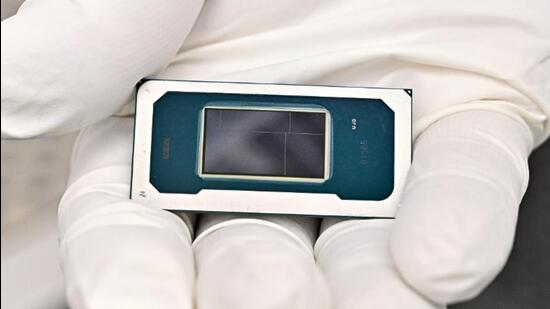
Stakes are high, not just for Intel, but also for every PC maker in the Windows ecosystem, as it battles not just a factual but also a performance perception battle against Apple and its own silicon. Intel has resoundingly delivered a performance leap with its newest chips, dubbed Panther Lake and called the Core Ultra Series 3 in more serious deliberations. This is, experientially and when verified by synthetic benchmarks, a significant leap that PC makers must do well to retain when configuring their machines — though that’s where many have slipped over the years. Microsoft has some responsibility too, regarding bringing Windows on track as a reliable, stable operating system (OS).
While there will be inevitable comparisons to Apple Silicon, the M5 and even the M4 generation, one must appreciate that two completely different platform architectures and approaches are at play. I wouldn’t still place much weight on direct comparisons (though Intel must take heart in the fact they’ve gotten very close on pure numbers), because Panther Lake silicon will still be mostly hostage to the whims and competence (often otherwise) of PC makers when they pair it with varying hardware components, install their own apps on new computers before they go on sale, and indeed the disarray that Microsoft’s Windows 11 finds itself in over the past twelve months and a bit more.
The performance leap is the result, and it’s important to understand the core reasons behind this assertion I make about a performance step up. The Core Ultra X9 388H launching this quarter is Intel’s flagship mobile processor in the latest generation (mobile processors are denoted by the “H” naming). Headline specs include 16 cores built with Intel’s 18A, which is the 1.8 nanometer architecture, in the search for maximum performance per watt. If you want a little more about the cores, there are 4 ‘Cougar Cove’ cores optimised for performance, 8 ‘Darkmont’ cores that are primed for efficiency and handling background tasks, and 4 ‘Darkmont’ low-power ‘E-cores’ that are for tasks whilst maximising battery life. The Neural Processing Unit is rated at 50 TOPS, or trillion operations per second, while the combination of CPU, GPU and the NPU for AI compute takes that total to 182 TOPS.
Intel shared the 2026 Asus Zenbook Duo UX8407AA with HT, to experience the Panther Lake enhancements. This machine, also dubbed the Asus Duo 14 owing to its unique dual screen approach, is yet to be launched in India — therefore, difficult to contextualise in terms of potential pricing. The Core Ultra X9 388H is paired with 32GB memory and a 2TB solid state drive, and the combination of Intel’s Arc graphics, support for Wi-Fi 7 99Wh lithium-polymer battery and a 100-watt Type-C power adapter.
Let me talk some straight numbers here. The Intel Core Ultra X9 388H returns scores of 2933 in single-core and 15614 in multi-core in the Geekbench 6 CPU tests. For all intents and purposes, this chip succeeds the Core Ultra 9 285H, which in the same tests, returns scores of 2609 and 14792. Performance wise, this is a big step forward. It is a similar scenario with the new Intel Arc B390 graphics hardware, which the chipmaker already claims is as much as 50% faster in performance compared with the predecessor — and the Geekbench 6 OpenCL score of 55,651 indicates this is par for the course in this era where neural processing unit (NPU) performance for AI compute is crucial.
That’s further verified by a Geekbench AI score: 4042 for single precision, 4387 for half precision, and 8573 for the quantized score. This result for the Panther Lake Core Ultra X9 388H marks another step forward from the Core Ultra 9 285H, which was competitive in its time but symbolizes this new era. The 285H clocked scores of 1850 (single precision), 941 (half precision) and 3454 (Quantised) in another Asus machine at the time. One could argue that Qualcomm’s Snapdragon X2 with the 80 TOPS NPU has a numerical advantage, but then again, NPUs are yet to reach a stage in everyday computing where 80 may hold a significant experiential advantage over 50 on the spec sheet. We could perhaps revisit this next year, if on-device AI takes off.
Architecture, and a new chapter
18A has been crucial for Intel. The switch to the RibbonFET (GAA) transistor type from the FinFET means better control over electric current flow and hereby reducing leak induced waste. Intel has also moved the power delivery to the bottom of the silicon, which now separates it from the signal, reducing voltage changes. Everything comes together to mean a 30% increase in transistor density that allows Intel to pack more power (bringing mobile chips closer to desktop ones, which tend to be larger), better performance per watt (claims of up to 25% more frequency at same power levels) and better thermals specifically for AI readiness when on-device compute will increase workloads.
At this point, I must note that different benchmark software will give you a different landscape to look at, and in the end, must be considered as part of the illustration, not the whole. In the case of Windows PCs particularly, the unfortunate reality is the chip’s strengths are often hidden by badly optimised hardware choices, and bloat-worthy software additions which PC makers often try to push as differentiators. Asus is no different, and having turned off a number of Asus services running in the background, synthetic scores immediately saw an uptick.
If the generational number leap isn’t impressive enough, Intel is also delivering on promise of battery life that matches the ecosystem benchmark set by Apple’s chips and matched closely by Qualcomm’s computing device silicon, namely the X Elite chips. On the Zenbook Duo UX8407AA, the run time of close to 23 hours on a single charge with some sort of regularity may well be uncharted territory for Windows laptops on Intel chips. Again, takes me back to the point about Windows behaving as it should, and how PC makers load their OS installations on machines, but you’re looking at MacBook-esque runtimes.
I’d summarise Intel’s generational leap by pointing to a crucial change that’s enabled this — the 18A architecture (which leads the industry in moving from the 2 nanometer architecture), which means Intel has found form, at a time when it needed to, as it now speeds up in cutting the deficit to Apple silicon. There’s also the looming context of Qualcomm’s chips, which prove their worth, time and again. The needle has well and truly moved now (more than it did between Core Ultra Series 2 chips, and the Series 1 — crucial time lost, as Apple’s two generations made advances), and this will play its part to bring confidence back into the halls and boardrooms of Intel’s offices. The timing, they’d hope is perfect too, since this is a crucial moment for the storied chip maker.
Intel has closed the silicon gap, but platform execution will determine whether it stays closed. I will admit some apprehension, about whether Microsoft and the PC makers have the necessary optimisation and refinement disciple. That’s the uncertainty which Intel can do nothing about, having held up its end of the bargain. The burden is no longer theirs.


