
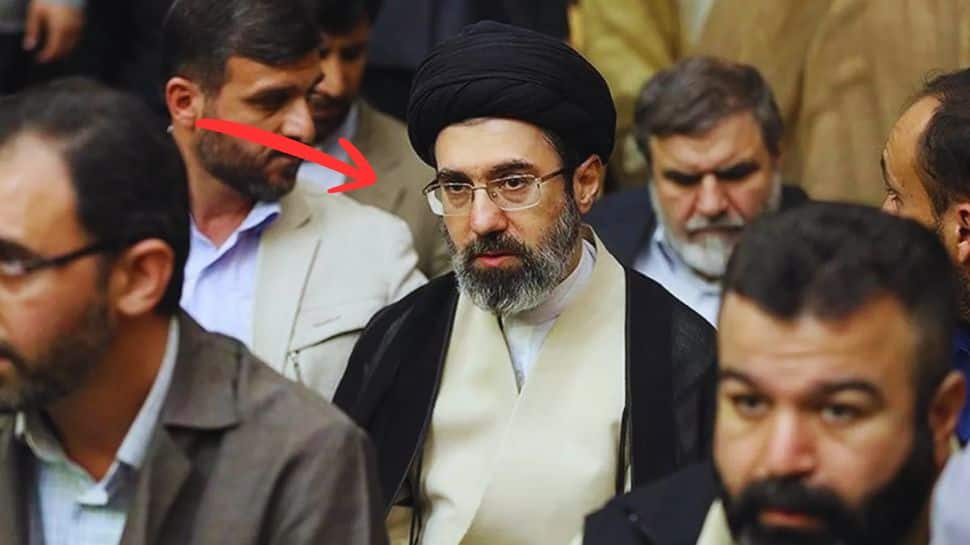
Days after Iran’s Supreme Leader Ayatollah Ali Khamenei and several senior officials were killed in a joint US-Israeli attack, his son, Mojtaba Khamenei, has reportedly been elected as the new Supreme Leader by the Assembly of Experts.
Reports published by Iran International and other media outlets suggest that Mojtaba Khamenei has been chosen as Iran’s new Supreme Leader, allegedly under heavy pressure from the Islamic Revolutionary Guard Corps (IRGC). The force is said to have pushed for the decision to preserve regime stability and sustain a hardline posture amid ongoing regional tensions, a move critics view as a controversial step toward dynastic succession.
Who is Mojtaba Khamenei?
Born in Mashhad in 1969, Mojtaba Khamenei was raised while his father was a well-known activist leading the opposition against the Shah of Iran. Despite his upbringing during the 1979 revolution, he holds the clerical rank of Hojjatoleslam, considered a mid-level position below that of Ayatollah. Before being elected Supreme Leader, he held no official government or elected position. Much of his influence came from his key role as an advisor in the Supreme Leader’s office and his close and long-standing ties with the Islamic Revolutionary Guard Corps (IRGC).
57-year-old Mojtaba Zamani received his religious education at the elite seminaries of Qom, where he studied with hardline clerics like Ayatollah Mohammad-Taqi Mesbah-Yazdi, an influence that helped shape his staunchly conservative outlook. Over the years, he is believed to have secretly built a shadowy network of loyalists within the Basij militia and intelligence agency. Experts generally describe this informal power structure as part of Iran’s “deep state,” which is accused of meddling in elections and suppressing protests, including the 2009 Green Movement and the riots that followed the death of Mahsa Amini in 2022.
His lack of a public role has not shielded him from international scrutiny; in 2019, the US Treasury Department imposed sanctions on him, stating that he acted in an official capacity for the Supreme Leader without ever being appointed or elected. His personal history includes military service during the Iran-Iraq War, a conflict he survived while several other members of the Khamenei family, including the late leader’s wife and children, lost their lives.
However, his rise to power remains highly controversial in Iran’s political and religious climate. Shia clerics generally dislike the practice of father-to-son succession, and the Islamic Republic has often presented itself as a more equal alternative to dynastic monarchies. This tension is further exacerbated by reports that the Supreme Leader excluded Mojtaba from a confidential list of potential successors drawn up last year, suggesting significant internal obstacles to his path to formal leadership.


