
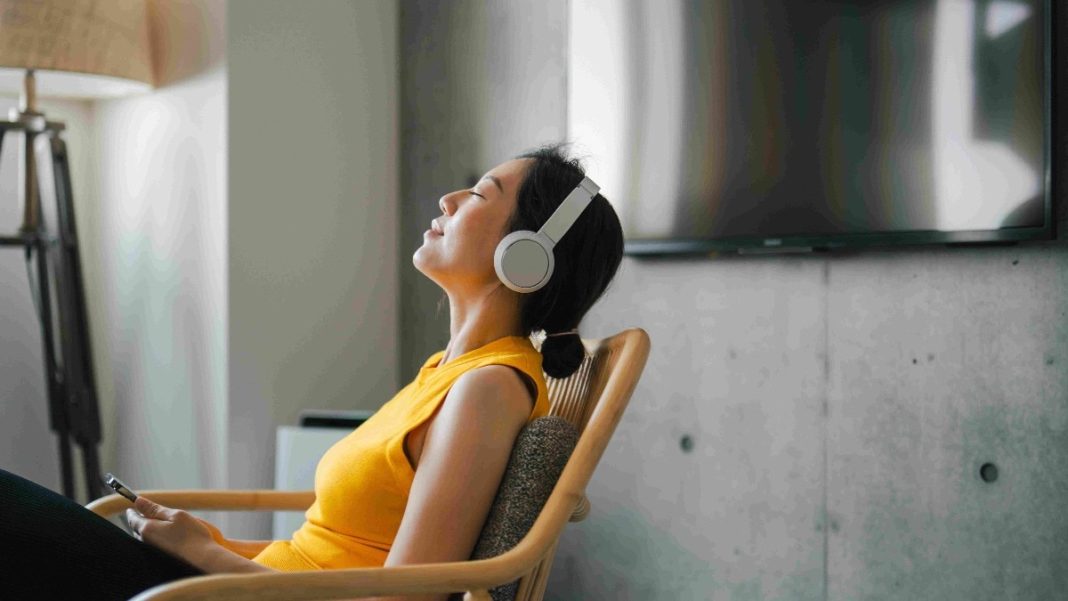
Hearing loss has long been described as a problem associated with ageing, but its prevalence among younger people is quietly but rapidly increasing. Excessive headphone usage is one of the main drivers of this epidemic.

According to the World Health Organization (WHO), more than 1.5 billion people worldwide currently live with some form of hearing loss. Common causes of hearing loss, like ear infections, loud sounds, or excessive headphone usage, are usually preventable, but early signs are often ignored.
A 2023 report published by the British Medical Journal Global Health estimated that over a billion teenagers and young people are at risk of hearing loss caused by using headphones and earbuds, and also from being present at venues with loud music.
WHO recommends keeping sounds under 80 decibels (dB) for safe listening, but this limit can easily be breached by overuse of headphones, without active realisation by users. Apart from volume, the duration of listening and frequency of exposure to loud sounds also affect hearing.
THE HEADPHONE EPIDEMIC
According to experts, the use of headphones poses multiple risks to users, one of them being noise-induced hearing loss (NIHL).
NIHL is common and is caused by damage to the ear’s hearing structure following exposure to loud sound. This exposure can be workplace-related, environmental, or recreational in nature, and can be sudden (like an explosion), or over time (from headphones).
“Young adults today are spending several hours a day on earphones – for work calls, entertainment, music, and gaming – often at volumes well above safe limits,” Dr NVK Mohan, ENT and Cochlear Implant Surgeon at CK Birla Hospital, Kolkata, said. “This continuous exposure places the delicate hair cells of the inner ear under constant stress, leading to permanent damage that cannot be reversed with medication or surgery,” he added.
Prolonged use of headphones can be a contributing factor to NIHL. Extended listening sessions can increase auditory stress. A study from South Korea, published in 2021, found that adolescents who used earphones in a noisy environment had a 4.5 times higher risk of hearing loss and an 8.4 times higher risk of having a subjective hearing problem than those who did not.
The rising use of earbuds is making this crisis worse. They increase the intensity with which the ear canal and drum receive the sound waves, enhancing the damage.
ALL ABOUT HEADPHONES
Headphones are usually in-ear, on-ear, or over-ear. Does the auditory risk differ?
According to Dr Ravinder Gera, Principal Director and HOD – ENT at Max Hospital, Gurugram, it does not. “If you deliver the same equivalent at a continuous level at the eardrum for the same duration, the inner ear ‘sees’ the same dose, so theoretical risk is essentially identical,” he said.
However, he also added that in-canal headphones provide “a good seal, better perception and hence lead to significantly lower levels of noise exposure”.
But according to Dr Anand Gupta, Regional Director, ENT at Yatharth Super Speciality Hospital, Faridabad, over-the-ear headphones are better because they do not transfer sound directly to the ear with high intensity.
Headphones with active noise cancellation (ANC) can be used for two purposes: to dim surrounding noise, or to provide a clean audio experience.
They are helpful when used to remove otherwise loud sounds from your auditory environment, like construction and heavy vehicles.
“Noise cancellation headphones reduce the risk of damage because the person does not need to amplify the sound for good listening,” Dr Gupta said.
If you use ANC headphones to listen to high-quality audio at high volumes, it can cause more harm than good. But if used at a lower volume, they can be better than regular headphones (although usage should still be discretionary).
HOW CAN YOU PREVENT DAMAGE?
NIHL is progressive and usually considered permanent by experts, but it is also preventable.
Avoid using headphones as much as possible, and when you do, follow the 60-60 rule: keep volume below 60% and don’t use them for more than 60 minutes at a stretch.
“Another beneficial habit is to build in regular quiet intervals—even 5–10-minute silent breaks every hour reduce continuous exposure duration and allow recovery,” Dr Gera said.
Get your hearing checked regularly. If you experience ringing in your ears or struggle with listening clearly, consult a specialist immediately.
If your work involves unavoidable exposure to noise, periodic audiometric surveillance is recommended to detect early threshold shifts so that listening habits, device choice, or workplace controls can be adjusted before significant hearing loss is established, Dr Gera suggested.


