
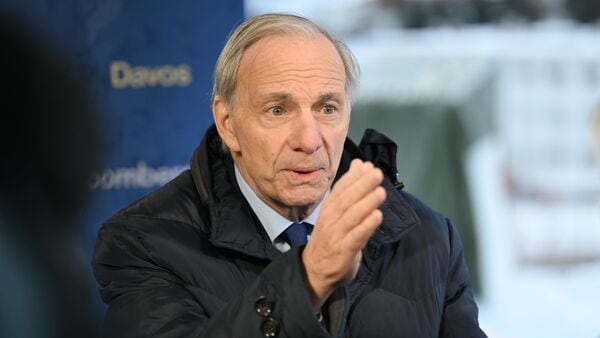
When Ray Dalio talks about cycles, he isn’t referring to short-term swings in the stock market, but to structural forces that shape economies and financial markets over long periods of time.
In a recent clip from The Tucker Carlson Show shared on X, Bridgewater Associates founder Ray Dalio explained a basic idea of finance: “One man’s debts are another man’s assets.”
Interest rates in an economy cannot be too high or too low if it needs to function smoothly. If rates are high for too long, borrowers get squeezed. It can raise debt servicing costs, increase defaults, and can slow growth. But if interest rates are kept too low, creditors suffer. Savers earn negative real returns, capital is misallocated, and excessive borrowing fuels asset bubbles.
Dalio argues that this push and pull naturally creates cycles. When interest rates are very low or during negative real interest rates period (when interest rates are below inflation) — such as those seen after the 2008 global financial crisis and during the pandemic — borrowing increases sharply and there is a massive credit creation. Cheap money drives borrowing, inflates asset prices, and overall debt in the system grows.
But the growth period does not last forever. With piling debt and risks building, the system becomes fragile. Eventually, problems show up — in the form of high inflation, financial stress or even a recession. At that point, policymakers are forced to raise rates or tighten financial conditions. That is when the cycle begins to turn.
“These cycles must happen, due to the nature of the dynamic around them. Understanding the underlying mechanics driving these patterns can help you understand what is likely to happen next,” Dalio said.
Crisis and Control
Dalio also connects monetary cycles with politics. He says that during periods of financial stress, differences between central banks and elected governments usually tend to diminish — not because they fully agree, but because a crisis demand coordination.
In a severe downturn or monetary emergency, a public fight between the government and the central bank can deepen instability and make things worse. As a result, governments often take greater control or influence over central banks during such times. The focus shifts from maintaining full independence to crisis management.
According to Dalio, this reflects a broader “fight for control.” When economies are under stress, questions about who really holds power become sharper — whether it is policymakers, politicians, lenders, borrowers, markets or the state. Monetary policy, therefore, is not just a technical tool but a battleground of competing interests.
Understanding What Comes Next
Dalio’s larger point is that these trends are not random. The relationship between debt, interest rates, money creation and political power follows a pattern that repeats over time. When borrowing rises quickly because rates are low, it often increases the chances of a future correction. When losses mount, policy coordination tightens and control centralises.
For investors and policymakers, understanding where the economy stands in this cycle is more important than focusing only on the next set of data numbers. If one person’s debt is another person’s asset, then long-term stability depends on maintaining balance. When that balance is lost, the cycle eventually shifts.
Understanding that rhythm, Dalio implies, is key to anticipating what may come next.
Disclaimer: The views and recommendations made above are those of individual analysts or broking companies, and not of Mint. We advise investors to check with certified experts before making any investment decisions.


