
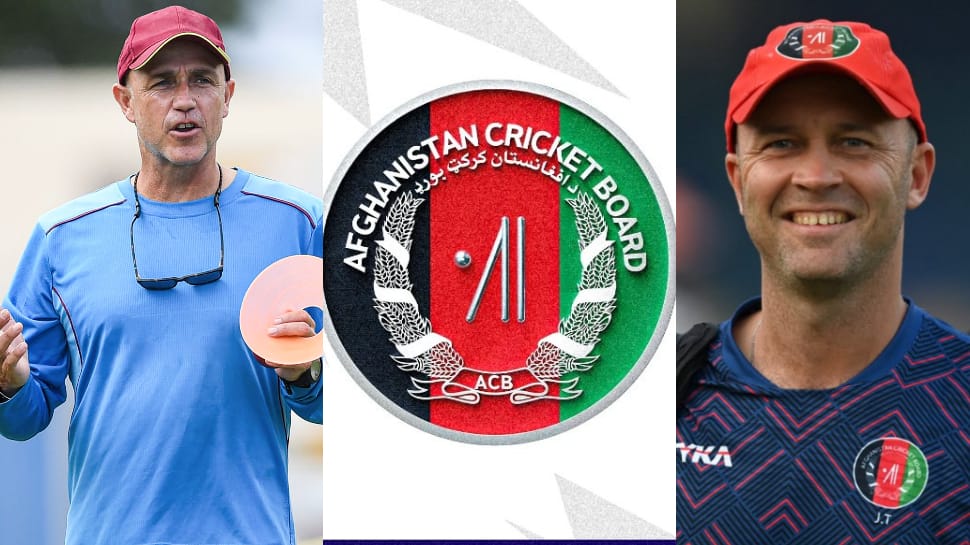
The Afghanistan Cricket Board (ACB) has named England-born Richard Pybus as the new head coach of the men’s national team across all formats. The appointment was confirmed on February 24, just days after Afghanistan’s group-stage exit from the 2026 T20 World Cup.
Pybus will take over immediately and join the squad ahead of the white-ball series against Sri Lanka in the UAE next month (three ODIs and three T20Is from March 13).
Richard Pybus’s Journey With Different Teams
Richard Pybus joins a talented Afghanistan side with a rich experience. He is a globally respected cricket leader and performance director with a distinguished international coaching career. He is a three-time ICC Cricket World Cup-winning head coach & Director of Cricket and brings a wealth of elite-level experience and a proven record of building high-performance systems.
His recognized coaching journey includes serving as Head Coach, Director of Cricket, and Head of High Performance for the West Indies cricket team from 2013 to 2019. During this period, he designed and managed the high-performance structure that led to a historic treble of ICC World Cup victories in 2016, when the West Indies Men’s, Women’s, and U19 teams all secured world titles in a single calendar year, which marked the first in the history of international cricket.
Previously, Pybus served as head coach of the Pakistan national cricket team and guided the side to the ICC Cricket World Cup Final in 1999, which they lost to Australia. He has also held a senior leadership role with the Bangladesh Cricket in 2013.
Domestically, he has a strong coaching record in South African domestic & franchise cricket, where the teams under his guidance secured nine championship titles, which is also a national record. Additionally, he was named South African Cricket Coach of the Year twice.
Interestingly, he has also played a significant role in the development of individual players, including Pakistan’s Mohammad Rizwan and South Africa’s Faf Du Plessis. Additionally, he worked with Dale Steyn and helped him become one of the greatest bowlers in the history of cricket.
Why The Change?
The transition was driven by a combination of contract timing, performance, and a shift in board policy:
End of Tenure: Jonathan Trott’s three-year contract was naturally scheduled to conclude after the 2026 T20 World Cup.
Early Tournament Exit: While Trott led Afghanistan to historic heights (including the 2024 T20 World Cup semi-finals), the team’s group-stage exit in the 2026 edition – following losses to New Zealand and South Africa – prompted the board to move in a new direction.
The “Stationary” Requirement: A key factor in the ACB’s decision was a new requirement for the head coach to be based in Afghanistan. The board wanted a coach who could personally oversee domestic cricket and scout local talent when no international series were scheduled. Trott was reportedly unwilling to relocate his permanent base to Kabul, whereas Pybus has agreed to these terms.
Despite the circumstances, Trott leaves with pride. Under his guidance, Afghanistan reached their first T20 World Cup semi-final in 2024, pushed hard in the 2023 ODI World Cup, and consistently punched above their weight despite limited infrastructure and facilities. He often praised the players’ resilience and hunger to learn.
Looking Ahead
With Rashid Khan continuing as captain, the focus now shifts to whether Richard Pybus’ structured, data-driven approach can sharpen the raw talent that Jonathan Trott so famously nurtured.
Pybus’s first assignment will be the Sri Lanka series in the UAE, giving him immediate time with the squad before potential home commitments. The move signals the ACB’s desire for a coach willing to commit more fully to operations inside Afghanistan as the board continues to grow domestic cricket infrastructure.
Trott’s emotional departure and Pybus’s arrival mark the end of one successful era and the start of another for a team that continues to defy expectations on the world stage.


