
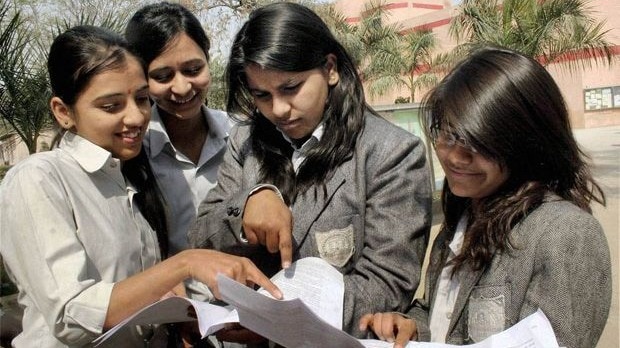
The CBSE Class 12 Physics exam 2026 has drawn mixed reactions from teachers and students. While some found it calculation-heavy and lengthy, most experts described it as moderate, concept-driven, and NCERT-aligned.
MODERATE AND CONCEPT-DRIVEN, SAY EXPERTS
Ajay Kumar Sharma, National Academic Director at Aakash Educational Services, said the paper “was of moderate difficulty, comparable to last year’s paperlargely NCERT-based.” A slightly tricky Wheatstone bridge numerical required conceptual thinking.
Dr Nisha Sharma from KIIT World School, Gurugram, called it “balanced and moderately structured, with a clear emphasis on conceptual clarity and application-based learning.”
Thilak M from JAIN International Residential School, Bengaluru, highlighted scoring long-answer derivations from Electrostatics, Ray Optics, and EMI & AC.
Ravi Dutt, Physics Teacher in Jaipur, described it as “concept-driven and well-balanced, aligning with NCERT,” with case-study questions testing analytical reasoning over memorisation.
Saurabh Shukla, PGT Physics, Global Indian International School, Noida, detailed the topic weightage: Optics (21 marks), Electrostatics & Current Electricity (17 marks), Magnetism & EMI (17 marks), Modern Physics (12 marks), Semiconductors (7 marks).
Poonam Soni, HOD Science at Manav Rachna International School, said the paper “closely followed the blueprintMCQs were easier than last year, though case studies were lengthy.”
Sunita Kandpal from DPS Sector 45 added that NCERT practice was key, though some lengthy calculations challenged students.
LENGTH AND CALCULATIONS CHALLENGING FOR SOME
Sarika from DAV Faridabad called it “excessively mathematical and calculation-intensive,” while Vineeta Singh from Lucknow noted “complex derivations and layered computations.”
Anup Karda from Witty International School, Udaipur, said Sections B and C needed strong conceptual clarity, while Section E was easier and scoring.
Nishant Kumar Singh from Seth M R Jaipuria Schools highlighted that case-study questions required integrated understanding.
STUDENTS’ PERSPECTIVE
Riya Sharma (Noida): “The paper was moderate, not too tough, but definitely lengthy. If you had practised numericals well, it was manageable.”
Harshita Verma (Lucknow): “The numericals from Current Electricity and Magnetism were straightforward, but a couple were calculation-heavy.”
Karan Patel (Noida): “There were no out-of-syllabus surprises, but some multi-step problems took time.”
Aayush Kumar (Noida): “MCQs were easy, but Section C needed careful calculation, so time management was key.”
Mr. Vijay Giri, Physics Teacher at Satya School, Gurugram, added: “The paper was slightly above average. One MCQ, the graph-based questions, and the case study were relatively lengthy.
JEE aspirants appeared confident, as it aligned well with their preparation.”
SECTION – WISE TAKEAWAYS
- MCQs & ASSERTION-REASON: Moderate, mostly direct, some analytical questions.
- 2 & 3 MARK QUESTIONS: Standard numericals and conceptual questions; some multi-step problems.
- CASE STUDIES: Tested application and integration of concepts; slightly time-consuming.
- 5 MARK DERIVATIONS: Scoring for well-prepared students; required careful step-by-step solutions.
FINAL TAKEAWAY
Overall, the CBSE Class 12 Physics exam 2026 was well-balanced, concept-focused, and NCERT-aligned. Time management and preparation remained key, especially for lengthy numerical and case-study sections.
Students with consistent practice and conceptual clarity were well-positioned to score comfortably.


