
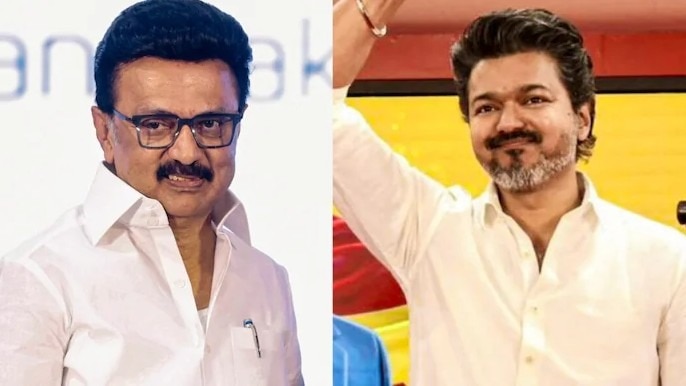
In Tamil Nadu’s charged political landscape, it is rare to see rivals stand on the same side. But when it comes to NEET, both MK Stalin and Joseph Vijay Chandrasekhar are strikingly aligned.
Even as they clash on governance and politics, their message on medical entrance exams has remained consistent. Tamil Nadu does not want NEET.
WHY TAMIL NADU HAS ALWAYS PUSHED BACK
Before NEET, Tamil Nadu followed a different model. Medical admissions were based on Class 12 board marks. The idea was simple. Reward consistent school performance rather than a single high-pressure test.
Supporters say this system gave rural and government school students a fair chance. It reduced dependence on expensive coaching and levelled the playing field.
When NEET was introduced as a national entrance exam, the state pushed back. The concern was that a centralised test would favour students with access to coaching institutes, often located in cities.
Chief Minister Stalin has repeatedly argued that NEET disadvantages poorer students and undermines the state’s social justice model in education.
VIJAY’S TAKE: SAME MESSAGE, NEW POLITICAL VOICE
Vijay, now leading Tamilaga Vettri Kazhagam, has echoed similar concerns.
During his campaign speeches, he has questioned the fairness of NEET and highlighted the pressure it puts on students. His messaging connects strongly with young voters and families who feel locked out by the coaching-heavy system.
For Vijay, the issue is not just about exams. It is about opportunity. His broader education promises, including free higher education for certain groups, tie into this larger narrative of access.
THE MONEY QUESTION
There is also a more controversial layer to the debate. Critics often claim that Tamil Nadu’s opposition to NEET is linked to its private medical college ecosystem, where high fees and capitation charges have long been debated.
Some argue that a centralised exam like NEET disrupts this system by making admissions more transparent.
However, the state government and its supporters reject this framing. They maintain that the core issue is equity, not economics. Their argument is that NEET shifts the advantage towards those who can afford coaching, not necessarily those who are most capable.
A RARE POINT OF AGREEMENT
What stands out is that despite their differences, Stalin and Vijay are speaking the same language on NEET. Both frame it as a question of fairness, access, and the future of students from ordinary backgrounds.
In a state where politics is deeply competitive, this shared stance reveals how deeply rooted the anti-NEET sentiment is.
For now, the debate is far from settled. But in Tamil Nadu, one thing is clear. On NEET, the lines are not between parties. They are between two very different ideas of how merit should be measured.


