
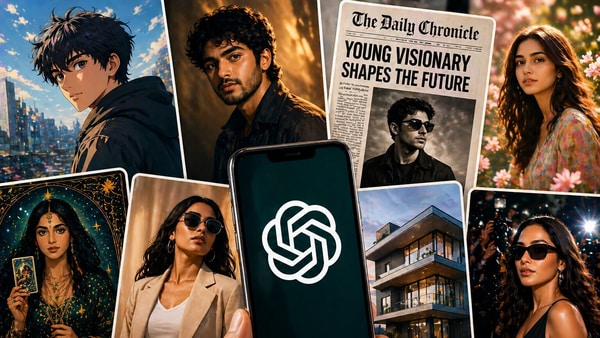
India has become the largest market for ChatGPT’s newly released Images 2.0 model, just weeks after the text to image geneation model debuted in the popular chatbot. The company also shed light on how Indian users are taking adavantage of its latest model for image geneation.
How is India generating images with ChatGPT 2.0?
OpenAI says that Images 2.0 model is being leveraged by Indian users for more than just basic photo editing tasks and is instead becoming a part of India’s internet culture and is getting especially popular among the young users who are experimenting with identity, aesthetics, and storytelling online.
The San Francisco based AI startup notes that Indian users are leaning heavily into self-expression and pop culture formats rather than just workplace or productivity use-cases.
According to OpenAI, here are the biggest trends emerging with Images 2.0 in India right now:
Universal Lighting: Users are transforming everyday photos into dramatic studio-style portraits.
Headshots: Generating polished, creator-style, and LinkedIn-ready profile images.
Anime: Turning selfies into manga-inspired transformations and stylized avatars.
Style Me: Creating AI-generated fashion transformations and outfit concepts.
Fantasy Newspaper: Designing fictional newspaper covers starring the users themselves.
Tarot: Crafting mystical, card-inspired portraits and storytelling visuals.
Blueprint: Generating futuristic architecture, room redesigns, and visual planning concepts.
Enhance: Restoring and upgrading older or low-quality photos.
Flash & Spring: Experimenting with paparazzi-style editorial imagery and soft pastel, dreamy seasonal aesthetics.
OpenAI also noted that there has been rise in country-level prompts which includes cinematic portrait collage, Y2K romantic portrait, among others.
What’s new with ChatGPT Images 2.0?
About a year ago, OpenAI had its biggest viral moment in India after the launch of native image generation abilities in GPT-4o model that allowed it to generate and edit images directly inside ChatGPT instead of calling on external tools like DALL-E 3. Uers soon realized that the AI chatbot was now capable of making complex edits to their pictures and soon the internet was flooded with the Studio Ghibli trend where celebrities to common people alike, turned their portrait images into Studio Ghibli style shots.
However, OpenAI could not sustain that momentum for long as months later Google’s Gemini Nano Banana model overthrew its chatbot in not just benchmarks but real-world use case. The model turned out to be not only faster than ChatGPT while having better character consistency and more advanced editing tools.
OpenAI even launched an Images 1.5 model to take on Nano Banana but that effort never really matched the performance of Google’s viral photo AI model.
However, with Images 2.0, OpenAI introduced ‘thinking’ capabilities which allows it to reason through the prompts and even use real-time data from the web for better image creation. Specifically for India, the model has become much better at generating images with non-English text. Meaning, you can create promotional material or even memes in Hindi or any other supported Indian language without messing up the text.
I tried this with a few images and as you can see with the results below, the result did turn out to be pretty decent.


