As the smart glasses market is heating up, with tech giants like Apple and Google preparing to launch their own devices, while Meta currently leads the space. Now, Samsung is also reportedly gearing up to join the race. A fresh report suggests the company is working on a pair of smart glasses, codenamed Jinju, based on the Android XR platform.
In the report, Android Authority has shared leaked images that closely resemble Meta’s Ray-Ban smart glasses. The device could launch as early as later this year — similar to the timeline Samsung followed for its Galaxy XR headset last year. The glasses are expected to be priced between $379 and $499 (roughly between Rs 35,848 and Rs 47,199).
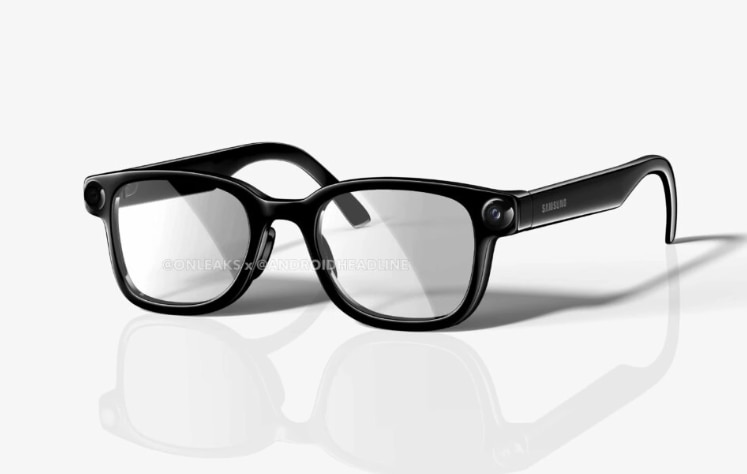
The report also points to a second, more premium model, codenamed Haean, which may arrive in 2027. This version is expected to feature a micro-LED display and could be priced between $600 and $900 (around Rs 56,753 and Rs 85,130).
In contrast, the Jinju model is said to launch without a built-in display, which is similar to Meta’s display-free Ray-Ban Meta Gen 2.
The design appears similar to existing offerings from Meta, as well as smart glasses prototypes Google has showcased since last year’s Google I/O. Samsung’s glasses are expected to run on Android XR, the extended reality platform co-developed with Google and already used in the Galaxy XR headset.
What we can expect from Samsung’s Galaxy Glasses
If the leaks prove accurate, then the Jinju glasses could be powered by Qualcomm’s Snapdragon AR1 processor and feature a 12-megapixel Sony IMX681 camera. Other expected specifications include a 155mAh battery, Wi-Fi and Bluetooth 5.3 support, and directional audio with possible bone-conduction technology. The glasses may weigh around 50g and could include photochromic lenses. However, these details remain unconfirmed, and Samsung has yet to officially verify them.
Integration of Gemini with smart glasses
With Google Gemini expected to be integrated into the glasses, users could perform tasks like capturing images through voice commands. The AI assistant is also said to support real-time translation, provide weather updates, and offer navigation via Google Maps. Reports on Google’s prototypes further suggest an interface largely centred around Gemini, alongside select apps such as Maps and Photos.
There is no confirmed launch timeline yet. Samsung may preview the glasses at Google I/O next month or tease them during its July Unpacked event, where it is also expected to unveil the Galaxy Z Fold 8, Galaxy Z Flip 8, and Galaxy Watch 9. A commercial release is more likely to follow later, similar to the rollout of the Galaxy XR headset.