
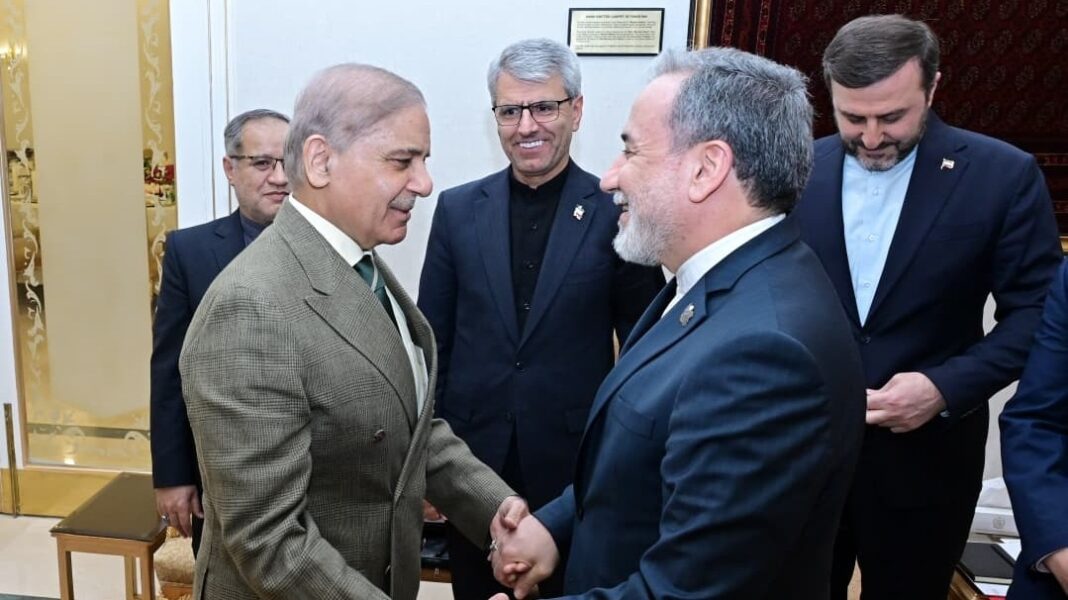
The prospect of a second round of talks collapsed on Saturday as the Iranian delegation left Islamabad after meeting top Pakistani officials, while a frustrated US President Donald Trump cancelled the planned trip of Steve Witkoff and Jared Kushner to Pakistan.
Iran’s Foreign Minister Abbas Araghchi and his delegation departed Islamabad after discussions with Prime Minister Shehbaz Sharif, Foreign Minister Ishaq Dar, and Army Chief Asim Munir.
Araghchi called his Pakistan visit fruitful and added that he had outlined Iran’s position on permanently ending the war and placed the ball in Washington’s court, questioning whether the US was truly serious about diplomacy.
Hours later, Trump cancelled the US delegation’s scheduled visit to Pakistan, citing frustration with Iran’s hardline stance on the negotiations. He told the media that discussions could also take place over the phone and emphasised that the US “held all the cards.”
‘NO DIRECT TALKS’
Talks between the two geopolitical rivals have stalled after the US Navy began blockading the Strait of Hormuz, a vital waterway that accounts for a third of the world’s energy supplies, in response to Iran’s closure of the route.
So far, Iran has shown no inclination to hold direct talks with the United States, instead using Pakistan as a conduit to convey its peace proposals.
While Trump has extended the ceasefire, Iranian sources have reiterated that Tehran won’t accept “maximalist demands” by the US to end the war.
The first round of talks on April 11 ended in failure, with Iran citing what it described as excessive demands — halting nuclear enrichment, surrendering its uranium stockpile, ceasing support for regional allies, and allowing US control over the Strait of Hormuz.
THE FAILED PUSH FOR TALKS
The possibility of another round of talks grew on Friday after Trump announced a two-member delegation comprising Steve Witkoff and Jared Kushner for negotiations. US Defense Secretary Pete Hegseth urged Iran to make a “good deal” before time runs out, by addressing nuclear disarmament in “meaningful and verifiable ways.”
However, Iran has asserted that talks with the United States should prioritise securing its core interests and demands, rather than focusing on nuclear weapons. Iran has also linked its willingness to resume negotiations to the lifting of the blockade, which it has condemned as “an act of aggression.”
With Washington pulling its delegation and Tehran unwilling to budge, the path to a second round of talks has, for now, hit a dead end.


