
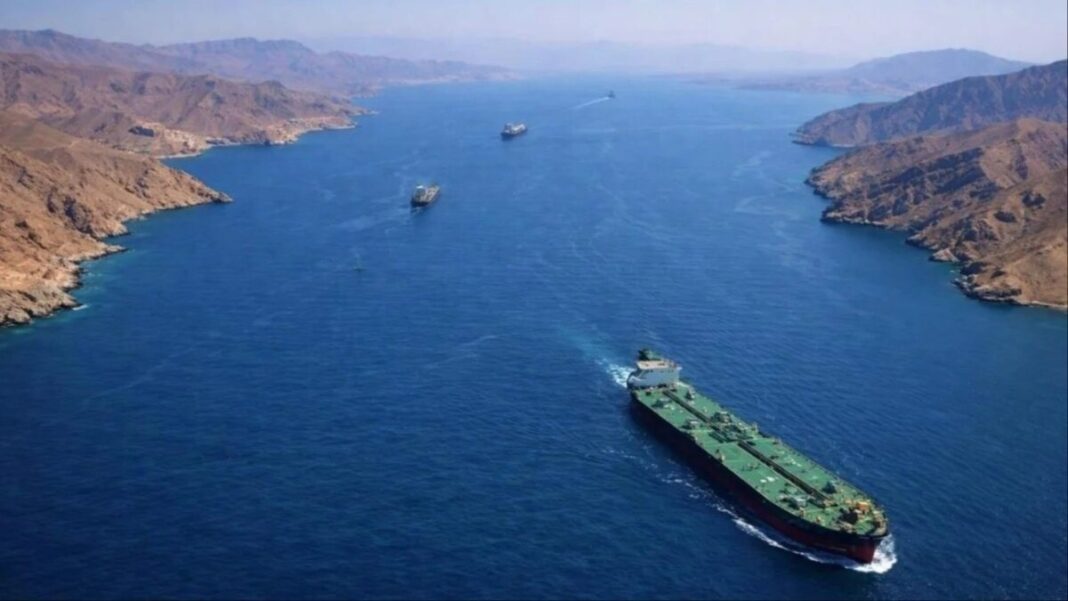
Iran has rejected remarks by European Union foreign policy chief Kaja Kallas on transit through the Strait of Hormuz, asserting that international law does not prevent it from acting to safeguard its security. Kallas had said that passage through key waterways like Hormuz “must remain open and free of charge” under international law.
Responding, Iran’s Foreign Ministry spokesperson Esmaeil Baghaei said Tehran, as a coastal state, can take “necessary measures” if the strait is used for military aggression against it, stressing that no legal provision bars such action. He also took a sharp swipe at Europe, saying its repeated references to international law ring hollow.
“Spare the sermons; Europe’s chronic failure to practice what it preaches has turned its ‘international law’ talk into peak hypocrisy,” Baghaei said, while asserting that no rule of international law forbids Iran from acting against the use of the strait for military aggression.
He further dismissed the idea of “unconditional transit passage” through Hormuz, arguing that such a concept no longer holds in the current geopolitical environment, especially with US and Israeli military presence near the strategic waterway.
Kallas, however, maintained that global norms must be upheld, reiterating that transit through waterways like the Strait of Hormuz must remain open and free of charge under international law. She warned that any pay-for-passage scheme would set a dangerous precedent for global maritime routes and said Iran must abandon such plans.
She also said Europe is prepared to play a role in restoring the free flow of energy and trade once a ceasefire takes hold, noting that the EU’s Aspides naval mission in the Red Sea could be strengthened to protect shipping across the region.
The exchange comes amid heightened tensions in the region, with increased military activity raising concerns over disruptions to global shipping. The Strait of Hormuz remains one of the world’s most critical maritime chokepoints, handling a significant share of global oil and trade flows.
In recent weeks, instability around the strait has prompted shipping companies to reassess routes, fuelling fears of escalation, even as Western powers continue to stress the importance of maintaining open and secure navigation.
Iran on Saturday reimposed restrictions on the strait, reversing an earlier reopening, and accused the United States of breaching a ceasefire. Its military said control of Hormuz has returned to “strict management,” warning transit would remain blocked as long as US restrictions on Iranian shipping continue.
Meanwhile, fresh Iran-US talks are expected in Islamabad on Monday, with delegations likely to arrive a day earlier.


