
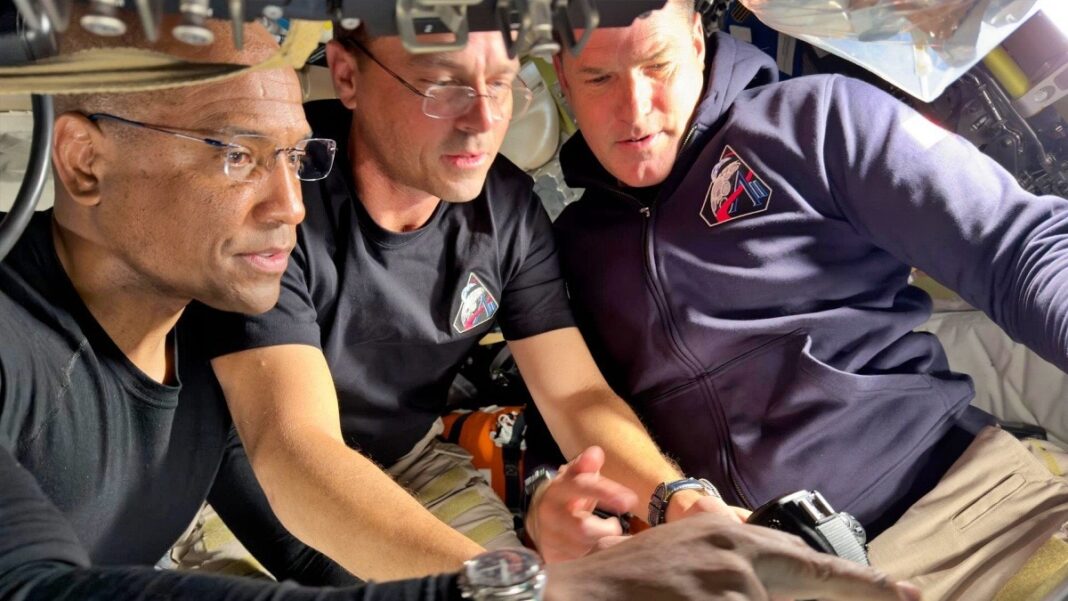
Space missions are often portrayed as smooth, meticulously planned journeys, but astronauts say the reality can be far more tense. In a recent account, Artemis-II crew described how repeated caution and warning alerts disrupted sleep and tested nerves throughout their mission to the Moon and back.
Four astronauts flew to the Moon and back in the first crewed lunar mission in over half a century in April 2026.
“Most nights we were woken up at some point by a caution and warning of some sort,” astronaut Jeremy Hansen said, recalling how alarms frequently interrupted rest cycles.
While all of these alerts ultimately turned out to be non-threatening, the constant disruptions created a persistent sense of unease aboard the spacecraft.
Among the most alarming incidents was a fire warning that suddenly went off during the mission. “That’ll get your attention,” the astronaut noted, emphasising how seriously such alerts are treated in space.
Even though there was no actual fire, the crew immediately sprang into action, carefully inspecting every corner of the spacecraft for any sign of danger.
In the confined and controlled environment of the Orion spacecraft, even a small fire could have catastrophic consequences.
With limited escape options and highly sensitive life-support systems, astronauts are trained to respond instantly and thoroughly to any potential threat. “You bet we sniffed every corner of that spacecraft trying to find anything,” the astronaut added, highlighting the intensity of the situation.
Despite the alarms being classified as “nuisance” warnings, their psychological impact was significant.
Repeated interruptions, especially during rest periods, can take a toll on crew members who already operate under high-pressure conditions. Sleep is a critical factor in maintaining focus, decision-making ability, and overall health during space missions.
Experts say such false alarms, while inconvenient, are often the result of highly sensitive detection systems designed to err on the side of caution. These systems are built to pick up even the slightest anomaly, ensuring that no real threat goes unnoticed.
The astronaut’s account offers a rare glimpse into the less-visible challenges of space travel, where even a false alarm can feel like a life-or-death situation.


