
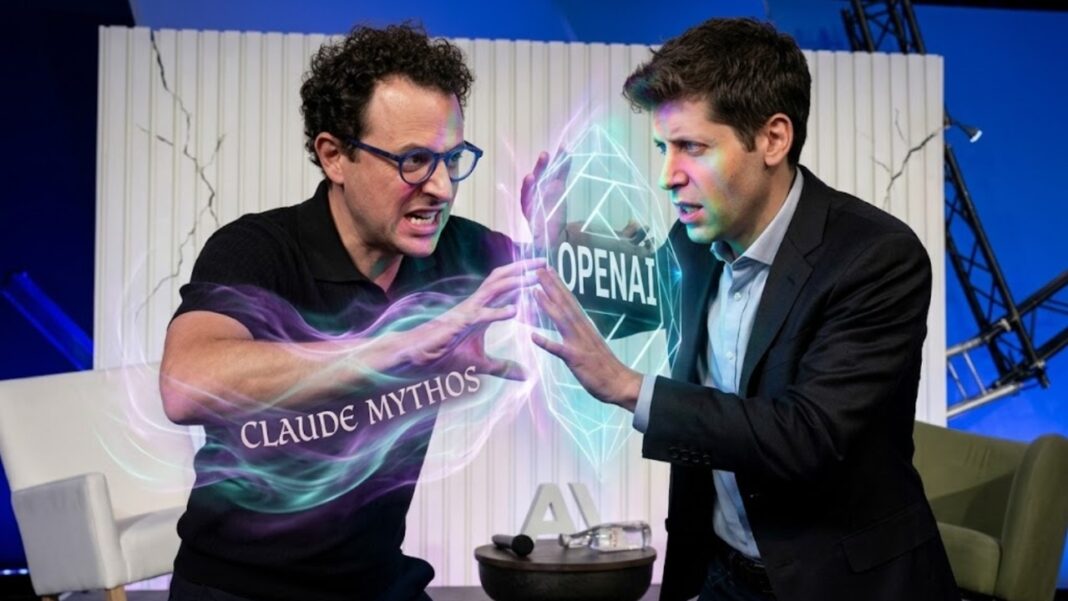
OpenAI has announced that it will be launching its latest AI model in a limited release for a select group of companies and users. The new model, GPT-5.4-Cyber, is tailored for cybersecurity use cases, and according to OpenAI, it can better spot cybersecurity flaws compared to its previous models.
This comes just days after Anthropic launched Claude Mythos to a consortium of limited companies, such as Amazon and Microsoft, claiming that the AI model had found thousands of zero-day cybersecurity vulnerabilities.
What is GPT-5.4-Cyber?
In a blog post, OpenAI stated that this model is a tailored version of the existing GPT-5.4 model. According to the company, GPT-5.4-Cyber “lowers the refusal boundary for legitimate cybersecurity work,” that is, companies and researchers will be able to use this model to find cybersecurity flaws, something that standard GPT-5.4 may refuse to do.
The cyber model will allow researchers and cybersecurity professionals to analyse software for “malware potential, and vulnerabilities” without needing access to its source code.
Difference between GPT-5.4-Cyber and Claude Mythos
On the surface, it may seem that GPT-5.4-Cyber is OpenAI’s version of Claude Mythos. But there are some key differences. GPT-5.4-Cyber is a version of the existing GPT-5.4 model, whereas Mythos was a new generation for Claude, not based on an existing version.
While Anthropic announced that Claude Mythos will be available to a select group of around 40 companies through Project Glasswing, OpenAI’s cyber model is part of its Trusted Access for Cyber programme, which was launched in February 2026.
The programme allows certain customers and cybersecurity professionals to test OpenAI’s most advanced offerings.
Who can use GPT-5.4-Cyber?
OpenAI says that GPT-5.4-Cyber is being rolled out to a select group of users as part of the cyber programme. As per the AI startup, users on the highest tier will get access to cyber.
However, any user or company can request for access to this model after completing a verification to join the Trusted Access for Cyber programme. An individual would need to authenticate their government ID and complete additional steps to complete this process. On the other hand, the OpenAI website states that a company may ask for access through their OpenAI representative.
The release of GPT-5.4-Cyber follows a growing trend in the AI industry over models dedicated to cybersecurity. Claude Mythos has already raised alarms among financial institutions and government agencies, after it found thousands of security flaws that were missed by humans. This has prompted discussions led by US Treasury Secretary Scott Bessent and Federal Reserve Chair Jerome Powell. The Treasury Department is also seeking access to Mythos to aid in identifying vulnerabilities.


