There is a place in the ocean where you can sail for days and never see land, not because you are lost, but because the sea itself has no coastline.
This is the Sargasso Sea, one of the most unusual geographic features on Earth – the sea without a shore.
A SEA THAT TOUCHES NO LAND
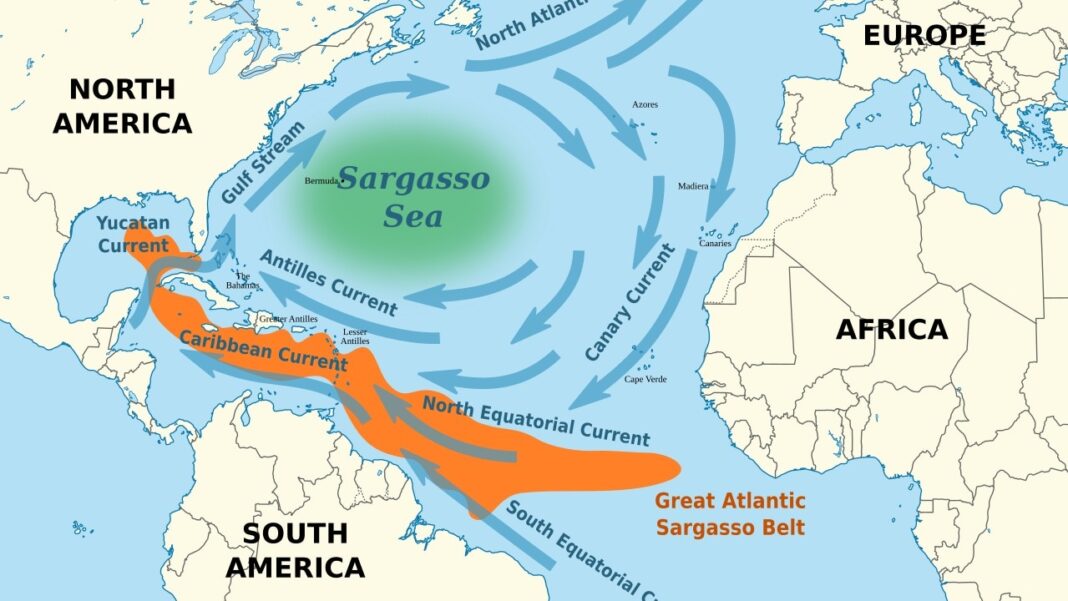
Unlike every other sea on the planet, the Sargasso Sea is not defined by continents or coastlines. Instead, it is surrounded by powerful ocean currents, including the Gulf Stream, North Atlantic Current, Canary Current and North Equatorial Current.
These currents form a slow-moving circular system in the Atlantic Ocean, creating a boundary made entirely of water. That is why the Sargasso Sea is often called the only sea without shores.
It sits roughly east of Florida and stretches across a vast patch of open ocean.
A FLOATING FOREST IN THE MIDDLE OF THE OCEAN
What makes this sea even stranger is what floats on its surface.
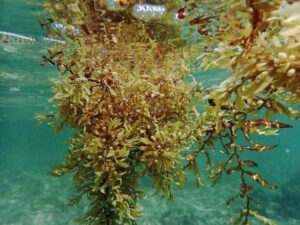
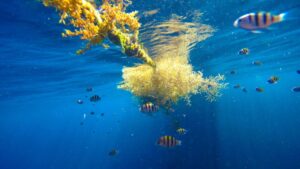
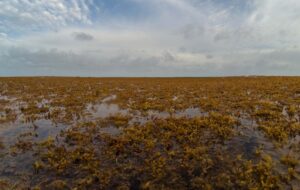
The water is dotted with thick mats of golden-brown seaweed called Sargassum. These drifting clusters form what scientists describe as “floating islands” or “habitat rafts.”
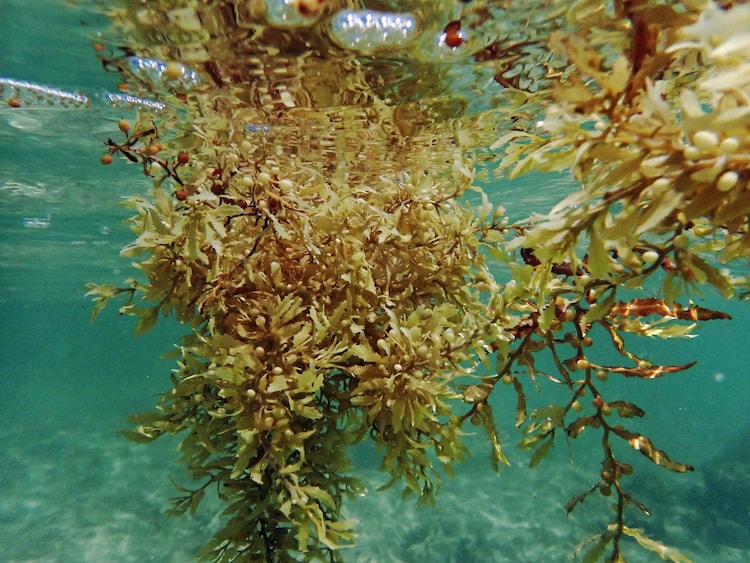
At first glance, the sea looks calm and empty. But look closer, and it is full of life.
Tiny shrimp, crabs, juvenile fish and even baby sea turtles live among the seaweed. For many species, this is a nursery where they grow before heading into the wider ocean.
THE MYSTERY OF MIGRATING LIFE
One of the most fascinating facts about the Sargasso Sea is that it serves as a birthplace for eels.
Species like the European eel and American eel begin life here as tiny larvae. They then travel thousands of kilometres to rivers in Europe and North America, growing into adults over years.

Later, they return to the same sea to reproduce, completing one of the most mysterious migration cycles in the animal world.
Scientists are still trying to understand how these creatures find their way back to the exact same region in the open ocean.
A HIDDEN ENGINE OF THE PLANET
The Sargasso Sea may look still, but it plays an active role in Earth’s climate system.
Its waters absorb heat and carbon dioxide from the atmosphere. Seasonal temperature changes help circulate warm and cold water across the Atlantic, influencing weather patterns far beyond the ocean.
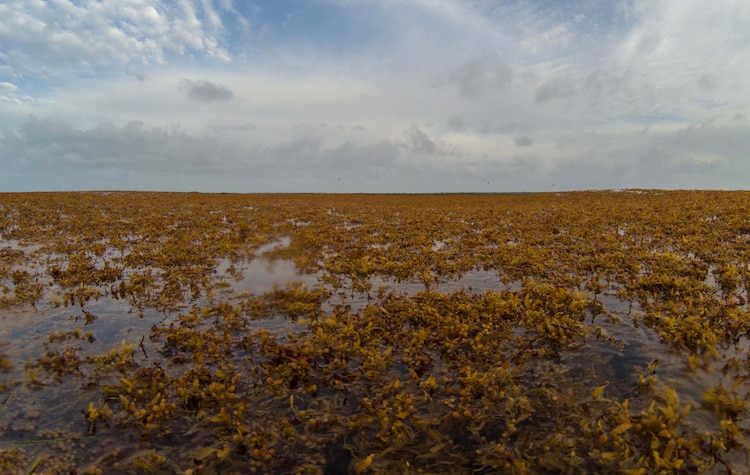
Long-term studies near Bermuda have shown that this region is changing. Over the past few decades, the water has become warmer, more acidic and lower in oxygen. These shifts are linked to rising global temperatures and increasing carbon emissions.
Long-term observations, including research published in Frontiers in Marine Science, have shown that the Sargasso Sea has become warmer, more acidic and lower in oxygen over the past few decades.
A BEAUTIFUL SEA UNDER THREAT
Despite its isolation, the Sargasso Sea is not untouched.
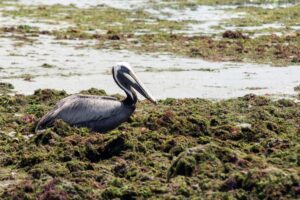
Because it lies within circulating currents, it traps floating plastic and marine debris. Fishing gear, microplastics and ship pollution are increasingly found in its waters.
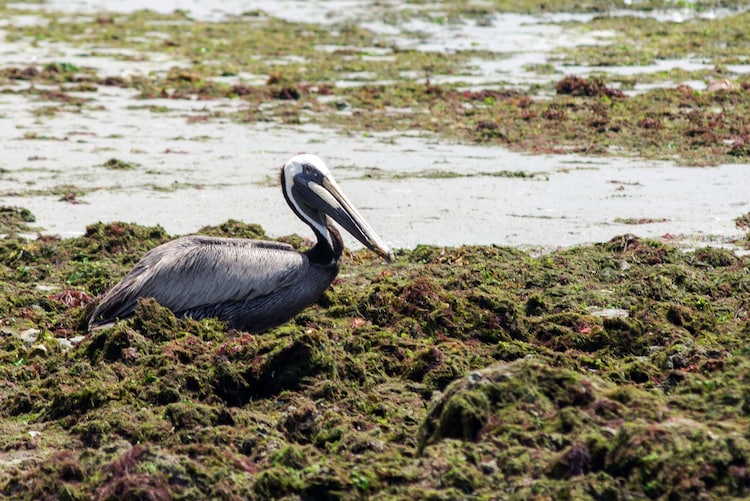
Marine life that once used the seaweed for shelter now faces risks from entanglement and habitat damage.
At the same time, warming oceans are changing the chemistry of the water, affecting the delicate balance that supports life in this region.
WHY THIS SEA MATTERS
The Sargasso Sea connects ecosystems across continents. It supports marine life, influences climate systems and acts as a natural carbon sink.
For something that has no land, no borders and no visible edges, it plays a surprisingly central role in how the planet functions.
It may look like an empty blue patch on a map, but it is one of the most important and mysterious regions in the world’s oceans.