
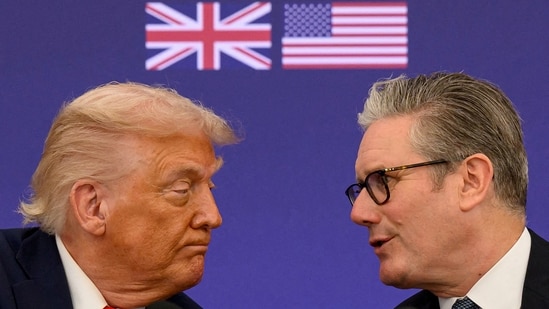
UK Prime Minister Keir Starmer on Monday said that Britain is working with allies to develop a “viable” plan to reopen the strategic Strait of Hormuz, but he ruled out any NATO involvement in the effort.
Starmer confirmed he had discussed the situation with US President Donald Trump. “We’re working with all of our allies, including our European partners, to bring together a viable collective plan that can restore freedom of navigation in the region as quickly as possible and ease the economic impacts,” AFP quoted him as saying at a Downing Street press conference. Track US Iran war LIVE updates
Keir Starmer’s comments came as several countries have already ruled out military involvement. Japan and Australia confirmed they would not send naval vessels to the strait, while Greece and Germany said they would not join any operations, with Berlin noting it is “not a job for NATO.”
No NATO involvement, says UK PM
He further added that the plan must be “credible” and made clear that NATO would not be part of any operation.
“Let me be clear, that won’t be and it’s never been envisioned to be a NATO mission,” Starmer said. “That’ll have to be an alliance of partners, which is why we’re working with partners, both in Europe, in the Gulf, and with the US.”
Starmer’s remarks followed comments from Trump, who described NATO’s future as “very bad” if allies failed to help reopen the strait.
“It’s only appropriate that people who are the beneficiaries of the Strait will help to make sure that nothing bad happens there,” Trump had said earlier.
Despite US pressure, Starmer stressed that Britain will act to protect itself and its allies but “will not be drawn into the wider war.”
Protecting Britain’s interests
The crisis has tested the so-called special relationship between the UK and the US, but Starmer indicated that safeguarding Britain’s interests remains his priority.
After speaking with Trump on Sunday, he said the discussion had been “a good call…in the way that you would expect between two allies and two leaders.”
Trump has urged global powers to escort tankers through the strait and warned of delays in a planned summit with Chinese leader Xi Jinping if countries refuse to act. Meanwhile, EU foreign ministers were set to discuss the issue on Monday.
The conflict, which began on February 28 after US and Israeli airstrikes on Iran, escalated when Iran retaliated by attacking Gulf states hosting American bases and obstructing the Strait of Hormuz—a key route that normally carries about one-fifth of global crude.
(With AFP inputs)


