
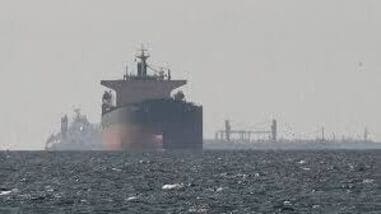
Across the wider Gulf region, as many as 23,000 Indian seafarers were employed on different types of vessels, including merchant ships and offshore installations, and 27 vessels near the Strait of Hormuz, confirmed Rajesh Kumar Sinha, Special Secretary, Ministry of Ports, Shipping and Waterways, at a media briefing on Friday.
Sinha also mentioned that the Directorate General of Shipping remained in constant communication with these personnel through their respective recruitment and engagement agencies.
“To the west of the Strait of Hormuz, in the Persian Gulf, there are 24 Indian-flagged vessels, carrying a total of 677 Indian seafarers, the same number as yesterday. To the east of the Strait of Hormuz, in the Gulf of Oman, there were previously four vessels; yesterday, one of them—the Jag Prakash, an oil tanker—departed the area. Consequently, three Indian-flagged vessels now remain in that region, carrying 76 Indian seafarers,” Sinha said.
He added, “Across the entire Gulf region, there are approximately 23,000 Indian seafarers working on various vessels—including merchant ships and offshore vessels. The Directorate General of Shipping (DG Shipping) maintains continuous contact with all of them through their respective engagement agencies.”
9,000 Indian nationals in Iran being assisted, says MEA
Meanwhile, the Ministry of External Affairs (MEA) earlier stated that External Affairs Minister S Jaishankar had been in constant touch with his Iranian counterpart, Abbas Araghchi, to discuss issues related to maritime safety and India’s energy interests, according to ANI.
During a press conference, MEA spokesperson Randhir Jaiswal stated, “EAM and FM of Iran have had three conversations in the last few days. The last one discussed issues pertaining to safety of shipping and India’s energy security. Beyond that, it would be premature for me to say anything.”
The MEA spokesperson also confirmed that nearly 9,000 Indian nationals, including seafarers, students, businesspersons, professionals and pilgrims, are currently in Iran and receiving assistance. He noted that several Indians, mainly students, had already returned to the country, while others, including pilgrims, had been moved to safer areas within Iran. Support was also being extended to those planning to travel to Azerbaijan and Armenia to board onward commercial flights, he further said.
Jaiswal further said that India had co-sponsored a Gulf Cooperation Council-led resolution at the UN Security Council, underscoring the need to safeguard its diaspora in the Gulf region. He added that Prime Minister Narendra Modi had held a series of conversations with regional leaders, emphasising the importance of dialogue, diplomatic engagement and civilian protection.
The developments come at a time of escalating tensions in West Asia after joint military operations by the United States and Israel led to the killing of Iran’s former Supreme Leader, Ayatollah Ali Khamenei, on 28 February. In response, Iran carried out strikes on Israeli and American assets in several Gulf nations, disrupting major maritime routes and sending shockwaves through global energy markets.


