US-Israel-Iran war: The US and Israel’s war on Iran has now entered its tenth day with no signs of easing so far. On Monday (local time), Bahrain’s Bapco Energies, the kingdom’s main energy company, which operates its only oil refinery, announced force majeure on operations that have been impacted by the ongoing war in the Middle East, Bloomberg reported.
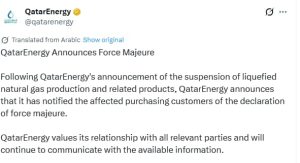
The company said that its local market needs are being met. The development comes after Bapco Energies said last week that the 90-year-old refinery was damaged in an attack. Bapco’s decision to enforce force majeure follows similar announcements by QatarEnergy regarding its shipments.
Here’s all you need to know about force majeure:
What does force majeure mean?
Force majeure is a legal term that is used in contracts to describe unexpected events outside the control of parties that make it impossible to meet agreed obligations. Such events can include natural disasters like earthquakes or floods, wars, pandemics, labour strikes, or government actions. In a situation of force majeure, the affected party may be allowed to delay, suspend, or be excused from fulfilling the contract without incurring any penalty. Simply put, this legal term provides protection in cases of unforeseen and unavoidable circumstances that prevent a party from fulfilling its contractual obligations.
What happens when a company invokes force majeure?
When a company invokes force majeure, it may suspend or delay its contractual obligations when extraordinary events such as war or disasters hinder performance. It means the company that enforced it may not be able to deliver its shipments, particularly oil, until the situation normalises.
Who all have enforced force majeure?
As tensions in the Middle East region escalate, several companies have enforced force majeure. This includes companies in both the Middle East and Asia.
QatarEnergy
On 4 March, QatarEnergy announced that it was halting production of its liquefied natural gas (LNG) and other associated products and declaring force majeure.

Kuwait Petroleum Corporation
On 7 March, Reuters reported that Kuwait Petroleum Corporation (KPC) also announced force majeure and cut oil output as tensions escalated in the Middle East. KPC invoked force majeure, citing security and logistical concerns. The company said Iran had issued threats against ships passing through the Strait of Hormuz, while continued Iranian attacks on Kuwait and the near absence of tankers in the Arabian Gulf made it difficult to transport crude oil and petroleum products.
Mangalore Refinery and Petrochemicals
Earlier this month, Mangalore Refinery and Petrochemicals Limited (MRPL) declared force majeure on all gasoline export cargoes for 2 months, until April, amid ongoing tensions in the Middle East. The state-run refiner, which operates a 500,000-barrel-per-day refinery in Karnataka, exports nearly 40% of its refined fuel output.
Gujarat Gas Ltd
In a stock exchange filing, the company, which supplies gas to domestic and industrial clients, said that it has declared a force majeure to limit gas supplies to industries from 5 March. Gujarat Gas’ parent company, GSPC, gets most of its supply from Qatar and Abu Dhabi National Oil Co., which it sells to local customers.
Petronet LNG
In an exchange filing, India’s top gas importer issued a force majeure notice to its supplier, QatarEnergy, and to local buyers like GAIL, Indian Oil Corp, and Bharat Petroleum Corp, after three of its LNG tankers were unable to reach the Ras Laffan loading port.
Rayong Olefins
Rayong Olefins, a Thailand-based petrochemical firm, a unit of Siam Cement Group, declared force majeure due to the Middle East conflict.
Wanhua Chemical
China’s Wanhua Chemical also declared force majeure to its customers in the Middle East, Reuters reported Monday.
Shell
A south China petrochemical joint venture with China’s CNOOC plans to shut a steam cracker soon and told domestic customers it is unable to supply some products.
Zhejiang Petrochemical Corp
A major Chinese refiner backed by Saudi Aramco also shut a 200,000-barrel-per-day unit amid the ongoing crisis.
Yeochun NCC
Yeochun NCC, a South Korean petrochemical company, declared force majeure and has slashed its output since it is unable to receive naphtha feedstock due to the Strait of Hormuz blockade.
PCS
Singapore petrochemical firm PCS also declared force majeure on shipments as the war in the Middle East disrupted supply chains.
Aster Chemicals and Energy
On 6 March, Singapore refiner and petrochemical major Aster Chemicals and Energy declared force majeure regarding supplies, with its steam crackers running at 50%, after being restarted late in February.
Chandra Asri
Chandra Asri, an Indonesian petrochemical producer, declared force majeure on all contracts amid the ongoing tensions in the Middle East, which have disrupted its raw material supply.
Binh Son Refining and Petrochemical
Binh Son Refining and Petrochemical has urged the government of Vietnam to prioritise domestically produced crude oil supplies for its Dung Quat Refinery and restrict crude exports until at least the end of the third quarter of this year to safeguard national energy security, the company said in a statement.