Think about the last time you filled up your car or boarded a flight. Somewhere in that fuel’s history is a refinery engineer who had to pick up a barrel of crude oil.
For decades, a surprisingly large number of them have quietly picked Iran’s oil, sanctions or not. The reason has nothing to do with politics. It is pure chemistry.
WHAT IS INSIDE A BARREL OF CRUDE OIL?
Crude oil is not one uniform liquid. It is a mixture of thousands of hydrocarbon molecules, which are simply chains of carbon and hydrogen atoms bonded together.
Short chains are light and produce petrol and jet fuel when refined. Long, heavy chains are sluggish and expensive to break down, ending up mostly as low-value asphalt or fuel oil.
When crude enters a refinery, it passes through a tall distillation tower and gets sorted by boiling point. Light molecules rise to the top and become premium fuels. Heavy ones sink. The refinery’s job is to maximise what comes out at the top.
The two most important quality characteristics of any crude oil are density and sulphur content.
Crude oils that are light and sweet, meaning low in sulphur, are usually priced higher because petrol and diesel can more easily and cheaply be produced from them.
Density is measured using API gravity, a scale developed by the American Petroleum Institute.
Think of it like this: water has an API gravity of 10. Anything above 10 floats on water and is considered oil.
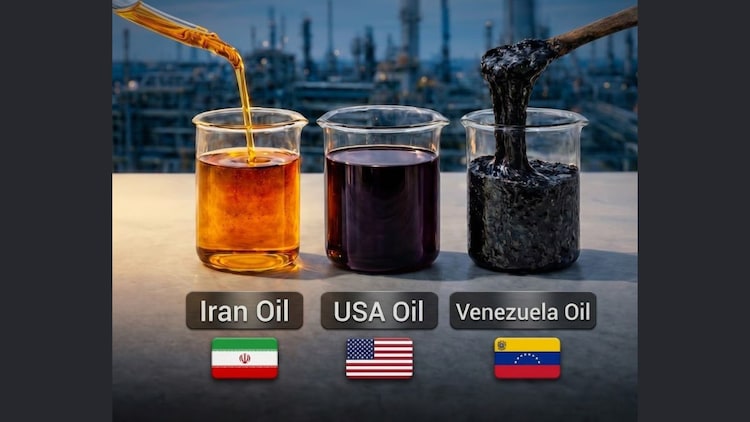
The higher the number climbs above 10, the lighter the crude. API gravity ranges from heavy, meaning high density, at less than 25 degrees, to light, meaning low density, at greater than 35 degrees.
Iranian Light sits between 33 and 36, right at the boundary between medium and light. That is the sweet spot most refineries prefer.
WHAT MAKES IRANIAN CRUDE SO HARD TO REPLACE?
Iranian Light, the country’s flagship export grade of crude oil, has a sulphur content of 1.36 to 1.5 per cent. Low-sulphur crude is called sweet; high-sulphur crude is called sour. Its distillation yield is roughly 20 per cent light fractions and 50 per cent middle distillates.
Middle distillates are the products pulled from the middle section of a distillation tower: diesel, jet fuel, and heating oil, all consistently the most profitable fuels globally.
Add those figures together and nearly 70 per cent of each barrel becomes premium fuel. That conversion rate is what refinery engineers lose sleep over when Iranian supply gets cut off.
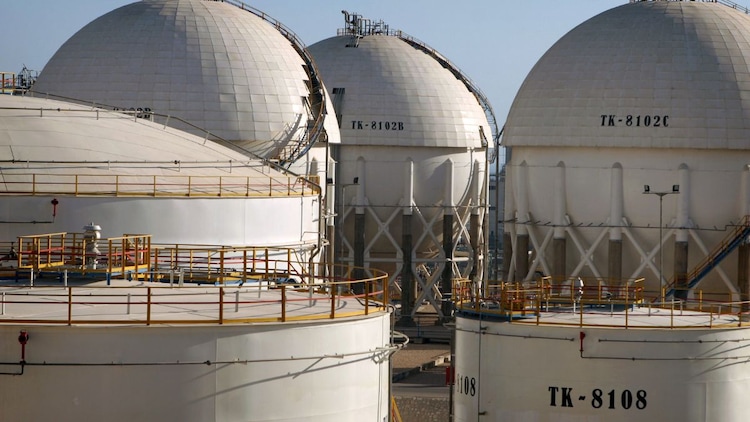
There is a second reason sulphur content matters, and it has nothing to do with price. When sulphur-rich crude is burned without treatment, it releases sulphur dioxide, a gas that causes acid rain and serious respiratory damage.
To prevent that, refineries strip the sulphur out before the fuel ever reaches a petrol pump, using a process called hydrodesulphurisation.
In this process, sulphur compounds in the crude are removed by reacting the oil with hydrogen gas under high temperatures of up to 450 degrees Celsius and pressures of up to 100 atmospheres, in the presence of metal catalysts.
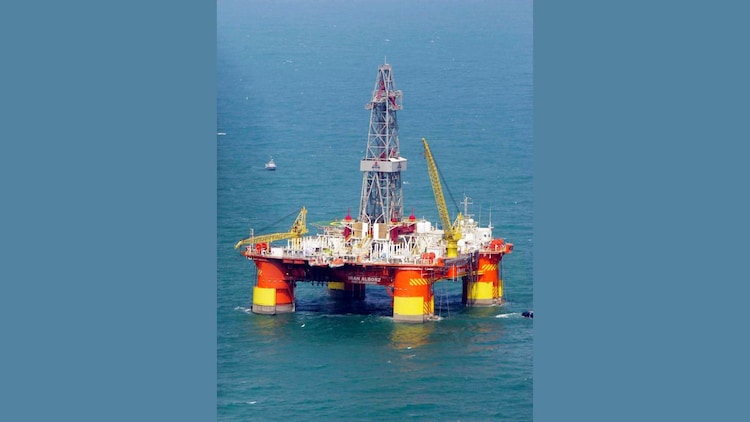
It is effective, but it is also expensive, energy-intensive, and requires specialist industrial equipment. The lower the sulphur content you start with, the lower the amount of equipment you need.
At 1.36 to 1.5 per cent, Iranian Light sits in a manageable range that most medium-complexity refineries across Asia can handle without major extra investment.
It sits in a productive middle zone: light enough to process cheaply, and heavy enough to produce the full range of fuels that large, complex refineries were built to sell.
WHY CAN’T REFINERIES SWITCH TO AMERICAN OR VENEZUELAN OIL?
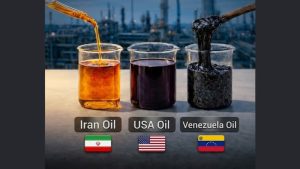
Both are poor substitutes, for opposite reasons. American West Texas Intermediate runs above 39 degrees API and is nearly sulphur-free.
It sounds better on paper. But it is so light that it overproduces naphtha, a lower-value lighter fraction, and delivers far less diesel and jet fuel.
Relatively light crude oils are typically priced higher than heavier crude oils because light crude oils require less refinery processing to produce high-value products such as petrol and diesel, and not all refineries have the equipment necessary to process heavier, denser crude oils efficiently.
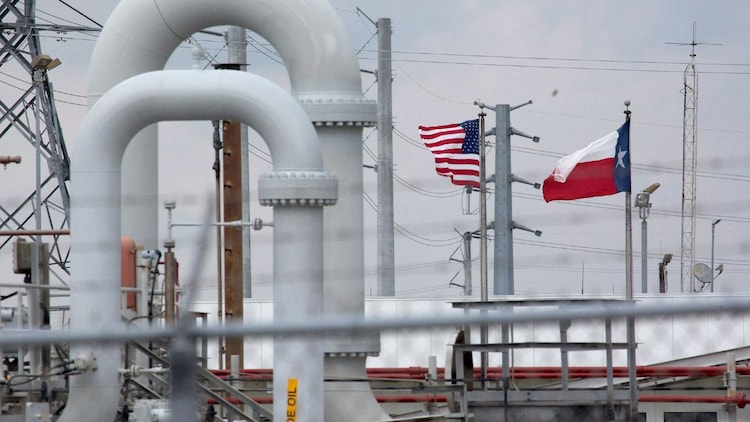
The reverse is also true. Refineries built around medium-grade crude cannot simply run ultra-light American shale instead without losing efficiency on the products that actually pay.
Venezuela sits at the other extreme. Venezuelan extra-heavy crude from the Orinoco Belt has an API gravity of just 8 to 10 degrees and a high viscosity, meaning it is so thick it cannot move through a pipeline.
Venezuela’s state oil company PDVSA must dilute it with 20 to 40 per cent lighter fluids just to export it.
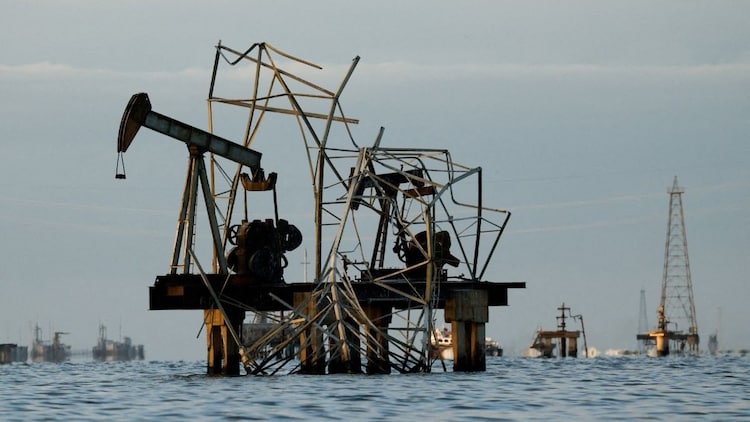
To refine it profitably, a facility needs a coker, which is a unit that breaks down the heaviest residues, a hydrocracker, which uses heat and pressure to split heavy molecules into lighter ones, and a full desulphurisation system.
Billions of dollars in extra infrastructure, before a single drop is refined. Iranian Light needs none of that.
WHY DOES THE STRAIT OF HORMUZ MATTER SO MUCH?
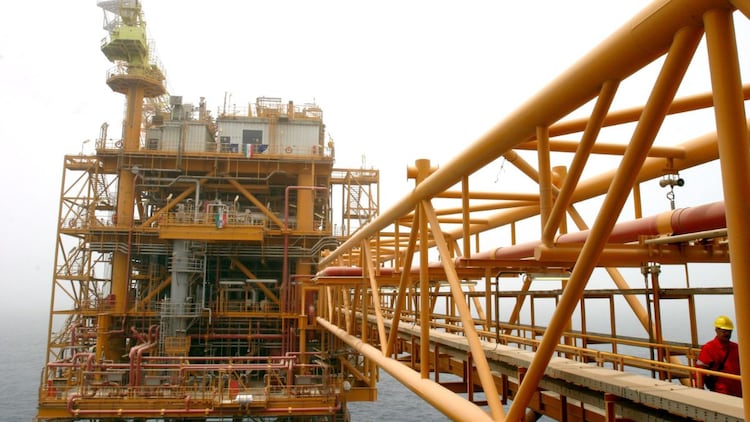
The Strait of Hormuz is important beyond words because that narrow corridor is how Iranian and Gulf oil actually reaches the world.
In 2024, oil flow through the Strait of Hormuz averaged 20 million barrels per day, equivalent to about 20 per cent of global petroleum liquids consumption.
The strait is just 33 kilometres wide at its narrowest point. China, India, Japan, and South Korea are the top destinations for crude oil moving through the strait to Asia, accounting for 67 per cent of all Hormuz crude oil and condensate flows.
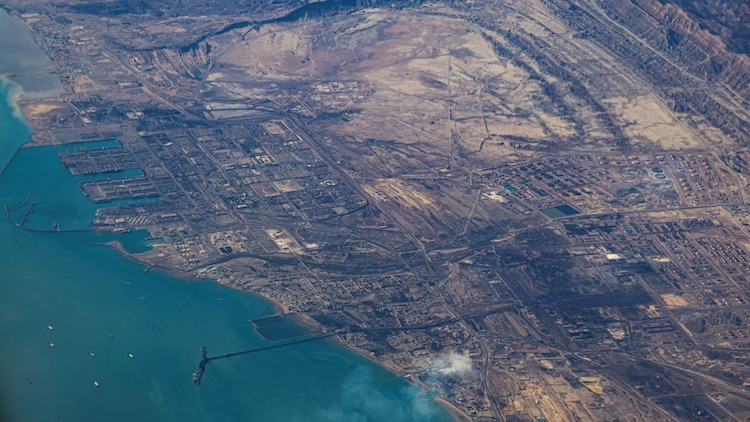
Close it and you do not just cut oil volumes. You remove the specific medium-grade crude that Asian refineries were engineered to process most efficiently.
The whole system slows down, costs rise, and no readily available substitute fills the gap.
Iranian crude is not just oil. It is the oil the global refining system was built around.