

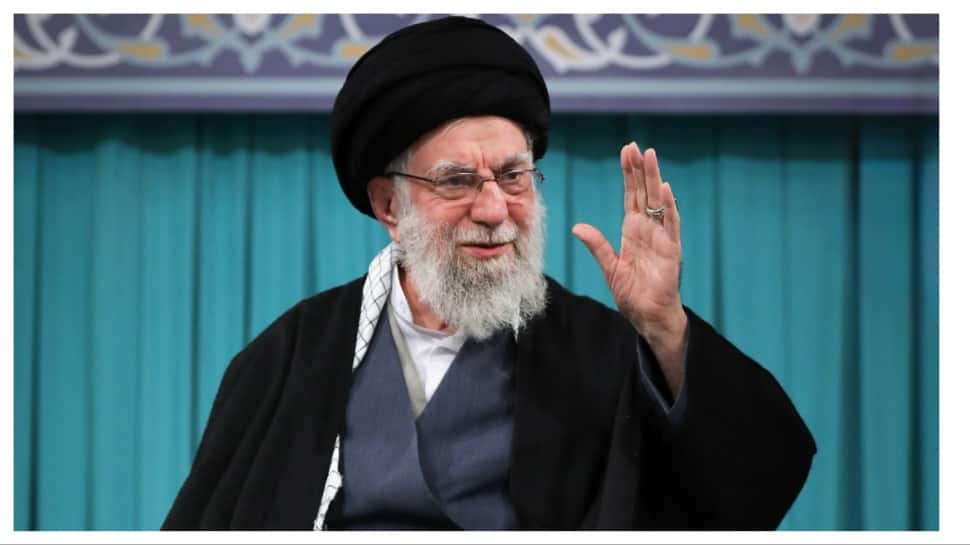
Iran’s Supreme Leader, Ayatollah Ali Khamenei, the country’s most powerful political and religious authority for over three decades, was killed early Saturday. The confirmation of his death made by Iranian state media, sparked nationwide mourning and raised uncertainty about the future of the Islamic Republic.
State media also reported that he died at his office during his routine work, with authorities declaring 40 days of public mourning, a customary period for senior religious leaders in Iran.
Who was Ayatollah Ali Khamenei ?
Supreme Leader Ayatollah Ali Khamenei was an Iranian Shia cleric and politician who served as the second Supreme Leader of the Islamic Republic of Iran from 1989 until his death in 2026.
Khamenei was born in 1939 in Mashhad, Iran’s second-largest city, into a clerical family. He received a religious education before becoming politically active against the Shah, Iran’s monarch until the 1979 revolution.
During the 1960s, Khamenei went into exile but returned after the Shah’s overthrow. A close ally of Ayatollah Ruhollah Khomeini, the revolutionary leader, he quickly advanced within the new government. Following the assassinations of several key officials—and surviving an assassination attempt himself that left his right arm paralyzed—Khamenei was elected president of Iran in an uncontested vote.
Khamenei’s rise to power
Khamenei’s political ascent started with his involvement in the 1979 Iranian Revolution, where he was a close associate of Ayatollah Ruhollah Khomeini, the founder of Islamic Republic of Iran.
After the establishment of the Islamic Republic, he held several positions, including serving as Tehran’s Friday prayer leader and a member of the Revolutionary Council. In 1981, he was elected President of Iran, a role he held until 1989, during which he led Iran in its war with Iraq (1980–1988).
Following Khomeini’s death in 1989, the Assembly of Experts appointed Khamenei as Supreme Leader, elevating him to the highest political and religious authority in Iran despite initial debates over his clerical rank (he was later granted the title of Ayatollah).
His tenure as Supreme Leader lasted over 36 years, making him the longest-serving head of state in the Middle East at the time of his death.
Khamenei’s influence in the Middle East
As Supreme Leader, Khamenei wielded ultimate control over Iran’s foreign policy, military, and judiciary, shaping the country’s role as key player in regional geopolitics.
He championed the “Axis of Resistance,” providing financial, military, and ideological support to groups such as Hezbollah in Lebanon, Hamas in Gaza, the Houthis in Yemen, and the Assad regime in Syria, positioning Iran as a counterweight to US and Israeli influence.
Khamenei’s policies intensified Iran’s adversarial stance toward the West, including oversight of the nuclear program, which he insisted was for civilian purposes only, while facing international sanctions and accusations of pursuing weapons capabilities.
His leadership also involved several conflicts, including proxy wars and direct confrontations, such as the 2025 Israeli strikes that preceded his assassination.
Domestically, he suppressed dissent, including women’s rights movements and economic protests, as seen in crackdowns on activists and the 2009 Green Movement.
What legacy Khamenei left for his predecessors
Khamenei left behind a legacy of deeply entrenched hardline governance, having centralized power within conservative factions and the Islamic Revolutionary Guard Corps (IRGC), which expanded Iran’s regional influence but also led to prolonged economic isolation through sanctions.
His tenure marked by resistance to Western integration, support for Shia militias across the Middle East, and a nuclear infrastructure that remains a flashpoint in global diplomacy.
However, his rule faced repeated challenges from internal protests, such as those in 2025 over economic hardships, which threatened regime stability.
For his successors, this creates a complex inheritance, a fortified theocratic structure but one vulnerable to unrest and external pressures, with potential turmoil in the leadership transition amid uncertainty over who will be next to carry his legacy forward.
His death has left Iran unmoored, potentially ushering in a period of instability as the country grapples with his authoritarian imprint.