
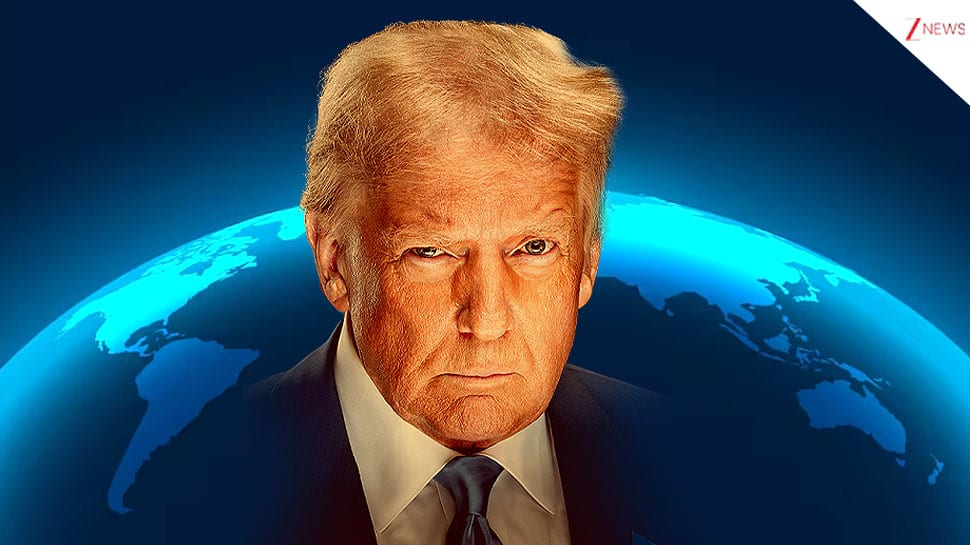
United States President Donald Trump on Wednesday (Indian time) hinted at a new round of talks between the United States and Iran could resume within the next 36 to 72 hours, with negotiations restarting as early as Friday. The tentative timeline has emerged through diplomatic backchannels and mediation efforts led by Pakistan.
According to the New York Post, Trump said that “good news” is “possible” in the next 36-72 hours.
Earlier today, Trump said he had directed the US military to continue the blockade of Iranian ports and remain “ready and able.”
“I have … directed our Military to continue the Blockade and, in all other respects, remain ready and able, and will therefore extend the Ceasefire until such time as their proposal is submitted, and discussions are concluded, one way or the other,” he said in a Truth Social post. He also confirmed that the ceasefire would remain in place until Iran submits its proposal.
What is Iran’s response?
However, there has been no confirmation from the Iranian side. Despite the ceasefire extension, Iran has maintained a firm stance, saying talks with the US will take place only if “rational conditions” are in place.
Earlier in the day, Iranian foreign ministry spokesman Esmaeil Baghaei said Tehran was prepared to defend itself militarily. He added, however, that the Islamic Republic remains open to further talks if the conditions are right.
According to the official IRNA news agency, Baghaei said Iran would negotiate “whenever we conclude that the necessary and rational conditions exist to use this tool to achieve national interests.”
Trump announced an indefinite ceasefire
US President Donald Trump has unilaterally extended the ceasefire with Iran indefinitely, hours before it was due to expire, even as Tehran declined to attend a second round of talks Trump had described as imminent.
After warning Iran repeatedly that he would act if it did not accept his terms for a settlement, Trump announced on Truth Social on Tuesday (local time) that, because “Iran is seriously fractured,” the ceasefire would remain in place until Tehran comes up with a unified position.
Earlier on Tuesday, Trump had said in a CNBC interview that he would not extend the ceasefire and added, “I expect to be bombing Iran” if there was no deal.
The ceasefire announcement offered some hope for a world already rattled by the blockade of the Strait of Hormuz, which cuts off 20 per cent of global oil and gas supplies. But there was no sign, for now, of any easing of restrictions by either side.
Tasnim news agency said, citing sources, that Iran’s negotiating team had informed the American side through a Pakistani mediator that it would not be in Islamabad on Wednesday and that there was no prospect of participating in the talks.
Pakistan’s Information Minister Attaullah Tarar also confirmed on Tuesday that Iran would not come to Islamabad for the second round of negotiations.
US Vice President J.D. Vance, who is leading the negotiations with Iran, was expected to leave for Pakistan on Tuesday morning, but delayed the trip after concerns that Iran would not show up.
Trump again cited Pakistan’s leaders while extending the ceasefire, saying military chief Asim Munir and Prime Minister Shehbaz Sharif had asked him to “hold our attack on the country of Iran until such time as their leaders and representatives can come up with a unified proposal.”
Earlier, when he announced a 14-day ceasefire on April 7 after 21 hours of talks in Islamabad ended without a breakthrough, Trump had also framed the move as a response to Pakistan’s request.
In a stage-managed face-saving move, Shehbaz Sharif had then posted on X asking Trump for a ceasefire, and the White House had reportedly seen and approved the post.
Tasnim said Iran had not asked for an extension of the ceasefire.
“A continued naval blockade means the continuation of hostilities. Iran will not open the Strait of Hormuz at least as long as the naval blockade remains in place, and will break the blockade by force if necessary,” it said.
Trump has repeatedly said over the past few days that a deal was close, and on Monday claimed he was offering Iran a better deal than the one under the international agreement he had rejected in his first term as too lenient.
If Iran accepted, he said, “they can make themselves into a strong nation again, a wonderful nation again.”
But his proposal would require Iran to abandon nuclear ambitions, surrender the remnants of enriched uranium in the debris of facilities Trump said were destroyed in last year’s bombing, and end its missile capability.
Iran is unlikely to accept those terms after enduring heavy attacks by Israel and the US.
Its main objective is to retain control of the Strait of Hormuz, which Tehran sees as a key source of regional power, since 20 per cent of global oil and gas supplies pass through it.
At one point, Trump even offered to share control of the strait with Iran.
Trump’s claim that Iran’s leadership is “seriously fractured” does appear to reflect a real divide, with hardliners in the military currently dominant.
On Friday, after Trump brokered a ceasefire between Israel and Lebanon, Iran’s Foreign Minister Abbas Araghchi said on X that the Strait of Hormuz was fully open.
But the Islamic Revolutionary Guard Corps, representing Iran’s military and hardline faction, quickly asserted control again on Saturday, restoring restrictions on the strait and even firing on two Indian ships that had been allowed to pass.
(with agencies input)


