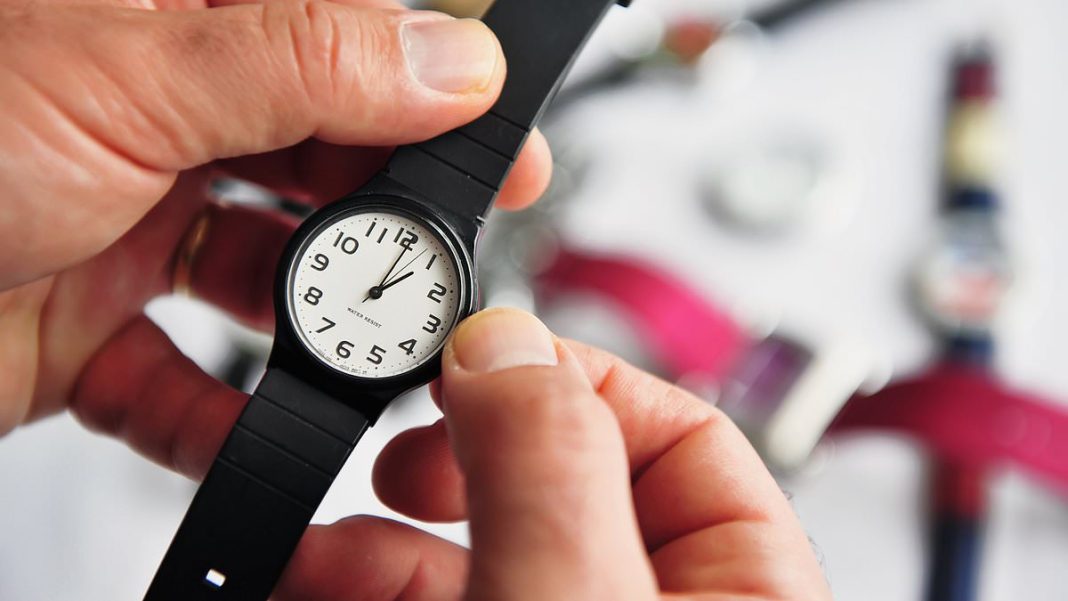
Scientists Demand End to Daylight Saving Time Over Health Risks
Leading scientists are calling for the immediate abolition of Daylight Saving Time (DST), citing alarming evidence linking the twice-yearly clock changes to increased cancer risks, fatal traffic accidents, and serious health complications.
Key Takeaways
- DST linked to 6% increase in fatal traffic accidents after spring transition
- Higher risks of cardiovascular events, suicide, and mortality post-time change
- West time zone residents show elevated cancer risks due to body clock mismatch
- 300% spike in road crashes observed at 2am Tuesday following clock changes

The Health Crisis Behind Clock Changes
Mounting research reveals the biannual time shift disrupts our circadian rhythms with dangerous consequences. Losing an hour of sleep during spring transition affects the entire population’s alertness and wellbeing.
Studies indicate fatal traffic accidents increase by approximately 6% following the spring time change. Evidence also shows elevated risks of cardiovascular events, suicidal behaviours, and overall mortality in the days immediately after switching clocks.
Dr Jeffrey Kelu, a circadian rhythm specialist at King’s College London, explains: “Our bodies rely on bright morning sun to maintain alignment with the 24-hour solar cycle. Disrupting this synchronization has severe long-term health implications.”

Cancer Risks and Body Clock Mismatch
Research demonstrates that people living in western parts of time zones—where the mismatch between solar time and body clocks is most pronounced—face higher risks of leukaemia, stomach cancer, lung cancer, and breast cancer.
Since DST creates similar mismatches when clocks shift forward, scientists warn it could be producing comparable cancer impacts across populations.
Historical Context: Why We Change Clocks
Contrary to popular belief, clock changes originated from wartime measures rather than scientific reasoning. Germany first implemented DST in spring 1916 to conserve energy during World War I. The UK and other nations soon followed to support war efforts.
The practice has remained controversial for 109 years, with campaigners debating between permanent British Summer Time versus Standard Time.
Expert Consensus: Abolish DST Now
Molecular biologist Dr John O’Neill states unequivocally: “Daylight Saving Time should absolutely be abolished. It’s completely ridiculous that we’re still living with this anachronism.”
Dr Megan Crawford of the British Sleep Society emphasizes the mental health impacts: “Sleep and mental health are incredibly interlinked. Poor sleep predicts development of depression and anxiety.”
Alarming Accident Statistics
Recent analysis of Department for Transport data reveals dramatic crash rate increases following clock changes. Tuesday at 2am shows a 300% spike in road accidents, while the hour after midnight on Sunday records 186% more crashes.
Dr Thomas Upton from University of Bristol notes: “Evidence is growing that daylight savings may be harmful to health. Our biological rhythms get out of sync, potentially contributing to depression and heart attacks.”

The Sleep Reality: Extra Hour Myth
Despite expectations of gaining an hour’s sleep in autumn, research involving 11,800 UK Biobank participants reveals people only sleep about half an hour more than usual Sundays.
Melanie de Lange from University of Bristol explains: “People continue being woken by their internal body clock, or by children and pets unaware of time changes.”
Comprehensive Health Impacts
- 40 minutes less sleep typically following DST switch
- 5% increased heart attack incidence after time changes
- Reduced moral judgment capacity post-transition
- 5% longer criminal sentences issued by judges on post-DST Mondays
The scientific community urges policymakers to consider permanent time standardization to protect public health and safety.