
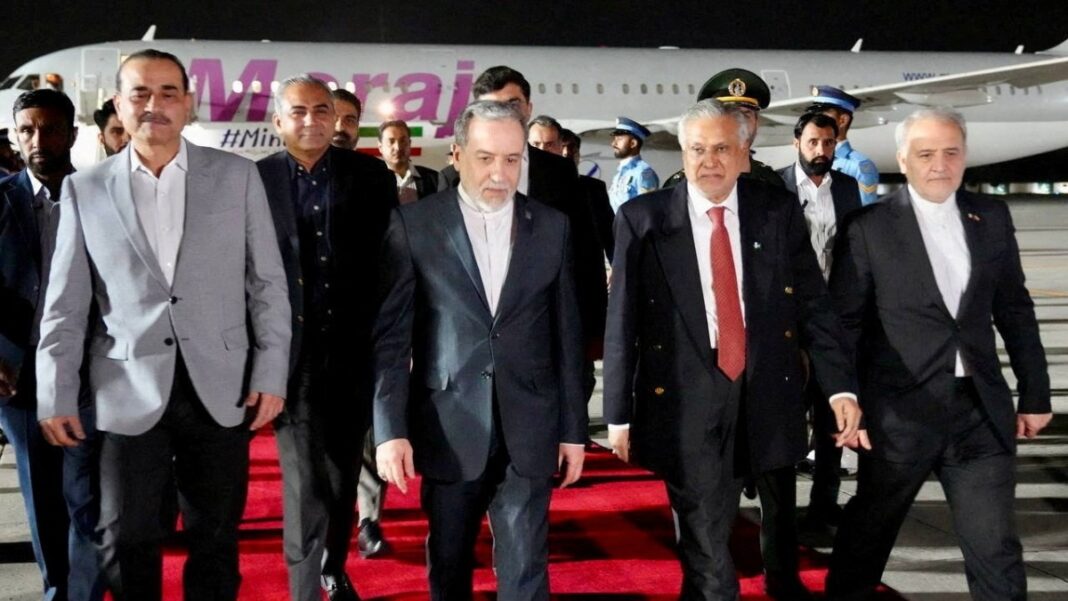
After a week of security lockdowns and diplomatic buildup in Islamabad, the much-anticipated US-Iran talks never happened. Yet Pakistan continues to project momentum, saying a draft agreement is still under discussion remotely, according to news agency Reuters.
The claim comes at a time when Islamabad appears more eager to project diplomatic importance than deliver results. Pakistani officials have repeatedly said that negotiations are still ongoing, albeit remotely. “The draft will be negotiated remotely till they reach some consensus,” a source familiar with the process told Reuters.
Meanwhile, US President Donald Trump has made it clear that Washington is in no rush. “If they want to talk, they can come to us, or they can call us. You know, there is a telephone. We have nice, secure lines,” he said. He doubled down on the US position, adding, “They know what has to be in the agreement. It’s very simple: They cannot have a nuclear weapon; otherwise, there’s no reason to meet.”
IRAN PUSHES FOR PHASED TALKS
According to Reuters, Iranian sources have floated a phased approach to negotiations, which was brought to Islamabad by Abbas Araghchi over the weekend.
The proposal prioritises ending the war and resolving tensions around the Strait of Hormuz before addressing the nuclear issue. Tehran’s plan reportedly calls for guarantees that the US cannot restart hostilities, followed by discussions on lifting the blockade and reopening the Strait of Hormuz under Iranian control. Only after these steps would more extensive negotiations, including the nuclear programme, begin.
This approach directly clashes with Trump’s demands, which place nuclear restrictions at the focus of any agreement. The gap between both sides, therefore, remains not just wide but fundamental.
Iranian Foreign Minister Abbas Araghchi engaged in back-to-back visits to Pakistan before heading to Russia to meet Vladimir Putin, though it has produced little beyond optics.
Despite a ceasefire halting large-scale strikes that began on February 28, there is still no agreement on how the conflict will end. Both Washington and Tehran now appear locked in a test of endurance, each waiting for the other to concede under pressure. Trump is facing backlash over the prolonged conflict, while Iran continues to leverage its control over major shipping routes.
The situation is further complicated by developments in Lebanon, where fighting has intensified. Israeli strikes killed at least 14 people and wounded dozens more in the south on Sunday, marking one of the deadliest days since a ceasefire was agreed earlier this month. Iran has made it clear that negotiations cannot move forward unless stability is restored in Lebanon, where Israel and Hezbollah continue to accuse each other of violating the truce.
With inputs from agencies


