
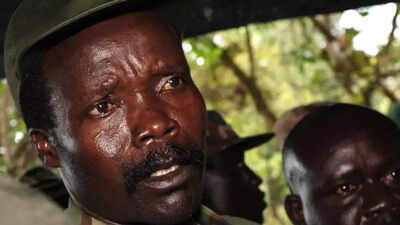
For decades, the name Joseph Kony has been synonymous with one of the most gruesome rebellions in Africa. The warlord from Uganda, who has been accused of perpetrating some of the worst atrocities on unarmed civilians, has been on the run for decades, evading capture by forces from various nations who have sought to capture him. Despite this, Joseph Kony remains on the loose.
His ability to slip away into some of the most ungoverned corners of Central Africa has intrigued observers and baffled international authorities. His rebel group, which he founded, the Lord’s Resistance Army, is now but a shadow of what it once was. Nevertheless, the fact that both Kony and his small group of loyal followers are alive today prompts many questions about the reach of global justice and regional security cooperation.
According to reports from intelligence sources and former rebel fighters, Kony is believed to possibly still be alive, operating out of the border of the Sudan-Central African Republic. As reported by The Independent, in the year 2024, it was reported that the Wagner Group, which is affiliated with Russia, attempted to capture one of his trading camps in the eastern Central African Republic but was unsuccessful.
How Joseph Kony’s rebel group devastated communities in Northern Uganda
The story of the LRA began in the late 1980s in northern Uganda as cited by DNI.gov. At that time, they intended to fight against the government of President Yoweri Museveni and protect the interests of the Acholi people, a major ethnic group in Uganda. Initially, LRA had a political dimension but was later noted for its brutality against civilians.
The attacks on villages led to their destruction. Thousands of children were abducted and forced to become soldiers, porters, and even maids. Girls were forced into relationships with LRA commanders. The level of suffering was enormous, and people found themselves in a situation where they had to endure brutality from both the LRA and Uganda’s military.
By the early 2000s, almost two million people had been forced to leave their homes in northern Uganda. Internally Displaced Persons camps became a reality for people in northern Uganda. Later on, some researchers characterised the situation in these camps as a form of social suffering.
When the world suddenly paid attention
For a long time, this war has been largely unknown outside of Africa. This situation, however, took a dramatic turn with the release of a viral video titled “Kony 2012” in 2012.
The movement quickly proliferated on social media sites and received huge global attention. Various individuals, including celebrities and politicians, contributed to discussions on this topic, and millions of people watched this video shortly after its release. The United States government even announced a reward of five million dollars for information leading to Kony’s arrest. This movement, however, eventually died down. This is because, by then, the war’s location had shifted, and Kony himself remained elusive.
How remote Borderlands helped Joseph Kony avoid capture for years
The most prominent reason for the survival of Kony can be identified as geography. His remaining fighters are based in the remote border regions that stretch from the Central African Republic, Sudan, and the Democratic Republic of Congo.
The border regions are vast, sparsely populated, and often ungoverned. The thick forests and rugged terrains make it extremely difficult for the armed groups to carry out their operations. These groups can freely move from one country to the other, taking advantage of the poor coordination between the countries.
For the rebel groups, the border regions provide the opportunity for the armed groups to hide, replenish themselves, and collect information through their local connections. Analysts have identified that this geography has allowed Kony and his followers to blend into the larger landscape of cross-border trade.
How Joseph Kony and his few fighters stay hidden in remote forests
The LRA once had thousands of fighters and carried out large-scale attacks across several countries. Today the group is much smaller. Some intelligence estimates suggest that Kony may now command only a handful of loyal followers, possibly between a dozen and twenty fighters.
Although the group’s military capacity has sharply declined, its small size may actually make it more difficult to locate. Large rebel movements require supply chains, camps, and organised logistics. A tiny group moving quietly through remote forests leaves far fewer traces.
Over the years, Kony appears to have adjusted his strategy. Instead of conducting frequent attacks, the group reportedly reduced violence and focused on avoiding detection. This shift helped them survive even as international military pressure increased.
How the rebels learned to survive quietly
As large-scale raids declined, the LRA had to find other ways to sustain itself. Researchers studying the region suggest that the group became involved in local economic networks. Small-scale farming, honey production, and cross-border trading reportedly became part of its survival strategy.
The borderlands where the group operates already host a mixture of legal and illicit trade routes. Goods such as bamboo, agricultural products, and livestock pass through these areas. At the same time, the trade in valuable resources such as gold, ivory, or diamonds has historically moved through similar routes.
In some cases, the LRA has reportedly taxed traders passing through certain areas or exchanged goods with other armed groups and nomadic herders. These arrangements allow the group to maintain a low profile while still generating resources for survival.
Why the hunt for Kony lost momentum
Another reason that could be given for Kony’s continued freedom could be that the political priority given to capturing Kony and his Lord’s Resistance Army has diminished. There are a lot of security issues that need to be addressed by these countries, and the threat that the remnants of the LRA pose is no longer as great as it used to be.
For countries such as Uganda, the Central African Republic, and the Democratic Republic of Congo, it is expensive and complex to go after a group of fighters that are located in remote jungles. The issue is also no longer under the international spotlight.
The International Criminal Court still has arrest warrants out for Kony on charges of war crimes and crimes against humanity committed during his rebellion.


