
Singapore’s tourism boost: India has emerged as one of Singapore’s fastest-growing and most strategically important tourism source markets. In 2025, Singapore welcomed around 1.2 million Indian visitors, placing India among its top five inbound markets, according to the Singapore Tourism Board (STB). But beyond the numbers, Indian travellers are influencing how the city-state designs its visitor experiences, particularly after dark.
A key shift lies in traveller behaviour. Indian outbound travel is increasingly driven by a rising middle class that prioritises immersive, story-led attractions over traditional sightseeing. Multi-generational family trips are common, and experiences that can be enjoyed collectively; visually dramatic, interactive and socially shareable tend to perform strongly. With more than 40% of Indian visitors estimated to be repeat travellers, destinations cannot rely solely on legacy attractions; they must continuously refresh offerings to remain compelling.
Singapore appears to be responding by strengthening its night-time economy. High-profile events such as the Singapore Grand Prix, the world’s first Formula 1 night race have long positioned the city as an after-dark destination. Festivals like i Light Singapore and Light to Night Festival further reinforce this strategy, drawing visitors into public spaces through large-scale light installations and performances.
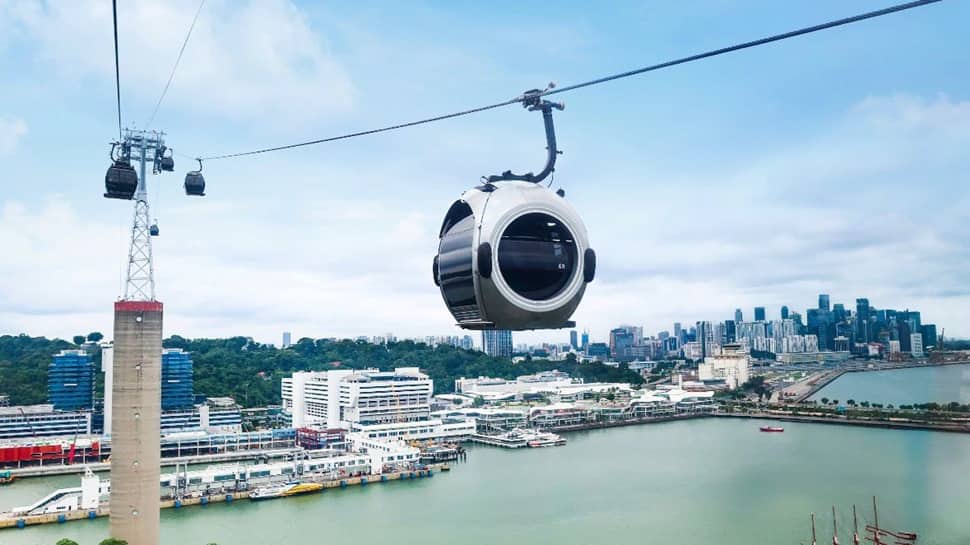
At the attraction level, experiences are being reimagined to extend beyond daylight hours. “The Singapore Cable Car, traditionally seen as a scenic transport link between Mount Faber and Sentosa, has evolved into an experiential product with themed cabins and curated dining options. On Sentosa’s shoreline, Wings of Time Fireworks Symphony, Singapore’s only permanent daily outdoor night show set against the open sea, has introduced enhanced fireworks sequences to heighten spectacle and repeat appeal,” said Jennifer Wong, Director, Commercial, Mount Faber Leisure Group.
These developments align with a broader urban tourism model in which destinations seek to lengthen visitor dwell time and diversify spending windows. For Indian travellers who often combine leisure with shopping, dining and entertainment after-dark programming provides additional itinerary depth without requiring extra travel days.
The result is a subtle recalibration of Singapore’s tourism playbook. Rather than focusing solely on iconic daytime landmarks, the city is building layered, immersive night experiences that cater to repeat, experience-driven markets. As Indian outbound travel continues to expand, its preferences are increasingly visible in how destinations innovate particularly when the sun goes down.


