

EU, India Poised for Historic Trade Deal, Sidestep Agriculture for Now
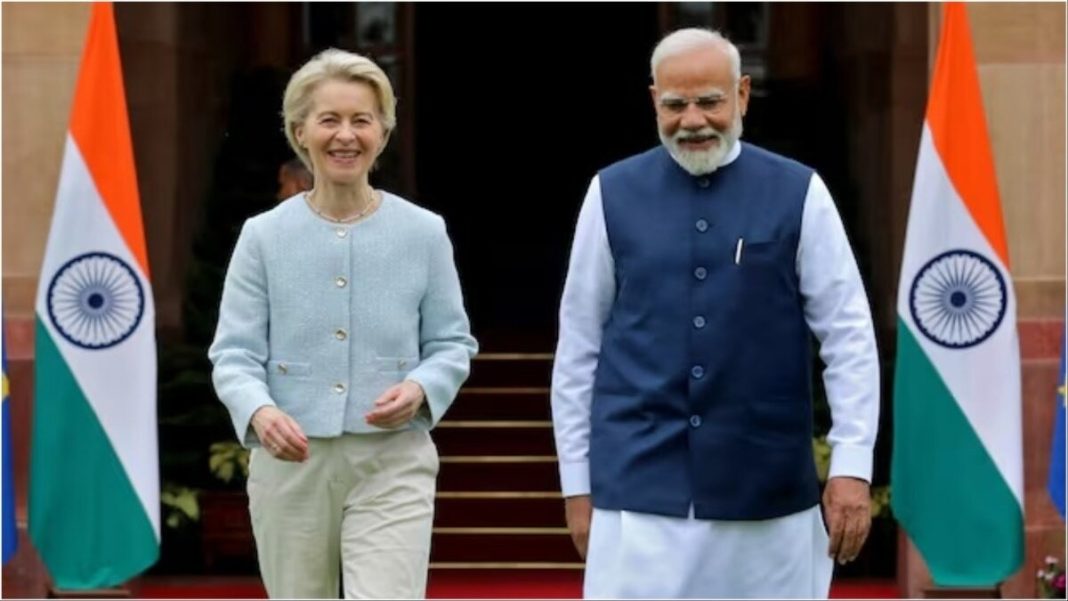
European Union leaders are in New Delhi for a summit with Prime Minister Narendra Modi, aiming to finalise a historic trade agreement that excludes the contentious issue of agriculture.
Key Takeaways
- EU and India are close to a 15-year-in-the-making trade deal focused on industrial goods and services.
- Agriculture has been excluded, a pragmatic move to break the long-standing deadlock.
- The pact aims to boost bilateral trade, currently worth €88 billion, and attract investment.
- Formal signing is expected later in 2023 after parliamentary approvals.
A Pragmatic Breakthrough After 15 Years
The two-day summit, which began on Friday, is expected to announce a trade deal negotiated since 2007. The agreement will focus on cutting tariffs on industrial goods like cars and machinery and increasing market access for services.
Why Agriculture Was Left Out
Omitting agriculture is likely to disappoint European farmers seeking access to India’s vast market. India has been reluctant to open its agricultural sector, which employs nearly half its workforce. This exclusion was key to unlocking progress.
“We are very close to a deal,” said a senior EU official, who spoke on condition of anonymity. “The focus is on industrial goods and services. Agriculture is not on the table.”
Benefits for Both Sides
The deal is a major victory. For the EU, it grants companies greater access to one of the world’s fastest-growing economies. For India, it will boost exports and attract much-needed foreign investment.
Broader Summit Agenda
Beyond trade, the summit will see agreements on climate change, digital cooperation, and security. Discussions on the war in Ukraine and the Indo-Pacific situation are also scheduled. Prime Minister Modi will hold bilateral talks with European Commission President Ursula von der Leyen and European Council President Charles Michel.
Analysts Call It a “Smart Move”
Experts view the decision to separate agriculture as pragmatic, allowing progress on mutual interests while deferring tougher issues.
“This is a smart move,” said Harsh V. Pant, a professor of international relations at King’s College London. “It shows that both sides are serious about getting a deal done. They can always come back to agriculture later.”
The deal is expected to be formally signed later this year, after approval by the European Parliament and the Indian government.