

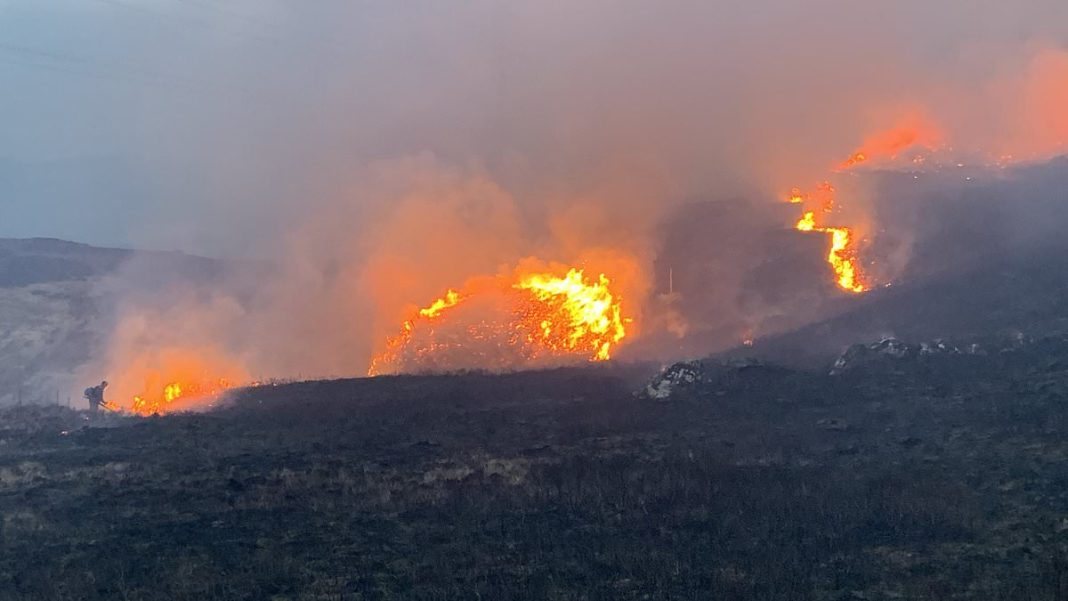
UK Records First Official ‘Mega Fire’ as Scientists Warn of New Normal
Key Takeaways
- UK experiences first recorded ‘mega fire’ burning over 11,000 hectares in Scottish Highlands
- 2025 marks worst wildfire season on record with 46,907 hectares burned
- Climate change creating hotter, drier conditions fueling more intense fires
- Scientists warn mega fires likely to become more common
Britain has recorded its first official ‘mega fire’ with the devastating Carrbridge and Dava Moor blaze in the Scottish Highlands, and experts warn such catastrophic wildfires could soon become commonplace. The June 2025 wildfire burned over 11,000 hectares of forest and peatland, killing thousands of animals and creating smoke visible up to 40 miles away.
Unprecedented Scale and Impact
The Dava Moor wildfire qualifies as the UK’s first ‘mega fire’ – defined as burning at least 10,000 hectares. This year has seen the worst fire season on record, with 46,907 hectares burned compared to the previous record of 28,100 hectares in 2019.
Between late June and early July, multiple fires raged through Carrbridge and Dava for several days. The Scottish Fire and Rescue Service believes human activity, such as campfires or barbecues, was the most likely cause. There are also concerns the blaze might have started from muirburn – the deliberate burning of moorland vegetation for land management.
Climate Change Driving Dangerous Conditions
Researchers attribute the unprecedented scale to an abnormally hot and dry spring that desiccated vegetation. Dr Matthew Jones from the University of East Anglia stated: ‘In 2025 we saw what appears to be the UK’s first megafire on record – that is, the first fire to burn over 10,000 hectares.’
Dr Francesca Di Giuseppe from the European Centre for Medium-Range Weather Forecasts explained: ‘In the UK summer of 2025, the most relevant feature was the dryness of the live vegetation rather than the dead vegetation. When live vegetation is able to burn, you usually experience the most intense fires.’
Future Fire Risks Increasing
According to the State of Wildfire report, climate change made wildfires significantly more likely and dangerous between March 2024 and February 2025. Dr Jones warned: ‘Climate change brings more frequent and intense droughts and heatwaves, which are laying the groundwork for more severe fires which spread more quickly and end up burning greater areas.’
Dr Di Giuseppe, a co-author of the report, says it’s ‘very likely’ that megafires will hit the UK again. Co-author Dr Douglas Kelley added: ‘Hotter weather dries out vegetation, making it more flammable, while extreme heatwaves and droughts further increase the chances of fires spreading rapidly once ignited.’
How Wildfires Affect Local Temperatures
Wildfire smoke can cause measurable temperature differences at the surface by blocking sunlight. Smoke interactions with solar radiation can either cool or warm the air – scattering rays cools the air, while absorption warms it.
Studies show the cooling effect can extend to river temperatures and linger for years, particularly during winter. Brown carbon from burning biological material plays a significant role, with some reaching the upper atmosphere where it has disproportionate effects on planetary radiation balance.
Fires also transform landscapes by increasing albedo – the measure of light reflected. With less vegetation to absorb sunlight, cooling effects can persist for years.




