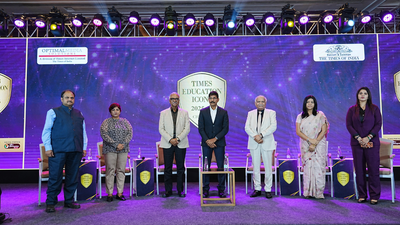
Some gatherings are formal. Some are inspiring. Times Education Icons 2026 was an evening where achievements were applauded, but ideas took centre stage. Bringing together educators, policymakers, academic leaders, and changemakers, the event felt less like a ceremony and more like a shared moment of reflection on what education truly means today. It wasn’t just about institutions being recognised; it was about the larger purpose behind the work they do, shaping lives, widening opportunities, and building futures.
The event was organised by Optimal Media Solutions, a division of Times Internet Limited, and held on January 22, 2026, at ITC Grand Chola, Chennai. Yet beyond the venue’s grandeur, what stood out was a sense of shared responsibility a room full of people who understand that the future of society begins in classrooms.
At the heart of the event was a message Tamil Nadu has long lived by: education is the state’s greatest equaliser. Its progress story has always been closely tied to learning from strong public education systems to institutions that combine academic rigour with social purpose. Times Education Icons 2026 celebrated those carrying this legacy forward at a time when the world of learning is changing faster than ever.

When Sabitha, former Additional Chief Secretary of Tamil Nadu, took the stage as Guest of Honour, her words reflected both policy experience and personal conviction. Having worked closely with school education systems and governance reforms, she spoke not only as an administrator but as someone deeply invested in how education shapes human potential.
She gently questioned a system that often revolves around textbooks and exams. “Are we preparing students only to score, or to succeed in life?” was the spirit of her address. She urged educators to create learning environments that nurture curiosity, creativity, and confidence, reminding the audience that real education goes beyond memorising content.
Sharing insights from her time on UPSC interview panels, she spoke of candidates who connected scientific ideas to everyday cultural practices examples that showed how powerful learning becomes when students think across disciplines. Education, she emphasised, should help learners see connections, not boundaries.
But the pride came with a reminder: past success should not lead to complacency. With AI, digital learning, and new industries reshaping careers, education systems must keep evolving.
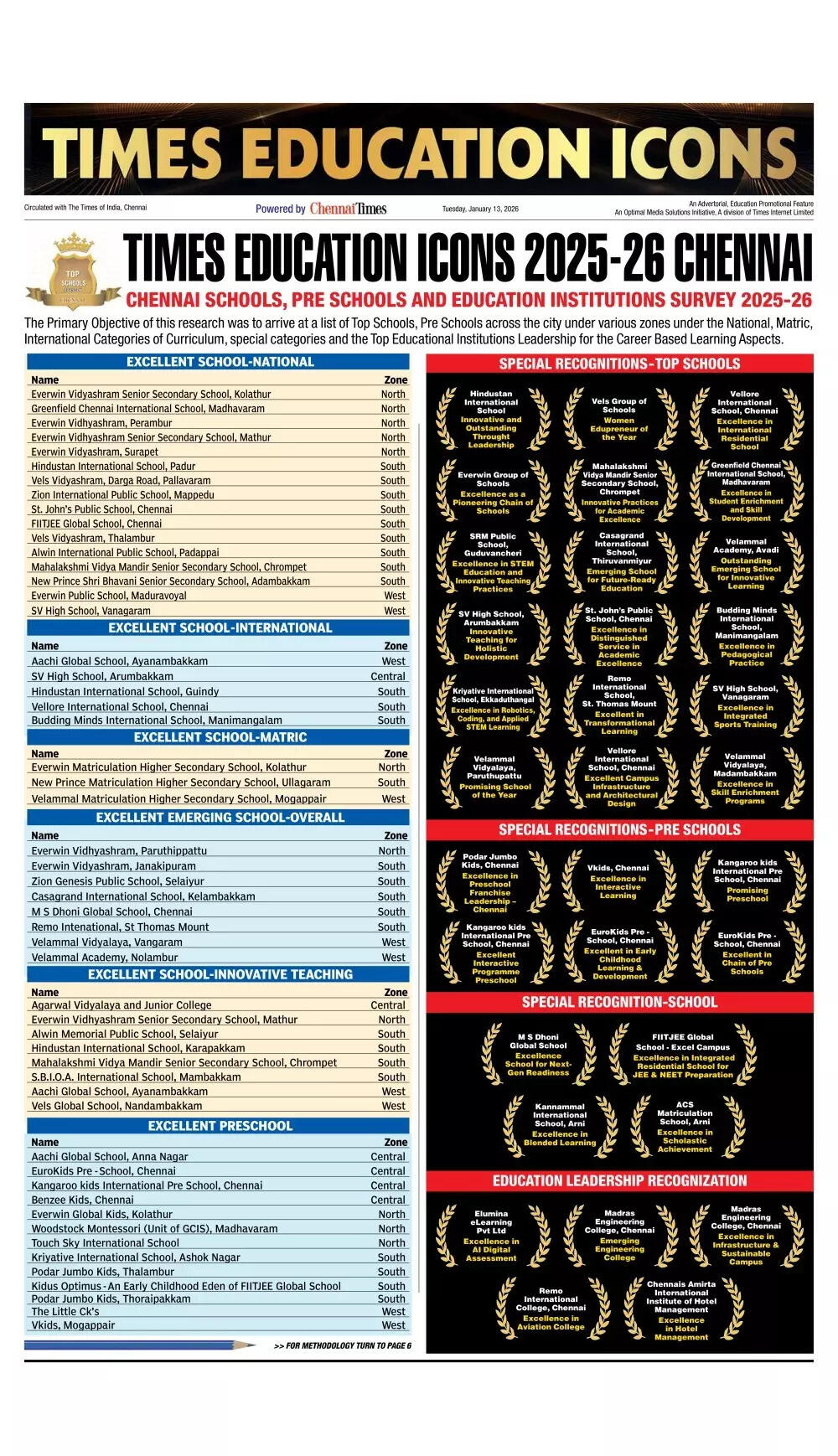
Also present was C. Sylendra Babu, IPS, former Director General of Police, Tamil Nadu, whose own journey stands as a testament to discipline, lifelong learning, and service. His presence underscored a powerful truth education shape not only careers, but character.
Actor Malavika Mohanan added a different dimension of inspiration. Her journey resonated especially with younger attendees, reminding them that self-belief and continuous learning matter in every profession, whether on a film set or in a laboratory.
A thought that echoed repeatedly through the event was simple yet profound: marks alone cannot define a student’s future. Sabitha highlighted the growing importance of emotional intelligence, adaptability, and problem-solving skills qualities that help young people navigate a world defined by change.
She called for stronger bridges between classrooms and the real world through internships, field exposure, mentorship, and skill-based learning. Degrees may open doors, she noted, but experience builds confidence.
The two panel discussions brought energy and openness to the evening. Moderated by C. Sylendra Babu and M. J. Xavier, CEO of the DFT Group of Institutions, the sessions felt like collaborative conversations rather than formal debates.
A key theme was teacher empowerment. Speakers emphasised that meaningful reform begins with supporting educators by giving them training, autonomy, and tools to adapt to new learning methods. Teachers, they said, are not just instructors but mentors and guides.
There was also strong support for experiential learning, with calls to take education beyond classroom walls into industries, communities, and research environments. Participants advocated moving away from memory-based tests toward assessments that value understanding and application.
Technology, too, featured prominently but with balance. While AI and digital platforms are transforming education, panellists agreed that technology should enhance learning, not replace the human connection between teacher and student.
As the evening ended, Times Education Icons 2026 felt like more than a recognition platform. It was a reminder that education is a living, evolving journey.
Tamil Nadu’s legacy of valuing learning remains strong, but its future depends on how boldly institutions innovate and how closely academia, industry, and government work together. By celebrating excellence while encouraging reflection and reform, the event highlighted a simple but powerful truth:
The future of society is shaped not just in offices or laboratories, but in classrooms where guidance, imagination, and opportunity meet.
In honouring education leaders, the event ultimately honoured something even greater: a collective commitment to nurturing responsible, capable, and future-ready citizens.