

15.1 C
Delhi
Friday, February 27, 2026

Indian astronomers devise clever method to find dead suns in deep space

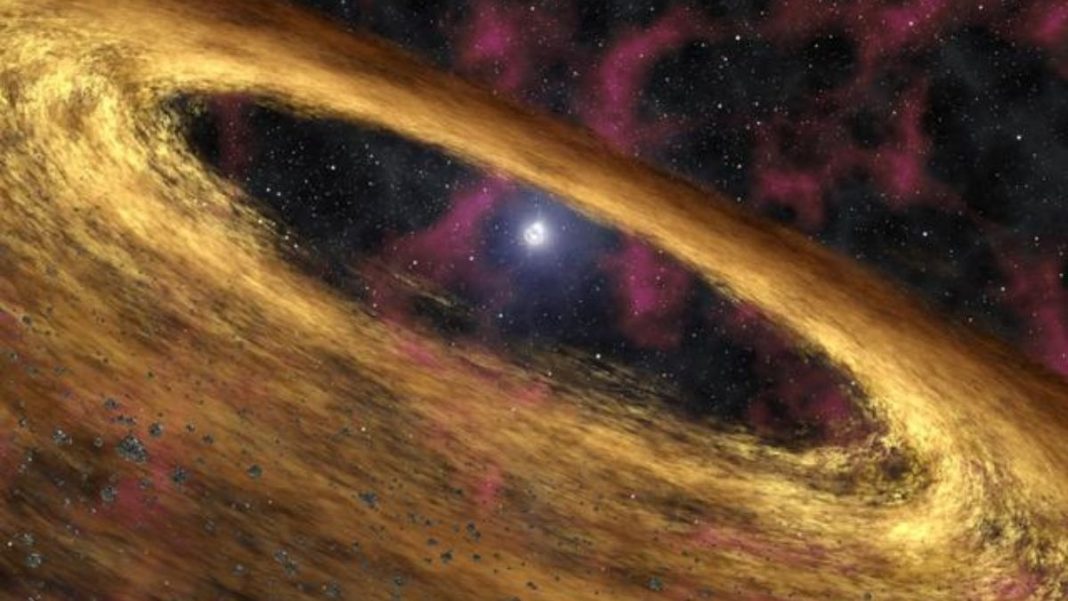
Astrophysicists from IIT Kanpur and the National Centre for Radio Astrophysics (NCRA) Pune have discovered a powerful new way to measure the distance of pulsars, which are dead stars that act like cosmic lighthouses by spinning and emitting regular flashes of radio waves.

For decades, measuring how far these stars sit from Earth has been one of the toughest puzzles in astronomy. While we can see exactly where they are in the sky, calculating the depth of space between us is a different challenge altogether.

The research, published in the Monthly Notices of the Royal Astronomical Society, offers a clever solution.

HOW DID THE TEAM MEASURE PULSAR DISTANCES?

Instead of relying on old, often inaccurate models of the Milky Way Galaxy, the team used two specific effects that happen to radio waves as they travel through space: dispersion and scattering.

Dispersion occurs when radio waves from a pulsar are delayed by different amounts based on their wavelength as they pass through free electrons in space.

Scattering happens when these same signals hit clumps of turbulent gas, causing the radio waves to take slightly different paths and arrive at Earth as a smeared or broadened pulse.
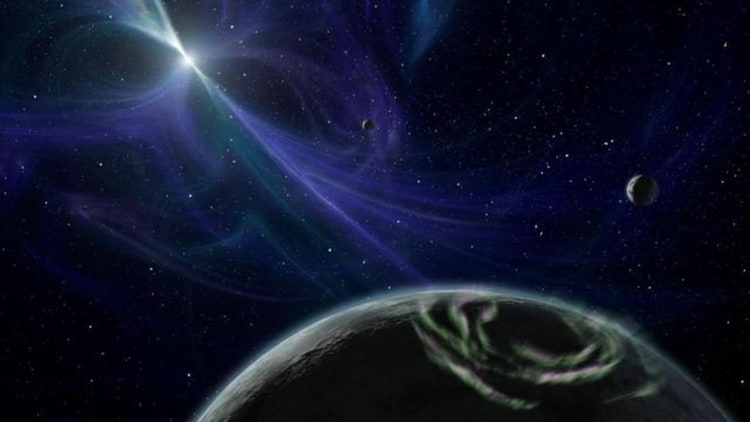
IIT Kanpur and NCRA Pune scientists find new way to measure pulsar distances. (Photo: Nasa)

IIT Kanpur and NCRA Pune scientists find new way to measure pulsar distances. (Photo: Nasa)

As a pulsar signal travels to Earth, it passes through a thin mist of particles called the interstellar medium.

This mist acts like a cosmic obstacle course. It delays the signal based on its wavelength and scatters the light, causing the pulses to smear out.

By measuring both these effects at once, the researchers can determine exactly how much material the signal passed through.

This allows them to calculate distance much more reliably than before.

The team tested their theory on the Gum Nebula, a massive cloud of gas in the southern sky.

Their results show that this method could be applied to hundreds of other pulsars already known to science. It might even help us understand Fast Radio Bursts, which are powerful flashes coming from far beyond our Milky Way.

This Indian breakthrough does more than just measure distance. It helps astronomers understand the true brightness and speed of these stars, providing a clearer map of our galactic neighbourhood.

By removing the guesswork from older models, the IIT Kanpur and NCRA Pune team has given the global scientific community a sharper lens to view the universe.

HOW DO PULSARS HELP US MAP THE MILKY WAY?

Pulsars act like cosmic lighthouses, sending out regular flashes that reveal the hidden particles floating between stars.

Space looks empty, but it is filled with electrons that distort light, making it difficult to tell if a star is faint or just very far away.
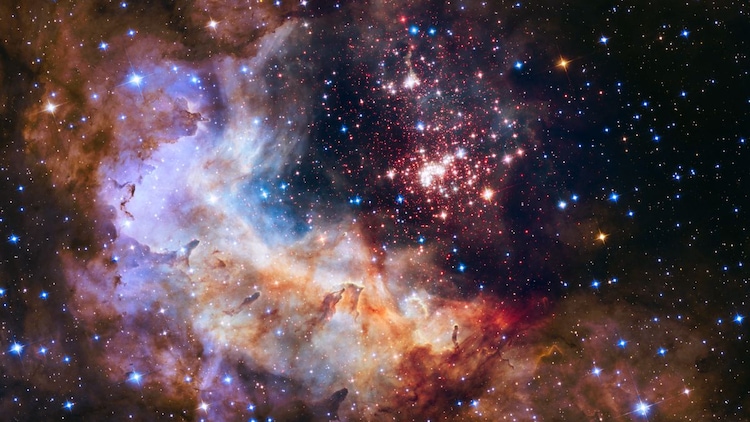
Star cluster in Gum Nebula (Photo: Nasa)

Star cluster in Gum Nebula (Photo: Nasa)

The massive gas structure serves as a perfect laboratory for Indian scientists to test how radio waves scatter over long distances.

By using the same logic applied to pulsars, researchers hope to pinpoint the origin of mysterious radio flashes from other galaxies.

Latest

Constantly watching reels is rewiring your brain, science confirms. Here’s how

People are getting addicted to social media platforms, adopting short-duration content. The harm that comes with watching reels for a long time is concerning.

This is the most detailed image of the heart of the Milky Way galaxy

The stunning new image, produced using the Atacama Large Millimetre/submillimeter Array (ALMA), represents the largest dataset ever obtained by the observatory.

Mud volcano erupts in Colombia. Know science behind the phenomenon

A mud volcano in San Juan de Uraba, Colombia, erupted on February 25, 2026, spewing fire and mud near a water plant. Authorities report no injuries to humans bu

Nasa reveals astronaut’s name behind the rare medical evacuation from space

Nasa astronaut Mike Fincke has come forward as the one who suffered a medical event on the ISS, leading to Crew-11's unprecedented early return.

Why do worms socialise? IISc study finds they share a genetic secret with humans

Researchers at the Indian Institute of Science have identified a specific gene that controls social behaviour in worms. The study reveals how serotonin pathways

Topics

IDFC First Bank returns Rs 583 crore after fraud, but is it enough to rebuild trust?

IDFC First Bank’s response offers a rare test of corporate accountability. But will a quick refund and bold messaging be enough to turn a damaging crisis into

Abhishek Sharma finds form at the perfect time as India’s semifinal push gathers pace

IND vs ZIM, T20 World Cup 2026 Super 8s: Abhishek Sharma finally found his touch with a crucial 55 off 30 balls against Zimbabwe, as India posted a record 256 f

Netflix calls Warner deal not attractive, clears path for Paramount

Netflix declined to raise its bid for Warner Bros. Discovery, clearing the way for Paramount’s $31-per-share takeover offer that could reshape Hollywood and t

Howard Lutnick Epstein Island photo taken down by DOJ? Thomas Massie flags issue amid outrage; ‘don’t see wife…’

Secretary of Commerce Howard Lutnick was reportedly photographed on Little St James Island or Epstein Island, sparking outrage. 

US Congressional report sounds alarm over Chinese expansion in Latin America

A US House panel report warns China is expanding influence in Latin America through Belt and Road investments, ports, minerals and telecom networks, potentially

UFOs to Pizza-gate: Hillary Clinton reveals ‘unusual’ questions at Epstein deposition; ‘answered all’

Hillary Clinton says her House Oversight hearing on Epstein turned “unusual,” with questions about UFOs and the debunked Pizzagate conspiracy.

Who is Borge Brende? WEF chief resigns after Epstein document revelations

The former Norwegian foreign minister has stepped down as head of the WEF over connections with Jeffrey Epstein amid the new batch of files released by the DOJ.

Devonta Lee cause of death: What happened to the ex-LSU star? All on his cancer battle

Former LSU Tigers and Louisiana Tech Bulldogs wide receiver Devonta Lee has passed away at the age of 27 after battling osteosarcoma.
spot_img

Related Articles

Popular Categories

spot_imgspot_img