
China has announced major progress in its push to land humans on the Moon, with key rockets, spacecraft and landers all developing smoothly.
The updates come as Nasa refines its own Artemis programme to target an American lunar landing by 2028, reigniting a thrilling global race for the Moon that mixes science, resources and national ambition.
WHAT PROGRESS HAS CHINA MADE ON LUNAR MISSIONS?
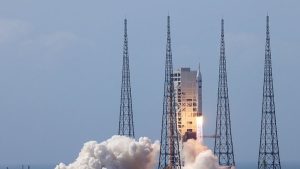
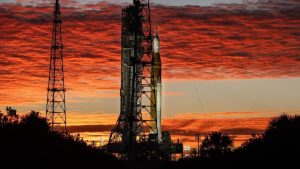
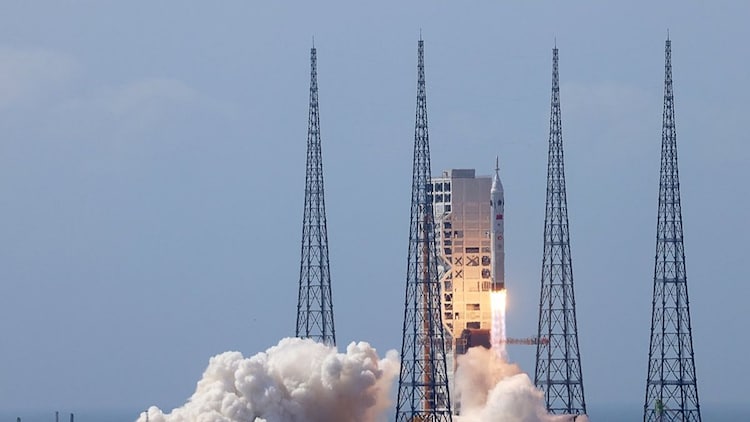
The powerful Long March-10 rocket, China’s new super-heavy launch vehicle built specifically for crewed Moon missions, has passed critical static fire and low-altitude demonstration tests.
A static fire test means igniting the rocket’s engines at full power while the vehicle stays bolted to the launch pad to check propulsion reliability without launching.
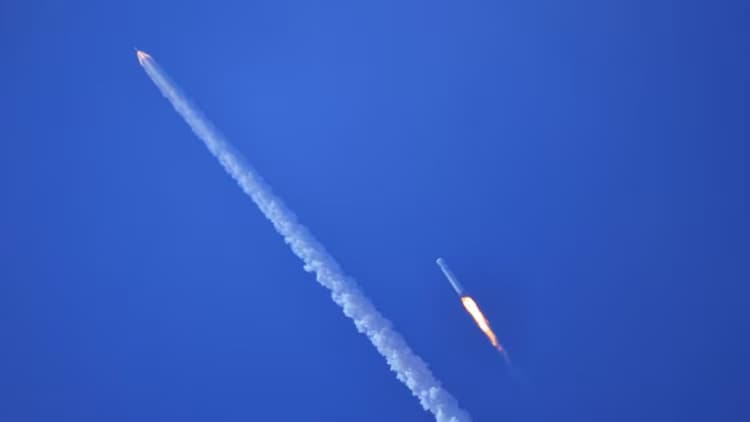
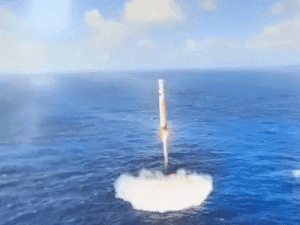
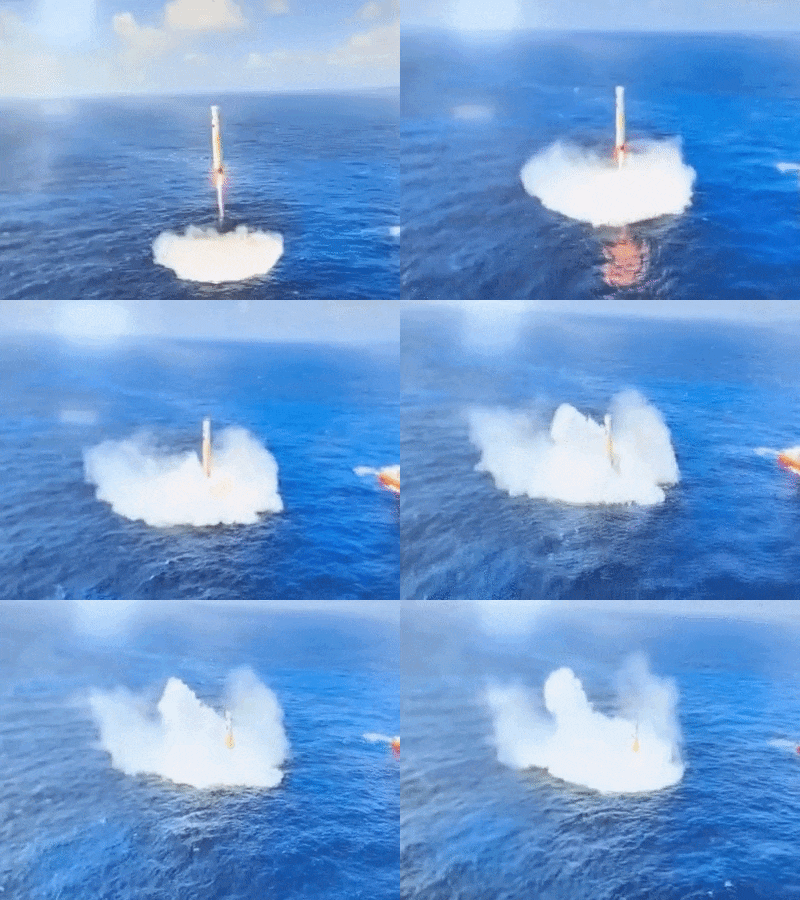
A low-altitude demonstration test involves a short, controlled flight at low height to prove basic systems like engine performance and stability, including splashdown and recovery.
The Long March-10 rocket will carry the crewed spacecraft and lander into space.
The Mengzhou crewed spacecraft, China’s next-generation reusable capsule designed for lunar trips, similar to Nasa’s Orion, will carry astronauts to lunar orbit, dock with a lander and return them safely to Earth.
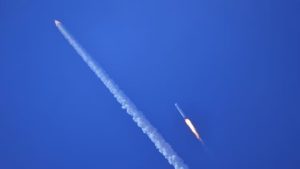
The spacecraft has successfully completed its maximum dynamic pressure escape trial.
Also called a Max Q abort test, this simulates the most stressful point during launch when air pressure and forces peak, at an altitude of around 11 kilometres.
In such a scenario, the escape system is fired to pull the spacecraft away quickly and safely, providing crew protection in emergencies.
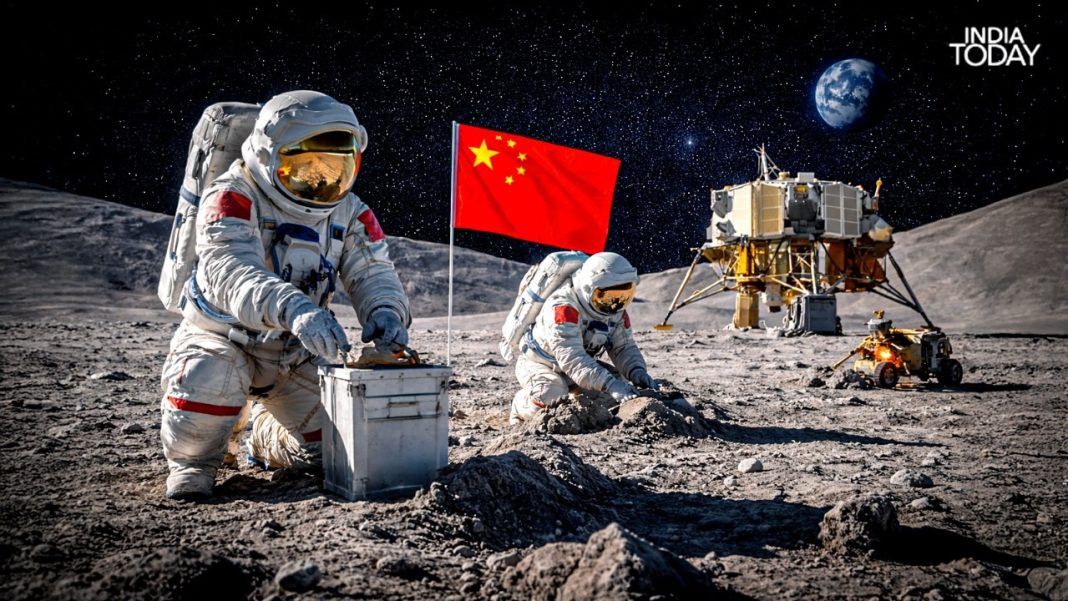
The Lanyue lunar lander will carry two taikonauts down to the lunar surface and back up to orbit, with separate landing and ascent stages.
Lanyue means ‘embracing the Moon’, and is a term first used in a Mao Zedong poem.
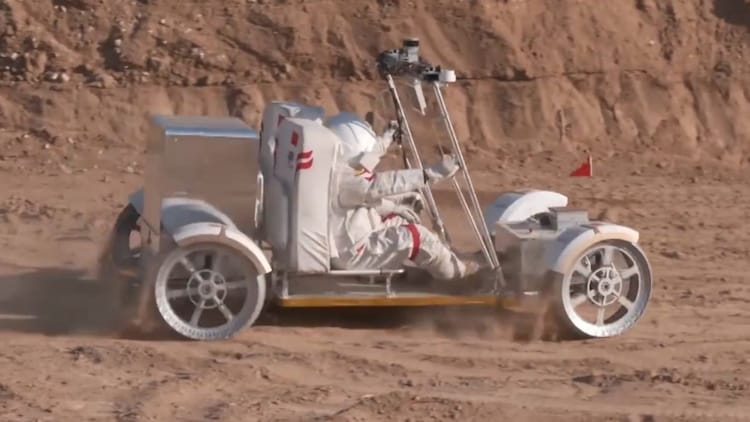
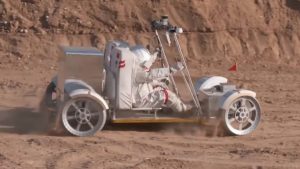
The lander has demonstrated precise landing and takeoff in simulations. These tests used a full-scale mockup in a simulated lunar gravity setup to verify control coordination across engines and thrusters for safe touchdown and liftoff.
Ground facilities, including launch pads, tracking stations and support buildings at China’s Wenchang Spacecraft Launch Site in Hainan, are expanding rapidly to handle the massive Long March-10 launches and the complex operations for crewed deep-space missions.
WHEN WILL CHINA SEND HUMANS TO THE MOON?
China has set 2030 as the target date for its first crewed lunar landing.
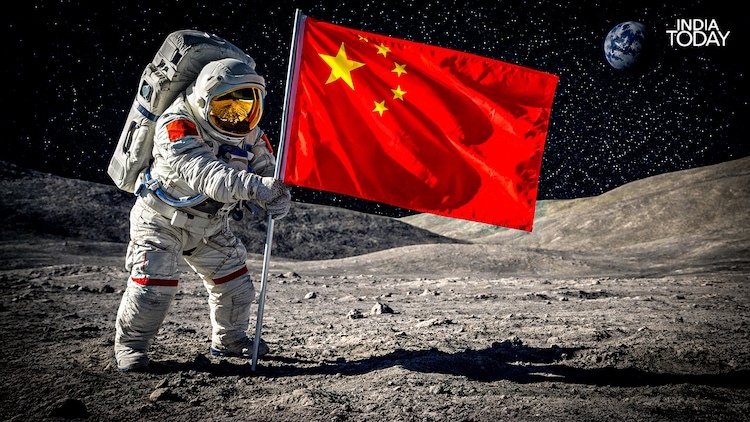
The China Manned Space Agency reports that all major elements are progressing well, with successful tests and infrastructure work putting the goal firmly within reach and setting the stage for a landmark moment in space history.
WHAT OTHER SPACE PLANS DOES CHINA HAVE?
China has laid out an active 2026 schedule that includes two crewed missions to the Tiangong Space Station, one cargo resupply flight, and a taikonaut spending a full year in orbit to gather data on long-duration spaceflight.
Taikonauts from Hong Kong and Macao are expected to visit the station as early as this year. Tiangong will keep growing with new modules and could host more international partners, including possible visitors from Pakistan.
WHAT CHANGES HAS NASA MADE TO ARTEMIS MOON MISSION?
Nasa has revamped the Artemis Moon Program, introducing a new 2027 low-Earth orbit test mission to rehearse docking with commercial landers built by SpaceX and Blue Origin.
Artemis II, carrying astronauts on a flyby around the Moon, is scheduled for April 2026.
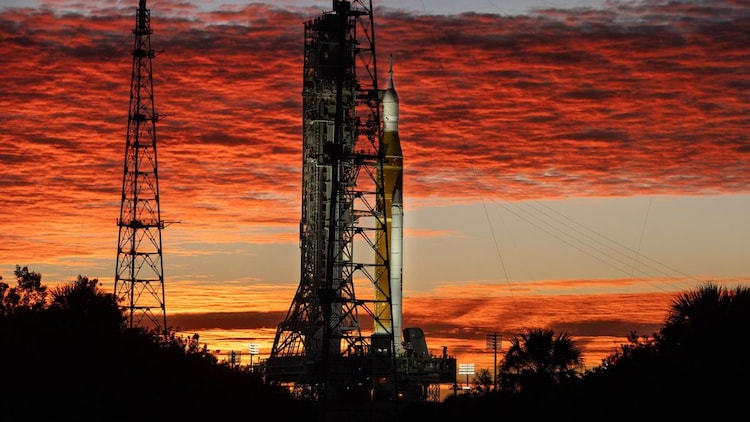
Artemis III will now serve as that 2027 practice run, moving the first actual landing to Artemis IV in 2028, with plans for potentially two landings that year and regular missions afterwards.
The adjustments aim to solve earlier setbacks and keep the programme on a steady track.
WHY IS THE MOON BACK IN FOCUS?
The lunar South Pole holds water ice in permanently shadowed craters that can be turned into rocket propellant and breathable oxygen, making it possible to build lasting outposts.
The rare Helium-3 on the Moon could one day support clean fusion power on Earth. These resources turn the Moon into a vital launchpad for Mars exploration and a hub for new technologies that benefit everyone.