

29.3 C
Delhi
Thursday, February 26, 2026

A year after NVS-02 satellite’s failure, Isro explains what went wrong in space

Over a year after the NVS-02 navigation satellite failed to reach its intended orbit, the Indian Space Research Organisation (Isro) has revealed what caused the mission setback and the corrective steps taken since then.

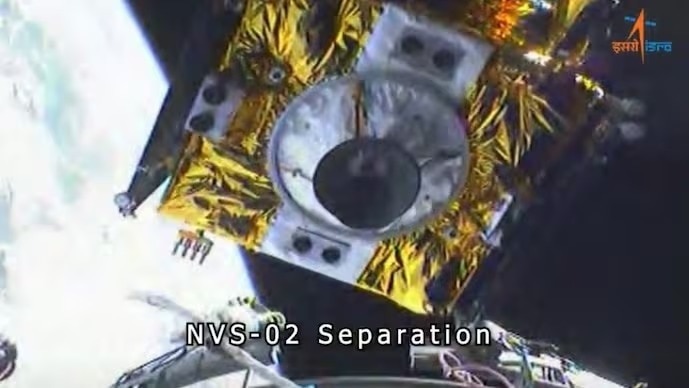
NVS-02, the second satellite in India’s NVS navigation series, was launched successfully on January 29, 2025 aboard the GSLV-F15 rocket. The spacecraft was placed into an elliptical transfer orbit measuring 170 km at its closest point to Earth and 37,785 km at its farthest.

The satellite separated normally from the rocket, and initial operations, including deployment of its solar panels and stabilising its orientation for power generation, were completed without issue.
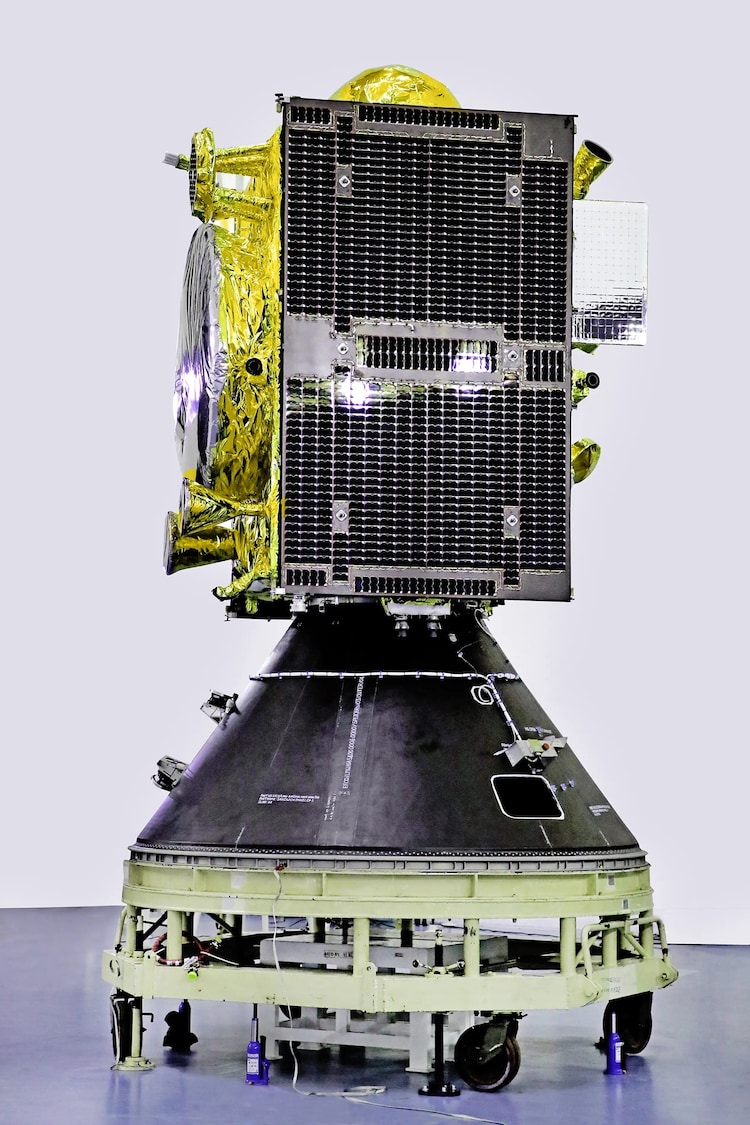
NVS-02 satellite

Isro said the investigation led to a set of recommendations to improve redundancy. (Photo: Isro)

However, the next critical step, raising the satellite from its elongated elliptical path into a circular operational orbit, could not be performed.

Isro constituted an Apex Committee to investigate the anomaly. After reviewing telemetry data (signals sent back by the satellite about its health and systems) and running detailed simulations, the panel identified the root cause.

According to Isro, the problem occurred in the “pyro valve” system of the satellite’s propulsion setup. A pyro valve is a small explosive-triggered device used to open fuel lines in spacecraft engines. In simple terms, it acts like a one-time switch that allows propellant, in this case, oxidizer, a chemical that helps fuel burn in space, to flow into the engine for orbit-raising maneuvers.

The committee found that the electrical drive signal meant to trigger the oxidizer-line pyro valve did not reach it.

The most likely reason was that at least one electrical contact inside a connector became disengaged in both the main and backup circuits. Because the valve never opened, the engine could not fire, preventing the spacecraft from moving into its final orbit.
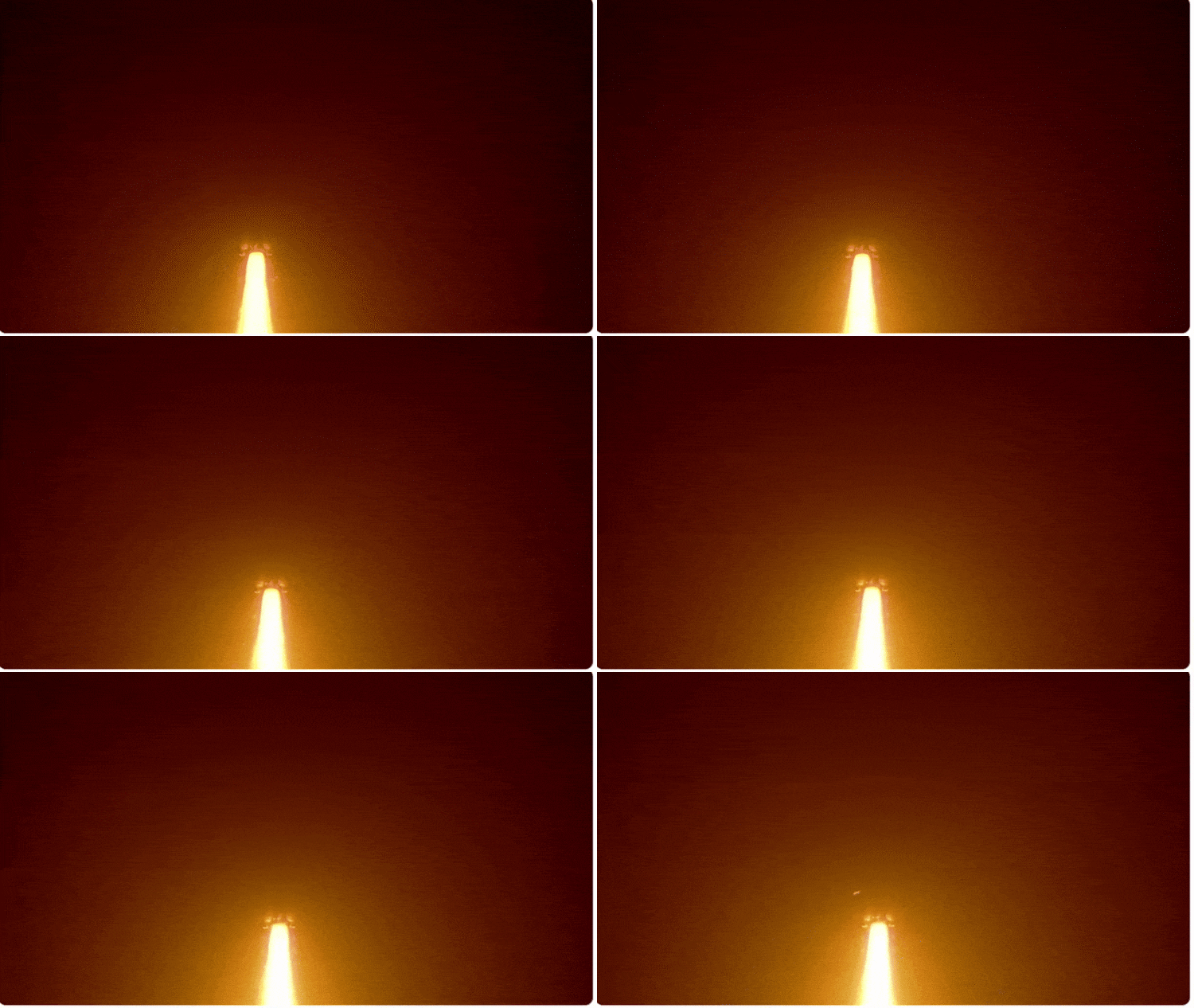
GSLV

Isro said the investigation led to a set of recommendations to improve redundancy, meaning having stronger backup systems, and increase the reliability of pyro mechanisms in future missions.

These corrective measures were implemented in the CMS-03 spacecraft, which was launched on November 2, 2025 aboard the LVM-3 M5. Isro confirmed that the pyro systems on CMS-03 functioned normally, and the satellite was successfully placed into its intended orbit.

The space agency stated that the lessons learned from NVS-02 will be applied to all future missions, reinforcing safeguards to prevent similar issues. The disclosure marks a rare and detailed public explanation of a technical anomaly, showing Isro’s focus on transparency and mission reliability.
Latest

Nasa reveals astronaut’s name behind the rare medical evacuation from space

Nasa astronaut Mike Fincke has come forward as the one who suffered a medical event on the ISS, leading to Crew-11's unprecedented early return.

Why do worms socialise? IISc study finds they share a genetic secret with humans

Researchers at the Indian Institute of Science have identified a specific gene that controls social behaviour in worms. The study reveals how serotonin pathways

Indian high school students design, launch mini satellite to 22 km height

Class XI students from a Sivagangai government school built and launched the Vikko Sat 1 mini satellite. The device reached 22 km to detect atmospheric fungal s

Rain expected over hills on Thursday, dry conditions to prevail in the plains

Northwest India is set to experience rising temperatures as a heatwave looms over Delhi and Punjab. Meanwhile, parts of Kerala and Karnataka may see light rain

India to provide free HPV vaccines: What is it and how does it work? Science explained

India is launching a free HPV vaccination drive for 14-year-old girls to eliminate cervical cancer. Discover the fascinating science of how these vaccines creat

Topics

Ramayana first screening has US viewers raving about ‘monstrous VFX, rooted storytelling’ of Ranbir Kapoor, Yash film

A test screening of the first cut of Ranbir Kapoor and Yash's Ramayana Part One was reportedly held in Los Angeles earlier this week.

Salesforce CEO says SaaSpocalypse will not kill SaaS, AI agents make it stronger

Salesforce has dismissed fears of a "SaaSpocalypse," saying AI agents will strengthen, not weaken, software-as-a-service. CEO Marc Benioff said businesses are n

Why would Annie Guthrie’s car be part of probe? Abuse survivor shares chilling ‘stalkers’ theory

New details have been emerging in the Nancy Guthrie case, including PCSD's confirmation that Annie Guthrie’s car "is still part of the investigation.”

‘Infiltration for terrorism purpose’: What Cuba said on motorboat incident amid US tensions

Cuban forces on Wednesday killed four people who were sailing in Cuban waters on a Florida-flagged ship.  

Zydus bets big on affordable GLP-1 therapy with new semaglutide brands in India

A single reusable pen could make costly GLP-1 therapy more affordable and accessible for millions of Indians battling diabetes and obesity.

Samsung Galaxy S26 has lots of AI, here are 5 new features that really matter

Samsung’s Galaxy S26 series brings a range of advanced AI features aimed at simplifying everyday life. From proactive reminders that surface at the right time

Surgeon with 25 years of experience warns less than 6 hours of sleep can increase risk of heart disease, certain cancers

Dr Jeremy London explains that sleeping fewer than 6 hours or more than 9 hours is dangerous, and aiming for 6-8 hours of quality rest is key.

Ambanis host Arjun Tendulkar, Saaniya Chandhok and family in Jamnagar before wedding

Before the big wedding next month, Ambanis and Tendulkars came together to bless the couple Arjun Tendulkar and Saaniya Chandhok in Jamnagar.
spot_img

Related Articles

Popular Categories

spot_imgspot_img