

The US participation in Israel’s strikes against Iran marks a decisive escalation in an already volatile region. What began as deterrent signalling has now crossed into coordinated military action. The risk of a wider confrontation is real and immediate.
Yet this is not merely a West Asian crisis. It is part of a larger shift in global politics — one in which power is once again openly asserted as the primary instrument of statecraft.
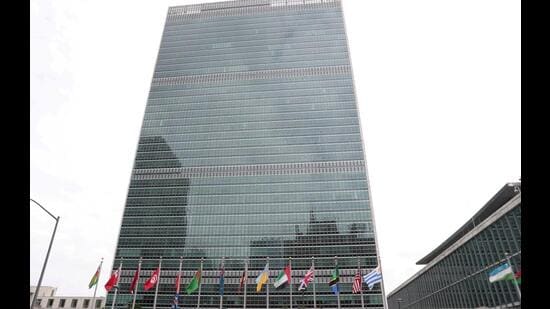
For three decades after the Cold War, it was widely believed that multilateral institutions, economic interdependence and international law had fundamentally moderated great-power behaviour. The United Nations system, supported by global financial and trade architectures, was expected to channel rivalry into structured frameworks and constrain unilateral escalation.
That assumption is now visibly under strain.
The joint US–Israel operation against Iran, developments in Venezuela, sustained pressure on Cuba, and broader geopolitical manoeuvring across regions all point to a harder international environment. States are increasingly prepared to assert interests through demonstrations of capability — military strikes, sanctions regimes, technological restrictions, alliance consolidation and territorial signalling.
There is a temptation to view such moments as aberrations tied to particular leaders or political cycles. President Trump is often described in this way — as a deviation from an otherwise stable liberal trajectory. But history suggests a more sobering interpretation.
Periods of institutional optimism are frequently followed by renewed assertions of hard power. When strategic balances shift, when rising and established powers reassess relative strength, or when leaders perceive core interests to be at stake, it might reassert itself. Individuals may accelerate or dramatise this dynamic, but they do not invent it. The deeper currents are structural.
Throughout history, power — military, economic and technological — has been a central determinant of political order. Norms and institutions matter, but they function within a framework ultimately sustained by capability and credibility. When existential stakes are perceived, States rarely subordinate their security calculations entirely to procedural constraints.
What we are witnessing today is less a collapse of order than its transformation. The assumption that the post–Cold War model would indefinitely restrain coercive behaviour now appears overly optimistic. Power demonstration is becoming normalised.
Recognising this reality is not the same as endorsing it. Nor does it mean that conflict is inevitable. But wishing for a return to a more predictable era will not prevent the consequences of a shifting balance of power.
The critical challenge is management.
Formal multilateral institutions remain important. However, they were designed for a different distribution of power and a different strategic climate. Their ability to mediate acute confrontation among major actors is limited. When direct interests collide, diplomacy must often operate through alternative channels.
Here, India’s position becomes significant.
As an emerging great power committed to strategic autonomy, India is not locked into rigid bloc alignments. It maintains working relationships across competing centres of power while preserving independent judgment. Its credibility extends across the Global South and among advanced economies. This unique positioning provides diplomatic space that few others possess.
In a more power-centric world, structured engagement mechanisms are indispensable. Carefully designed Track 1, Track 1.5 and Track 2 dialogues can create forums for candid exchanges that formal multilateral settings often constrain. Retired officials, military leaders and strategic thinkers can explore red lines, escalation risks and confidence-building measures without the pressures of public posturing.
India could also deploy special envoys with focused mandates to quietly facilitate communication between rival actors. The objective would not be to impose solutions or claim mediation status prematurely, but to reduce miscalculation — particularly when coercive signalling is becoming routine.
Even modest initiatives can matter if they are credible and sustained. By convening structured dialogue platforms and encouraging practical confidence-building measures, India could help shape norms suited to an era in which deterrence and dialogue must coexist.
For Asia — and especially for South Asia — the stakes are profound. Economic growth, connectivity and development depend on a stable external environment. Unchecked escalation among major powers would impose costs far beyond the immediate theatre of conflict.
History demonstrates that eras of heightened rivalry can either descend into prolonged instability or evolve toward new equilibriums. The outcome depends not only on the strength projected by the states, but on the seriousness with which they invest in communication.
Power has returned to the centre of international politics. The task now is not denial, but responsible navigation. India is well-positioned to begin that conversation — and to help ensure that a harder world does not become an uncontrollable one.
Milinda Moragoda is a former cabinet minister and diplomat from Sri Lanka and founder of the Pathfinder Foundation, a strategic affairs think tank. The views expressed are personal