
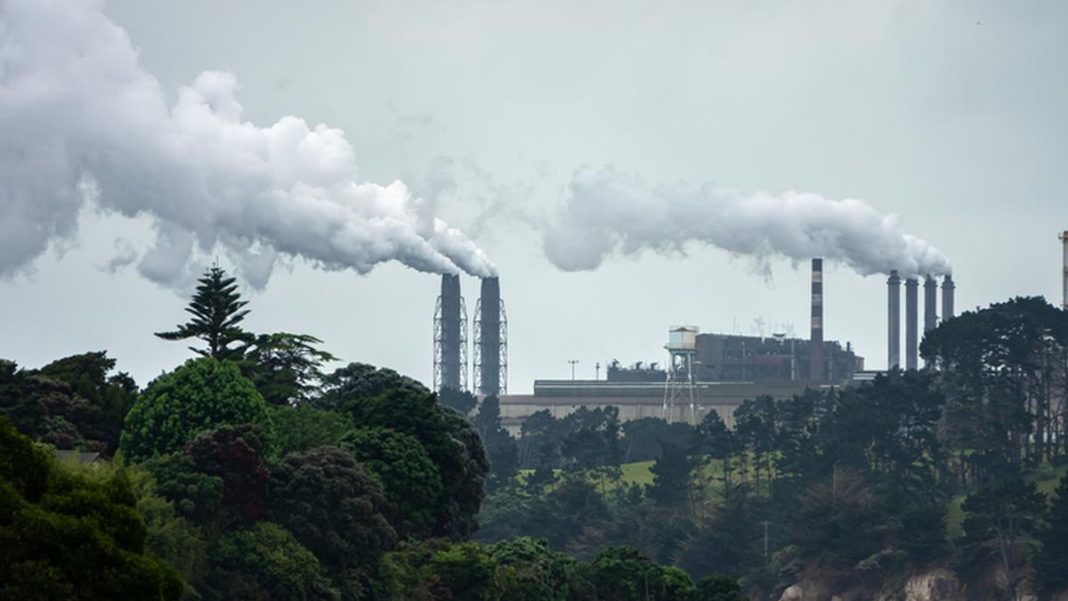
India notifies first emission intensity targets for carbon-intensive sectors

The government has notified the Greenhouse Gases Emission Intensity Target Rules, 2025, setting India’s first legally binding emission reduction targets for carbon-heavy industries.

The notification, issued by the Environment Ministry on October 8 after considering all suggestions and objections received on the draft rules published on April 16, requires 282 industrial units across the aluminium, cement, pulp and paper and chlor-alkali sectors to reduce their greenhouse gas emissions per unit of output (emission intensity) from the 2023-24 baseline levels.

Reduction of greenhouse gases emission

According to the notification, each facility must reduce the amount of greenhouse gases emitted per unit of output (measured in tonnes of carbon dioxide equivalent per tonne of product) compared to a 2023-24 baseline. The compliance period begins in 2025-26 and continues through 2026-27.

The move operationalises the Energy Conservation (Amendment) Act, 2022, which empowered the government to establish a domestic carbon market.

It also builds on India’s Perform, Achieve and Trade (PAT) energy efficiency scheme which had earlier set energy-saving targets for industries but not direct carbon limits.

According to the rules, facilities that emit less than their assigned target can earn tradable carbon credit certificates, while those exceeding the target must purchase equivalent credits from the Indian carbon market or pay a penalty.

Penalty for greenhouse gases emission

The penalty, termed “environmental compensation”, will be twice the average trading price of carbon credits during that compliance year.

The average price will be determined by the Bureau of Energy Efficiency (BEE). The Central Pollution Control Board (CPCB) will impose and oversee recovery of penalties, which must be paid within 90 days.

The notified schedule details company-wise and plant-wise targets.

For example, aluminium smelters operated by Vedanta, Hindalco, Nalco and Balco and large cement plants owned by UltraTech, Dalmia, JK Cement, Shree Cement and ACC, feature in the first compliance cycle.

Emission intensity reduction targets range from about 3.4% over two years in the cement sector to about 5.8% in aluminium, 7.5% in chlor-alkali and 7.1% in pulp and paper, based on the baseline year.

India’s carbon credit trading framework is seen as critical to meeting its nationally determined contribution (NDC) targets under the Paris Agreement, including reducing the emission intensity of GDP by 45% by 2030 from 2005 levels and achieving net zero by 2070.

The rules also prepare Indian exporters to adapt to international mechanisms such as the European Union’s Carbon Border Adjustment Mechanism (CBAM), which taxes carbon-intensive imports like cement, steel and aluminium.


Latest

Enhance ocean observations to forecast extreme weather: Parliamentary committee

The committee noted that ocean-atmosphere interactions play a crucial role in influencing extreme weather events.

China tests World’s first airborne megawatt wind turbine, powers grid from 2,000 metres

Environment News: China has reportedly achieved a world first by successfully testing a megawatt‑class airborne wind power system that can generate electricit

Climate change adds to woes of ‘tiger widows’ of Sunderbans

Environment News: GOSABA (SUNDARBANS): Even in knee-deep murky waters, Rina Sarkar is nimble on her feet as she navigates the slippery mudbanks of Chargheri vil

Mumbai records Feb’s fifth worst AQI at 130; ‘moderate’ as per CPCB’s SAMEER app

Environment News: MUMBAI: Mumbai on Friday recorded its fifth highest Air Quality Index (AQI) of February at 130, categorised as 'moderate' by the Central Pollu

Weather Bee: Is winter over?

The average maximum in the past week was like the average maximum usual for the week ending February 26 or later.

Topics

Need money to study, need education to earn: The vicious loop trapping students

Many students need to borrow money money before they can access quality education, yet need education first to earn money. This creates a cycle of education loa

Which place is known as the Wildlife Capital of the world?

Nairobi is called the wildlife capital of the world for a reason. It is the only city where a national park sits right next to the skyline, blending wild animal

AI era hiring: Rs 50,000 stipend, flexible roles, and real work from day 1

Newton School of Technology's latest placement cycle expanded from 10 roles to 11 as companies assessed candidates in real time. The shift highlighted growing d

Is NPS Swasthya enough for medical emergencies? Here’s the reality

With rising healthcare costs, many are turning to NPS Swasthya as a safety net. But is it enough when a real emergency strikes? The answer may not be as reassur

Cursor AI Agent wipes out startup database in 9 seconds, founder shares 30-hour chaos timeline

A startup founder said Cursor AI Agent erased the company database in nine seconds. The account traced 30 hours of disruption after the incident.

Explained: Why stock markets are rising even as crude oil remains above $100

Benchmark indices rallied in early trade on Monday despite crude oil remaining elevated above $100. The move reflected bargain buying and global AI-led optimism

Reopen the Strait of Hormuz and end the war, Iran offers new proposal to US

Iran has reportedly offered a two-stage plan to US via intermediary Pakistan, which offers prolonged period of ceasefire extension or a permanent end to the war

Sun Pharma’s biggest-ever bet: Why markets cheered the Organon mega deal

Sun Pharma just made the biggest bet in Indian pharma history. Markets loved it instantly. Here’s why investors backed the Organon deal despite the massive pr
spot_img

Related Articles

Popular Categories

spot_imgspot_img