
Food crops are becoming increasingly vulnerable to the energy supply crunch caused by war in the Middle East, with farmers across Asia and Europe facing a scarcity of fuel needed to operate essential machinery.
Australian grain growers are facing fuel delivery cutbacks ahead of the planting season. In Bangladesh, some rice farmers cannot secure diesel to power irrigation pumps, while fishermen in the Philippines may soon need to keep their boats ashore. A prolonged supply crunch will drive up food bills and play into global concerns about inflation arising from the conflict.
“As soon as we get cracking, every tractor and piece of machinery will be running, busy — and guzzling diesel,” said Richard Heady, a farmer in Buckinghamshire in the UK. “By mid-spring, we’ll exhaust what we’ve got and have to bite the bullet and pay whatever the going rate is — if we can get hold of it.”
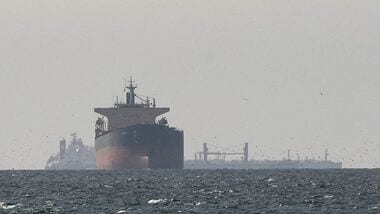
Two weeks into the US-Israeli war with Iran, flows of crude oil, liquefied natural gas and fertilizer have been choked by attacks on energy infrastructure across the Middle East and the effective closure of the Strait of Hormuz. Farmers are paying more for crop nutrients while – for some – access to a major export market has been cut off.
Now, the fuel crunch is adding another major hurdle. Modern agriculture is an energy-intensive industry, relying on large amounts of fuel to power machinery used for sowing, harvesting and tending to livestock in sprawling pastures. Without this supply, farming calendars honed over generations could easily be disrupted.
If farmers can’t get enough diesel, sowing could be delayed or reduced. Mature crops left in the ground would deteriorate, while the cost of processing and transporting produce after harvest would also increase.
“We don’t necessarily see this as a flash in the pan,” said Paul Joules, a farm-input analyst with Rabobank in Sydney. “There will be longer-term inflation issues on the input side, and obviously that can eventually be passed on to the consumer.”
The Asia-Pacific region is particularly dependent on commodities shipped from the Middle East. Even as governments move to cap prices or curtail use, consumers have rushed to buy fuel, leaving industries like farming vulnerable to shortfalls.
Irrigation equipment in much of Bangladesh — vital for the rice crop — runs on diesel-powered engines that draw up groundwater, and the government has begun restricting daily supply to 2 liters per person. Harprosad Roy, a farmer in the northern Rangpur region, said his two-acre plot needs at least 3 liters per day – but that he often returns from the pump with just one.
Nearly 40% of arable land in the region depends on these machines and – with the harvest starting next month – switching to an electric motor would involve a lengthy process to secure a government permit, said Roy. “There is no one to help farmers,” he said, which puts the Boro rice crop — Bangladesh’s largest — at risk.
In the Philippines, rice farmer Jespher Villegas typically rents a harvester machine during the collection season that starts this month and pays for it with about a 10th of his crop. “But the owners will definitely ask for more because of the high diesel prices,” he said, which will reduce the amount he can sell as he grapples with tuition fees for his three children.
Rice is a staple in the Philippines, which – despite two annual harvests of its own – ranks as the world’s biggest importer. In Thailand, meanwhile, some farmers fear that rising fuel costs mean it might not be financially viable to collect the crop, said Abhi Agarwal, co-founder of Living Roots, an agricultural company in Chiang Mai.
Fishermen are also struggling, losing about 500 pesos ($8.40) a day in the Philippines due to rising diesel costs, Jayson Cainglet, executive director of the SINAG farmers’ group, told a Senate hearing on Thursday. Subsidies have been mooted for about two weeks from now – but by then, boats might no longer be on the water, he said.
Elsewhere, the scarcity of fuel could reduce the amount that farmers are able to sow. Farmers in Australia are gearing up for winter grain planting, while their counterparts in much of Europe are preparing spring crops like barley and corn.
Australian farmers are “increasingly struggling to secure fuel,” the National Farmers’ Federation said this week, with continued price hikes meaning that some acreage could go bare. Livestock farmers are also susceptible, as they need to make regular deliveries of feed to cattle, or move milk to market.
In Western Australia, the country’s largest grain-growing and exporting region, some fuel suppliers are delivering less than farmers ordered ahead of wheat and barley sowing that starts in about a month, said Rhys Turton, a farmer and chair of industry group Grain Growers Ltd.
“A lot of them are rationing that fuel, so they’re just trying to spread it among the whole farming community,” Turton said, adding that he hopes supply chains will return to normal in two to four weeks. “Otherwise,” he said, “we will have some severe problems as we go into the planting season.”
In Germany, farmers must pay an extra €30 ($34) per 100 liters of fuel – and large tractors use about 250 liters during busy days in spring, said Henrik Wendorff, president of the Brandenburg State Farmers’ Association. Farm diesel prices in Romania have also jumped, by about 25%, since the war began, said Gabriel Razi, an analyst at consulting firm AgroBrane.
Heady, the UK-based farmer, stocked up on diesel last year but will need to buy more in about a month. A bigger threat than high prices, he said, is the risk that enough fuel won’t be available. “If we don’t have the fuel to provide nutrients and disease-protection to the crops, they could fail, leaving us well in the red,” he said.


