Oil markets are experiencing sharp volatility as traders try to interpret conflicting signals about the impact of the escalating United States-Israel war with Iran on global energy supplies, with the turbulence already rippling through the aviation industry.
Airlines across Asia and the Pacific are raising ticket prices and introducing or increasing fuel surcharges as jet fuel costs surge and concerns grow about possible supply shortages if the conflict intensifies.
The situation has also complicated airline operations with airspace restrictions across parts of the Middle East forcing carriers to reroute flights taking longer alternatives to avoid the region.
These diversions require aircraft to carry additional fuel and remain prepared for sudden changes or emergency rerouting, sharply increasing fuel consumption and operating costs.
Thousands of passengers are left stranded as flights across the region are cancelled or delayed.
According to aviation analytics firm Cirium Ltd, more than 43,000 flights scheduled in and out of the Middle East were cancelled between February 28 and March 10, highlighting the scale of disruption to global aviation.
The demand for flights that bypass Middle Eastern airspace is climbing sharply, particularly on routes between Asia and Europe, pushing ticket prices even higher.
Airlines raise fares and fuel surcharges
Several airlines across the region have already announced fare increases or fuel surcharges as they grapple with rising operating costs.
Southeast Asia’s largest low-cost carrier said it has raised fares and adjusted fuel surcharges, though it did not specify the amount of the increase.
The airline said it will “dynamically monitor market conditions and react proactively as and when needed,” according to a report by Bloomberg.
Air India and its low-cost subsidiary Air India Express said they will start levying a fuel surcharge of Rs 399 on each domestic flight ticket from March 12, as airlines face rising operating costs following a sharp increase in aviation turbine fuel (ATF) prices amid tensions in Middle East.
The airline group said the surcharge will be implemented in phases across domestic and international routes due to the steep rise in jet fuel prices linked to the geopolitical situation in the Gulf region.
In the first phase, a fuel surcharge of Rs 399 per domestic ticket will be imposed from March 12. The same surcharge will also apply to flights to SAARC destinations, the airline said in a statement on Tuesday.
Air New Zealand said on March 10 that it will raise fares by an unspecified amount and warned that additional pricing adjustments could follow if fuel prices remain elevated.
The airline also suspended its earnings guidance, saying the fuel cost assumptions it announced late last month were no longer valid.
The company added that it may also need to adjust its flight network and schedule depending on how the situation evolves.
Hong Kong Airlines has also increased fuel surcharges across several routes starting March 12. For flights to the Maldives, Nepal and Bangladesh, the surcharge will rise by 35%, or HK$100 ($12.80).
For long-haul destinations such as Australia and North America, the levy will increase by HK$150, bringing the total surcharge to HK$739.
Japan Airlines, which already applies a fuel surcharge on international flights, said it has no plans to bring forward changes to its levy before April 1.
Australia’s largest airline has announced that it will increase fares on international routes by around 5% on average. The airline said jet fuel prices have surged by as much as 150% in the past two weeks, sharply increasing operating costs.
Demand on some long-haul routes has also surged. Flights between Australia and Europe including Perth-London, Perth-Paris, and services via Singapore are more than 90% full this month, compared with a typical load factor of about 75% at this time of year, a Qantas spokesperson said, Bloomberg reported.
Indian airline SpiceJet has warned that carriers may have little choice but to raise fares if fuel prices remain high.
Founder Ajay Singh said airlines will have “no choice” but to impose a fuel surcharge. He also urged the government to reduce jet fuel taxes, warning that oil prices of $90 a barrel are “completely unsustainable.”
Singh added that the airline has considered grounding aircraft if fuel costs continue to rise and said airlines may have to rethink expansion plans in such an environment.
Oil prices have been highly volatile as markets react to developments in the Middle East conflict Prices seesawed on Wednesday after The Wall Street Journal reported that the International Energy Agency (IEA) had proposed the largest release of emergency oil reserves in its history to offset supply disruptions caused by the war with Iran.
Brent crude futures were up 11 cents, or 0.13%, at $87.91 a barrel at 0129 GMT, while US West Texas Intermediate (WTI) rose 7 cents, or 0.08%, to $83.52 a barrel. Both benchmarks briefly dropped after the report, reversing earlier gains.
According to the report, the proposed IEA drawdown would exceed the 182 million barrels released by member countries in two rounds in 2022, when Russia launched its full-scale invasion of Ukraine.
Oil prices had already pulled back on Tuesday after surging above $100 per barrel a day earlier. The decline came as concerns about prolonged supply disruptions eased slightly amid signs that the Middle East conflict could see diplomatic progress.
By 0018 GMT, Brent crude had fallen $6.51, or 6.6%, to $92.45 a barrel, while WTI dropped $6.12, or 6.5%, to $88.65.
The drop followed a dramatic rally on Monday, when oil prices jumped nearly 30%, pushing past the $100-per-barrel mark. During that session, Brent reached $119.50 and WTI touched $119.48, their highest levels since mid-2022.
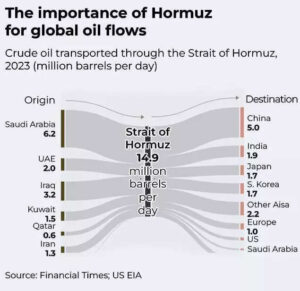
The spike was driven by concerns that the expanding US-Israeli war with Iran could disrupt energy flows across the Middle East, particularly around the Strait of Hormuz, a critical shipping route for global oil supplies.
The turmoil in oil markets and aviation has also rattled investors. Airline stocks fell sharply earlier on Monday as rising fuel costs and travel disruptions triggered fears of a major slowdown in global travel demand.
Analysts warn that prolonged high fuel prices could have severe consequences for the industry. In a note to clients, analysts at Deutsche Bank warned that the aviation sector could face serious challenges if fuel prices remain elevated.
“Absent near-term relief, airlines around the world could be forced to ground thousands of aircraft while some of the industry’s financially weakest carriers could halt operations,” the analysts said, Reuters reported.
Analysts also pointed to historical precedent showing how vulnerable airlines can be to fuel price shocks. A sharp spike in jet fuel prices in 2005, following hurricanes Katrina and Rita, severely damaged the aviation industry.