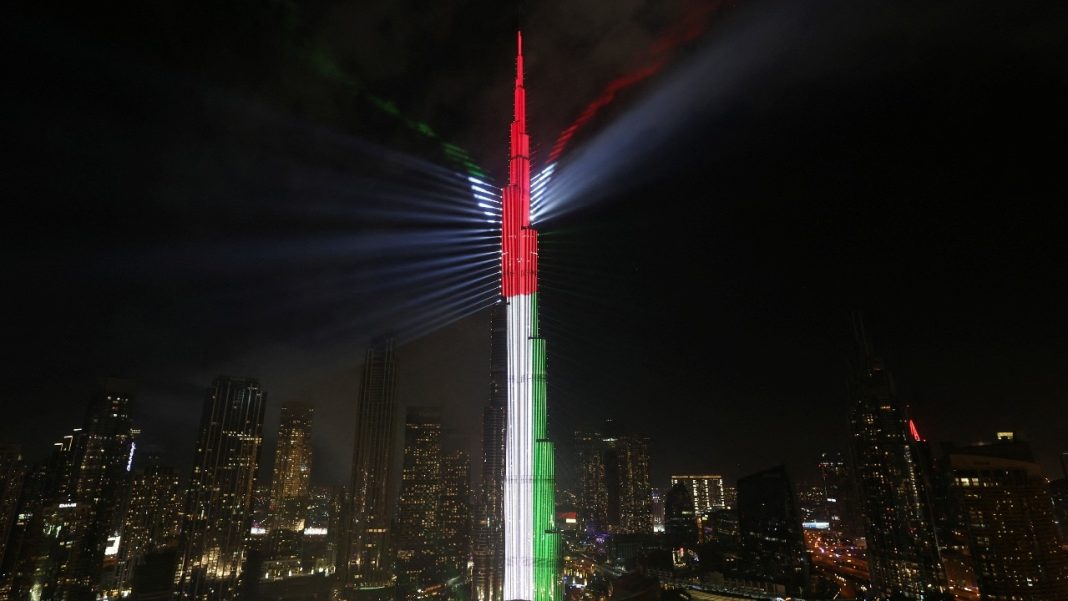
Dubai has long positioned itself as a safe haven for the ultra-wealthy. But rising tensions from what some analysts describe as a war-like conflict of Iran with the US and Israel have put that reputation under fresh scrutiny.
Investors and global families who once saw Dubai as a top choice for wealth, residence and business are watching closely to see whether regional instability could dent the city’s standing.
Regulatory reforms, favourable tax policies, long-term residency options like the Golden Visa, and a reputation for safety have helped attract high net worth individuals to Dubai from around the world.
According to the latest Henley & Partners Private Wealth Migration Report, at least 9,800 millionaires were projected to move to the UAE in 2025 alone.
Dubai’s rapid population growth reflects its success as a global hub. By August 2025, the city’s population officially crossed the 4 million mark, recording an annual growth rate of 5.92%. More than 223,000 new residents moved to Dubai in just one year. To put this in context, Dubai’s population in 2011 was only 1.93 million; in just 14 years, the city has more than doubled in size.
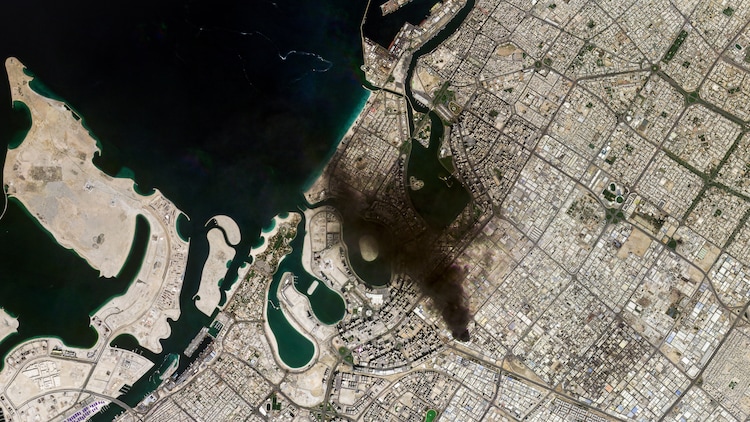
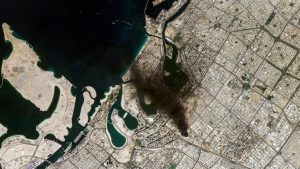
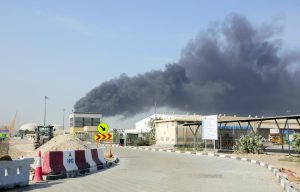
On Saturday, the sense of insulation that Dubai often enjoys from regional tensions appeared to narrow.
Iran’s retaliatory strikes across parts of the Gulf disrupted aviation routes and created temporary operational strain across sectors closely tied to Dubai’s global role, including airports, hospitality and port-linked trade flows.
While critical infrastructure remained operational, the episode unsettled the psychological comfort that underpins Dubai’s appeal.
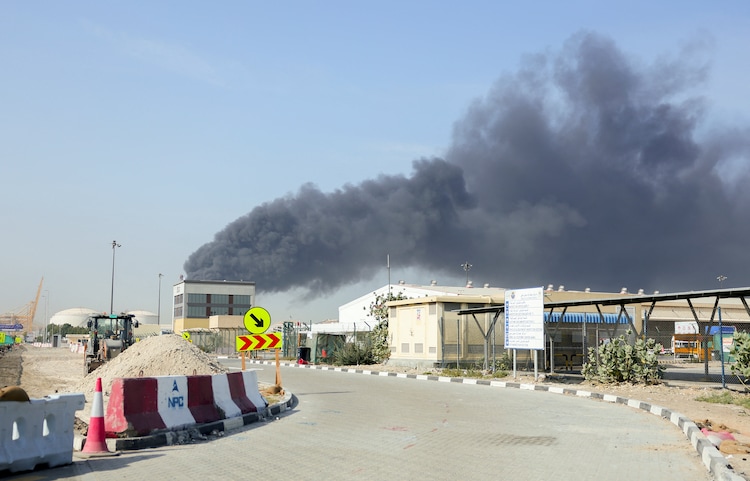
For a city that has spent decades projecting reliability in a volatile neighbourhood, even a short-lived security shock can prompt investors and residents to reassess risk.
MOOD ON THE GROUND: CAUTION, NOT PANIC
Ritu Kant Ojha, Dubai-based real estate strategist and CEO of Proact Luxury Real Estate, said there is caution but no panic among clients.
“There is a distinct mood of caution, but absolutely no panic,” he said.
He noted that Dubai has faced similar moments before. “During the 1990 Gulf War, the post-9/11 shockwaves, and the 2011 Arab Spring, the immediate global reaction was always to assume Dubai would empty out,” he said. “Instead, the exact opposite happened every single time. It became the region’s ultimate shock absorber.”
Ojha said Indian buyers, whether purchasing a $10 million villa in Emirates Hills or a $300k apartment in Jumeirah Village Circle, are aware of this history.
“Watching the UAE’s defence systems flawlessly intercept threats over the weekend didn’t scare them; it reminded them why they pay a premium to live here,” he said.
For now, he described the mood as “wait and watch”. Weekend property viewings have slowed, but “nobody is packing their bags,” he added.
TEMPORARY PAUSE, NOT STRUCTURAL DAMAGE
Ojha described the current slowdown as logistical rather than structural.
“We are definitely in a temporary pause. But we need to separate a logistical pause from a market crash,” he said.
Airspace restrictions and flight delays have slowed transactions. “You simply cannot close real estate transactions when the buyer is stuck at an airport or watching the news with anxiety,” he said.
Historically, he said, regional instability has often pushed wealth towards Dubai rather than away from it.
“When surrounding countries experience friction, wealth doesn’t flee to London or New York — it drives across the border or takes a short flight directly into Dubai’s banks and property market,” he said. “It acts as the region’s safe vault.”
PROPERTY PRICES AND MARKET STRUCTURE
Ojha rejected comparisons with the 2008 financial crisis.
“In 2008, Dubai’s real estate crashed because it was highly leveraged,” he said. “The 2026 Dubai market is completely different. It is an equity-driven market.”
He explained that many owners in prime areas such as Palm Jumeirah and Emirates Hills hold large equity stakes in their homes.
“They don’t have crushing mortgages forcing them to do a fire sale if the market goes quiet for a month,” he said.
He said a small dip of 1% or 2% cannot be ruled out if anxious sellers exit. However, strong cash buyers would likely absorb such supply quickly.
“The lack of leverage is the anchor that keeps prices stable today,” he said.
MACRO RISKS AND REGIONAL PERCEPTION
From a broader economic view, Manoranjan Sharma, Chief Economist at Infomerics Ratings, said Dubai’s open and externally integrated model is both its strength and its vulnerability during shocks.
“Growth depends on FDI, portfolio inflows, real estate investment, wealth migration, and tourism liquidity,” he said.
If regional tensions escalate, such as disruptions in the Strait of Hormuz, investors could reprice Gulf risk. This could delay foreign direct investment and shift capital towards ultra-safe assets like US Treasuries, gold or the Swiss franc.
“Even without direct UAE involvement, regional risk perception can spread,” Sharma said.
Dubai’s advantage has long been relative stability. If the entire Gulf is viewed as unstable, that premium may narrow.
Still, Sharma noted that the UAE has demonstrated strong recovery during past crises, including 2008 and COVID-19. The country maintains strong legal and business infrastructure and benefits from oil-linked fiscal buffers through Abu Dhabi.
He also pointed out that the dirham’s peg to the US dollar helps anchor inflation and limits currency speculation. A prolonged closure of the Strait of Hormuz and direct damage to oil infrastructure would be an extreme scenario, he said.
For now, Dubai’s safe-haven status remains intact. But as Sharma cautioned, that image is confidence-driven. Prolonged regional instability could test it.
At present, ground signals from real estate and broader economic buffers suggest caution, not panic. Whether this geopolitical flare-up remains short-term noise or turns into a deeper challenge for Dubai’s billionaire-friendly image will depend on how the situation unfolds in the coming weeks.