
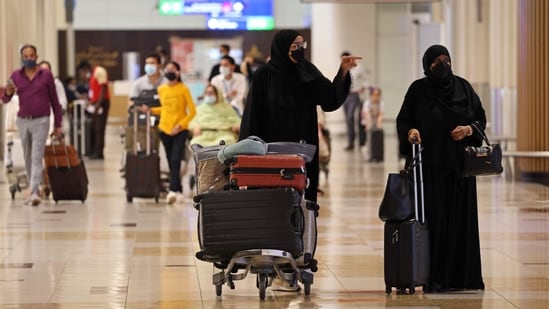
Major airports across the Middle East were forced to suspend operations after US and Israeli strikes on Iran and Tehran’s missile retaliation triggered widespread airspace closures and mass flight cancellations, according to Reuters.
Dubai International Airport, the world’s busiest hub for international travel, halted operations after sustaining damage during overnight Iranian retaliatory attacks, Reuters reported.
Dubai Airports suspended all flights at both Dubai International and Al Maktoum International until further notice and urged passengers not to travel to the airport.
Doha, another major global transit hub, was also affected as countries across the region shut their airspace.
Key gateways including Dubai, Doha and Abu Dhabi closed amid the escalating conflict, leaving flight maps over Iran, Iraq, Kuwait, Israel and Bahrain nearly empty.
How widespread are the cancellations?
Preliminary data from aviation analytics firm Cirium, cited by Reuters, showed airlines cancelled about half of their flights to Qatar and Israel on Saturday and roughly 28% of flights to Kuwait. In total, around 24% of flights scheduled to the Middle East were scrapped.
UK-based aviation analyst John Strickland told Reuters the scale of disruption could leave “hundreds of thousands of people” stranded across the world. He warned of a ripple effect across tightly connected east-west travel routes.
Dubai and Doha sit at the crossroads of long-haul traffic between Europe and Asia, meaning prolonged closures could disrupt airline schedules far beyond the region.
What should travelers expect?
Eric Schouten, head of aviation security advisory Dyami, said passengers and airlines should expect regional airspace to remain closed “for quite some time.”
Travelers in Europe were already feeling the impact. At Paris’ Charles de Gaulle airport, passengers bound for Thailand reported cancelled connections via Doha.
In Qatar, nearly empty departure gates contrasted with long queues of stranded passengers arranging hotel stays, a Reuters witness said.
The European Union Aviation Safety Agency has recommended airlines avoid the affected airspace during the ongoing military intervention.


