
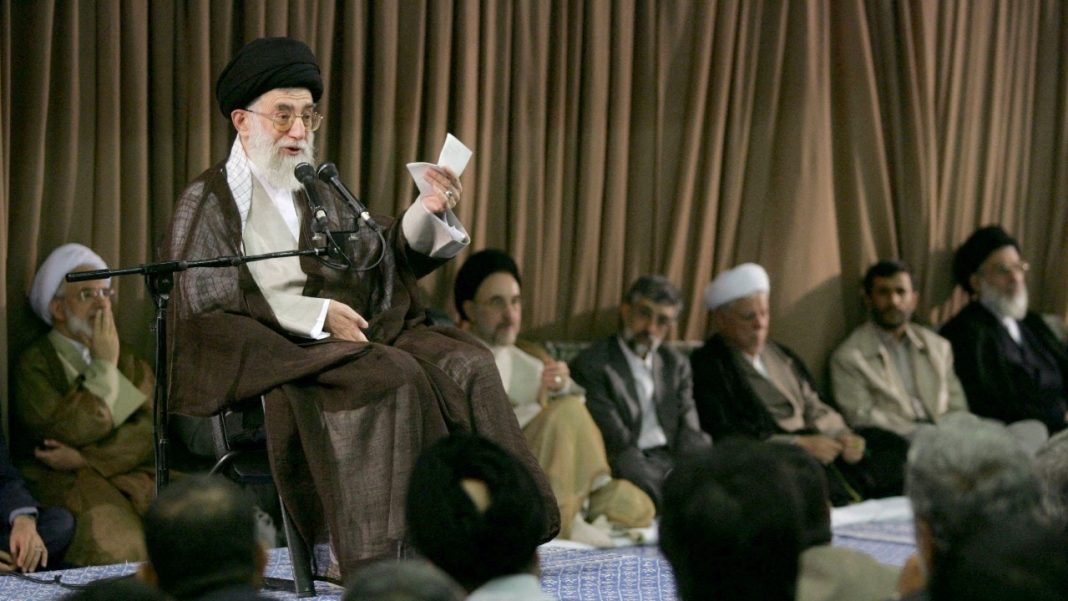
Iran’s Supreme Leader Ayatollah Ali Khamenei, the country’s most powerful political and religious authority for more than three decades, was killed in the early hours of Saturday, as confirmed by Iranian state media, triggering nationwide mourning and uncertainty over the future of the Islamic Republic.
State media reported that Khamenei died at his office, with authorities announcing 40 days of public mourning across Iran, a period traditionally observed for senior religious figures.
FROM CLERIC TO REVOLUTIONARY FIGURE
Born in 1939 in the holy city of Mashhad, Khamenei emerged as a key religious figure during Iran’s political upheavals leading up to the 1979 Islamic Revolution led by Ruhollah Khomeini.
A close ally of Khomeini, Khamenei was repeatedly arrested under Shah Mohammad Reza Pahlavi’s rule for his opposition activities. After the revolution reshaped Iran into an Islamic republic, he quickly rose through the new political order, combining clerical authority with political influence.
He served as Iran’s president from 1981 to 1989 during a turbulent period marked by the Iran–Iraq war and internal consolidation of the revolutionary state.
IRAN’S SUPREME AUTHORITY SINCE 1989
Following Khomeini’s death in 1989, Khamenei was appointed Iran’s second Supreme Leader, a position that stands above the elected government and holds ultimate authority over the state.
As Supreme Leader, he exercised final control over:
- Iran’s armed forces and the Islamic Revolutionary Guard Corps (IRGC)
- The judiciary and state broadcasting networks
- Strategic foreign and nuclear policy decisions
The office effectively made him the ultimate arbiter of Iran’s domestic and international direction, outweighing the powers of presidents and parliament.
ARCHITECT OF IRAN’S REGIONAL POSTURE
During Khamenei’s tenure, Iran adopted a confrontational posture toward Western powers, particularly the United States, while expanding its influence across West Asia through regional alliances and proxy networks.
Under his leadership, Tehran strengthened ties with non-state armed groups and positioned itself as a central actor in conflicts across Syria, Iraq, Lebanon and Yemen, shaping Middle East geopolitics for decades.
Khamenei consistently framed Iran’s foreign policy around resistance to Western pressure, economic sanctions and what he described as external interference in Iran’s sovereignty.
A DEFINING ERA ENDS
Khamenei remained Supreme Leader from 1989 until his reported death, making him one of the longest-serving political leaders in the contemporary world.
His rule spanned profound moments in Iran’s modern history – from post-revolution consolidation and nuclear standoffs with global powers to waves of domestic protests and intensifying regional rivalries.
With his death, Iran faces a critical transition as its clerical establishment moves to determine succession to the country’s most powerful office — a process likely to shape both Iran’s internal stability and the wider geopolitical balance in the Middle East.


