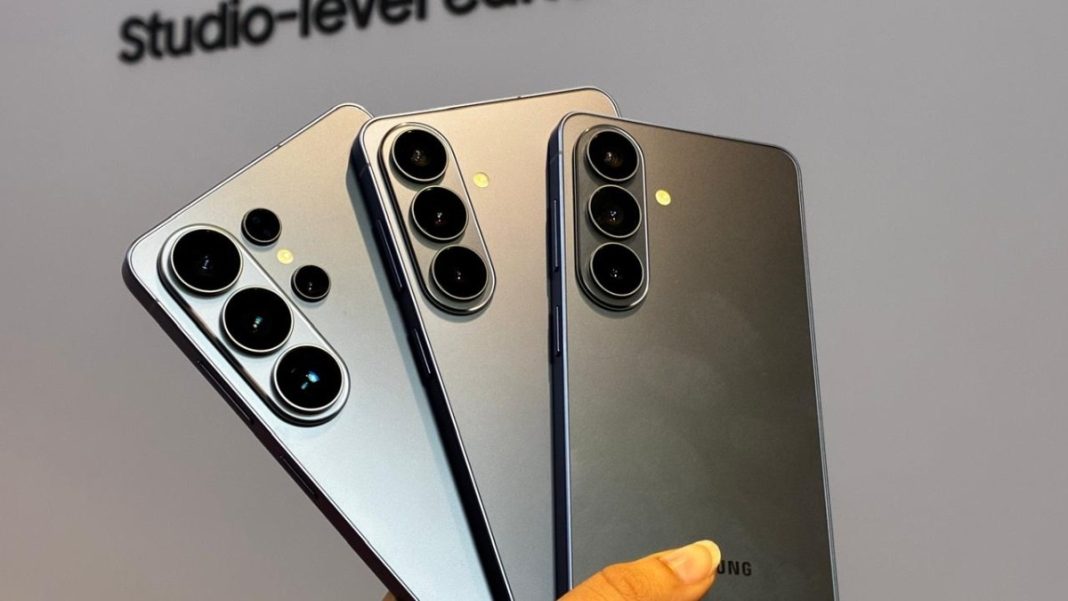
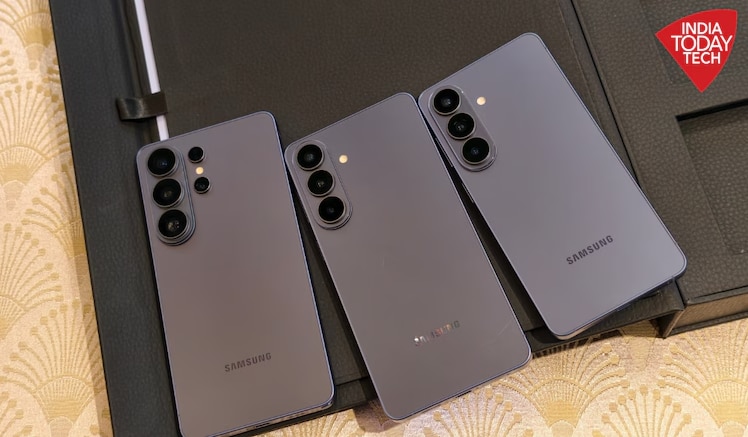
Samsung has launched the Galaxy S26 series in India, and while the phones bring visible upgrades, the pricing has quietly become the bigger talking point. Compared to last year’s Galaxy S25 lineup, the new models arrive with a noticeable hike across the board. The standard Galaxy S26 is now costlier by Rs 13,000, the S26 Plus by Rs 20,000, and the S26 Ultra by Rs 10,000. For many buyers, the jump could feel a little steep, especially at a time when smartphone upgrades are already demanding deeper pockets.
At first glance, it may be tempting to link the higher prices to headline features such as Samsung’s new Privacy Display technology. But that alone does not fully explain the scale of the increase. The more likely reason lies deeper in the supply chain, where rising component costs are changing smartphone pricing in a way the industry has not seen for years.
One major factor why phones of most top brands are likely getting costlier
One of the biggest pressure points is memory. RAM and storage prices have climbed sharply over the past year, largely because the same components used in smartphones are now in heavy demand from AI companies. These firms are buying memory in bulk to power large data centres and are locking in supply years in advance. As a result, smartphone makers are no longer the priority customers they once were, pushing costs up for everyone else.
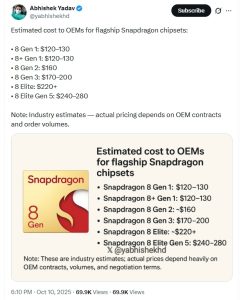
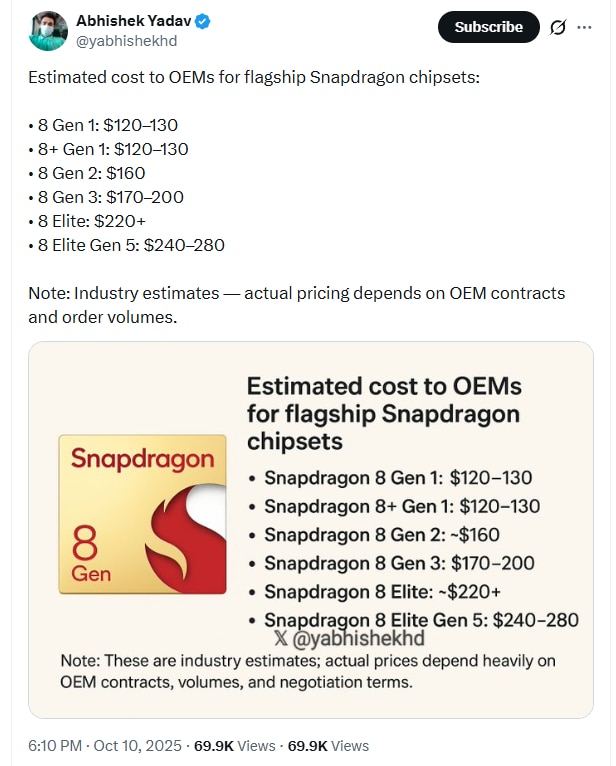
Chipsets are another major factor. Flagship processors have become significantly more expensive with every generation. According to estimates shared by tipster Abhishek Yadav in late 2025, the cost to manufacturers for top-tier Snapdragon chips has risen steadily, with the latest Snapdragon 8 Elite Gen 5 reportedly priced between $240 and $280. That is a substantial jump from earlier generations and goes a long way in explaining why premium phones are getting costlier. It also helps explain why Samsung has limited the newest Snapdragon chip to the Galaxy S26 Ultra this year, while switching back to its own Exynos processor for the standard and Plus models in India. Last year’s Galaxy S25 series had offered Snapdragon chips across the lineup, making the change more noticeable.
Phone price hike in 2026? A wider industry change, not just a Samsung problem
Samsung’s pricing strategy also needs to be seen in the wider context of the Indian smartphone market. Over the past year, several brands have pushed prices higher. Phones that once sat comfortably in the Rs 50,000–Rs 60,000 range are now edging closer to Rs 70,000 or more.
Take the case of iQOO. The iQOO 13 was launched in India at Rs 54,999, while its successor, the iQOO 15, debuted recently at Rs 72,999, which is an increase of Rs 18,000 in one generation. Realme has followed a similar path. The Realme GT 8 Pro arrived at Rs 72,999, a noticeably higher price than the Realme GT 7 Pro it replaced. OnePlus, while more gradual, has also pushed prices upward. The OnePlus 13 launched at Rs 69,999, and the newer OnePlus 15 now starts at Rs 72,999, continuing the brand’s pattern of incremental hikes with each generation.
Perhaps the most striking example comes from Nothing. The Nothing Phone 3 was recently introduced at Rs 79,999, a steep jump from the Rs 44,999 launch price of the Nothing Phone 2. The increase suggests how even brands that built their identity around aggressive pricing are now being forced to reassess what their phones cost. This trend suggests that Samsung might not be acting in isolation but is likely responding to industry-wide cost pressures.
Nothing CEO Carl Pei recently addressed this issue publicly, warning that 2026 could be a difficult year for smartphone pricing. He pointed out that for over a decade, phone makers relied on falling component costs to deliver better hardware without raising prices too sharply. That assumption, he said, no longer holds. Memory, once a relatively minor cost, is now among the most expensive components, forcing brands to either raise prices or cut back on specifications.
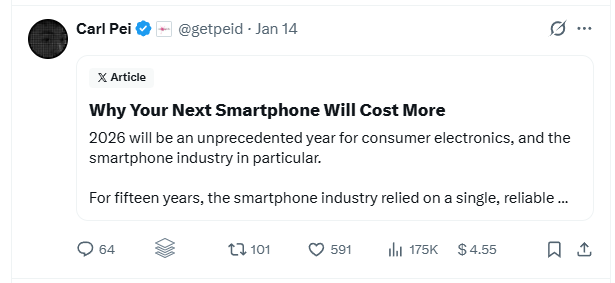
“Brands now face a simple choice – raise prices, by 30 per cent or more in some cases, or downgrade specs. Pricing will inevitably also increase across our smartphone portfolio, particularly as we will upgrade some products launching this Q1 to UFS 3.1,” Pei said on X.
Against this backdrop, Samsung is likely trying to soften the impact for early buyers. As part of its launch offers, the company is promising to offer double storage at the base price for a limited period. For instance, buyers can get the 512GB variant at the price usually reserved for the base storage option, which offers some immediate value despite the higher headline prices.
For the standard Galaxy S26, the base variant now starts with 12GB RAM and 256GB storage, priced at Rs 87,999. The higher 12GB + 512GB variant is listed at Rs 1,07,999. Under the launch offer, buyers can effectively get the 512GB model at a lower effective price, narrowing the perceived gap created by the Rs 13,000 hike over last year’s model. However, it is important to note that this is a time-bound offer. Once the promotional window ends, the real impact of the price hike will be felt more clearly, especially by buyers who do not prioritise higher storage.
A similar approach applies to the Galaxy S26 Plus and S26 Ultra. The Galaxy S26 Plus is priced at Rs 1,19,999 for the 12GB + 256GB variant and Rs 1,39,999 for the 512GB version. The Galaxy S26 Ultra starts at Rs 1,39,999 for 12GB + 256GB and goes up to Rs 1,59,999 for 512GB storage.
For context, the Galaxy S25 series had started at Rs 80,999 for the base model, with the S25 Plus priced at Rs 99,999 and the S25 Ultra at Rs 1,29,999.