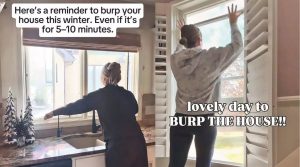
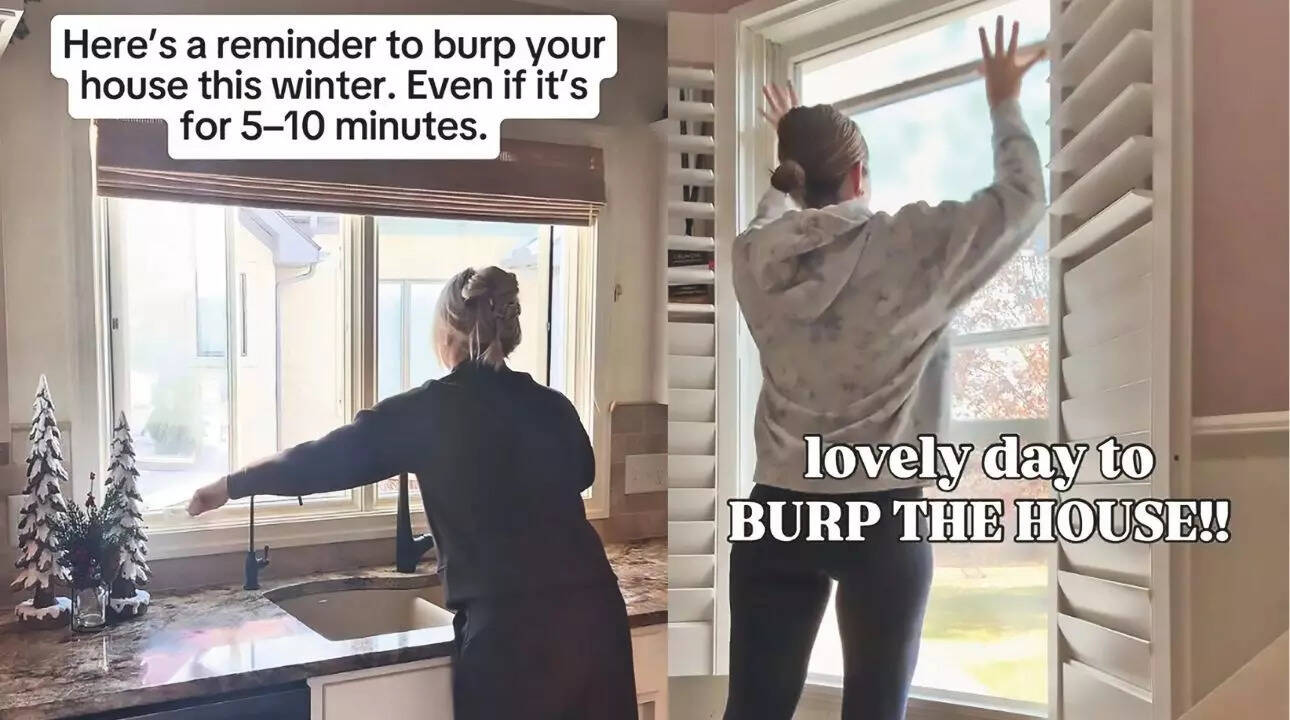
GERMAN PRACTICE NOW AN AMERICAN WELLNESS TREND
Instagram and TikTok are flooded with reels captioned, “Come with me as I burp my house,” “Gentle reminder to burp your house,” and “No matter what the weather, do a little house burping. ”
Originally, house burping is a German practice called Lüften. It is a long-standing habit of ventilating indoor spaces. In many German homes, residents are encouraged to open windows daily for a few minutes to let in fresh air, and some landlords even spell this out in rental agreements, expecting tenants to comply.
Now, however, it has been repackaged by Americans into a wellness trend with the catchy label, which has now gone viral.
The term is also trending on Google, with queries such as ‘what is house burping’ seeing a sharp 170% spike over the past month in the US.
DOES IT REALLY OFFER HEALTH BENEFITS
Doctors say house burping, in all seasons, really works. Household items like furniture and mattresses release chemicals into the air that are likely to cause headaches, itchy eyes, and breathing issues. Opening windows to get rid of stale air and make way for fresh air can help. It is also believed to help control household mould.
Dr Harish Chafle, bronchoscopist, says, “House burping can be a good practice to release indoor air pollutants like carbon dioxide, dust, and volatile organic compounds, by allowing fresh air to circulate. Regular ventilation helps improve oxygen levels and supports better respiratory health, especially in poorly ventilated homes.”
Homes often turn stuffy due to poor air circulation, leading to mould growth. This too makes burping the house important at least once a day. You can also burp your house after cooking or when guests have visited to flush out lingering odours and stale air
Dr Shahid Patel, pulmonologist
IS IT PRACTICAL IN INDIA’S AIR QUALITY CRISIS
In India, one cannot ignore the severe AQI; however, doctors say one can burp the house by following some key steps. Chafle says, “In highly polluted Indian cities, house burping can help reduce the impact of indoor pollutants such as smoke, dust, and chemical fumes, improving air quality inside homes and thus helping manage respiratory irritation, cough, sneezing, wheezing, sinusitis, and reducing the risk of infections caused by stale indoor air. ”
BURP YOUR HOUSE THE RIGHT WAY
-
Keep the windows open for around 15 minutes daily
-
Ensure cross ventilation
-
Don’t replace regular dusting of carpets and vents with house burping. Airing the house alone doesn’t help get rid of dust and allergens
-
Don’t burp the house when the air quality outdoor is poor, as that can worsen existing respiratory issues such as asthma, bronchitis, or chronic obstructive pulmonary disease (COPD)
-
If respiratory problems worsen, seek immediate medical help
Burp the house when the air quality is considerably better. Doing it during pollution hours can bring harmful pollutants inside the house, inducing respiratory issues
Dr Arvind Kate, pulmonologist