Perimenopause was once expected in the mid-40s. Today, many women in their late 30s report hot flashes, mood swings, missed periods, and sudden fatigue. The body seems to be changing earlier than anticipated.
Is this truly happening earlier, or are women noticing it sooner? The answer sits somewhere in between biology and modern life.
Perimenopause is not a disease. It is a transition. But when it arrives in the late 30s, it can feel confusing, even frightening. Understanding why it happens, who is more vulnerable, and what can be done makes this phase less overwhelming.
What exactly is perimenopause?
Perimenopause means “around menopause. ” It is the phase when the ovaries gradually produce less estrogen. Ovulation becomes irregular. Period cycles shift. Some months are heavy. Some are delayed. Some disappear for weeks.
This transition can last 4 to 8 years before menopause, which is confirmed after 12 consecutive months without a period.
According to the
National Institute on Aging, perimenopause commonly begins in the 40s, but it can start in the late 30s for some women.
Common symptoms include:
-
Irregular periods
-
Hot flashes
-
Night sweats
-
Mood shifts
-
Sleep disturbance
-
Vaginal dryness
-
Brain fog
The symptoms vary widely. Some women breeze through it. Others feel like strangers in their own bodies.
Why are symptoms showing up in the late 30s?
, explains, “Many women are experiencing early perimenopause symptoms in their late 30s. this is because of a number of factors which include lifestyle changes owing to hectic jobs, work stress, poor sleep and diet. All these things result in hormonal changes which in turn affect periods causing hot flashes, mood swings, fatigue and sleep disturbances during perimenopause. ”
Stress hormones like cortisol directly influence reproductive hormones. Chronic stress can disrupt ovulation. Poor sleep alters melatonin, which also interacts with estrogen levels. Extreme dieting or rapid weight loss can suppress ovarian function.
Research published in
Cureus has documented rising lifestyle-related hormonal disorders in urban Indian women, particularly linked to metabolic health and stress patterns.
In short, the ovaries do not function in isolation. They respond to the environment the body lives in.

Are women truly entering menopause earlier?
Globally, the average age of menopause remains around 45-51 years. Data from the World Health Organization shows that the natural age range has not dramatically shifted worldwide.
However, what has changed is symptom awareness.
Dr Archana Dhawan Bajaj adds, “In addition, women today are more focused on their body image, therefore even small changes get noticed and reported earlier.”
In previous generations, mild irregular cycles or mood changes were ignored. Today, women track cycles through apps, monitor hormones, and openly discuss health. What once went unnoticed is now recorded and questioned.
So the rise in early symptoms may reflect both genuine lifestyle stress and improved awareness.
Who is more likely to experience early perimenopause?
Some women face higher risk:
-
Smokers
-
Women with autoimmune disorders
-
Those with thyroid disease
-
Women with a family history of early menopause
-
Those who underwent chemotherapy or ovarian surgery
-
Women with severe chronic stress
-
Women with polycystic ovarian syndrome (PCOS) and metabolic disorders
-
Low body weight or very intense athletic training can also disturb ovarian function.
A large US government study under the
National Institutes of Health has linked smoking and metabolic factors with earlier ovarian aging. Genetics still plays a powerful role. If a mother entered menopause at 42, the daughter may experience a similar timeline.
The emotional side no one talks about
Physical symptoms are visible. Emotional changes are quieter.
Mood swings can feel sudden and sharp. Sleep loss adds irritability. Brain fog affects work confidence. A woman in her late 30s may still be building a career or raising young children. Hormonal instability at this stage feels mistimed.
This transition is normal, but it does not always feel gentle.
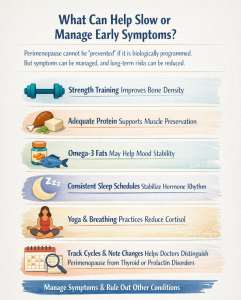
What can help slow or manage early symptoms?
Perimenopause cannot be “prevented” if it is biologically programmed. But symptoms can be managed, and long-term risks can be reduced.
Dr Archana Dhawan Bajaj advises, “It is important to understand that during perimenopause, all these changes are normal even if they are likely to disrupt your daily routine.”
“However, you can manage symptoms effectively with little care.
Firstly, you need to follow a proper diet, regular exercise and manage stress with techniques like yoga and meditation. Also, remember to go for regular checkups, track your cycles and if required going for early intervention can greatly help you in this transition phase and reduce long term risks. ”
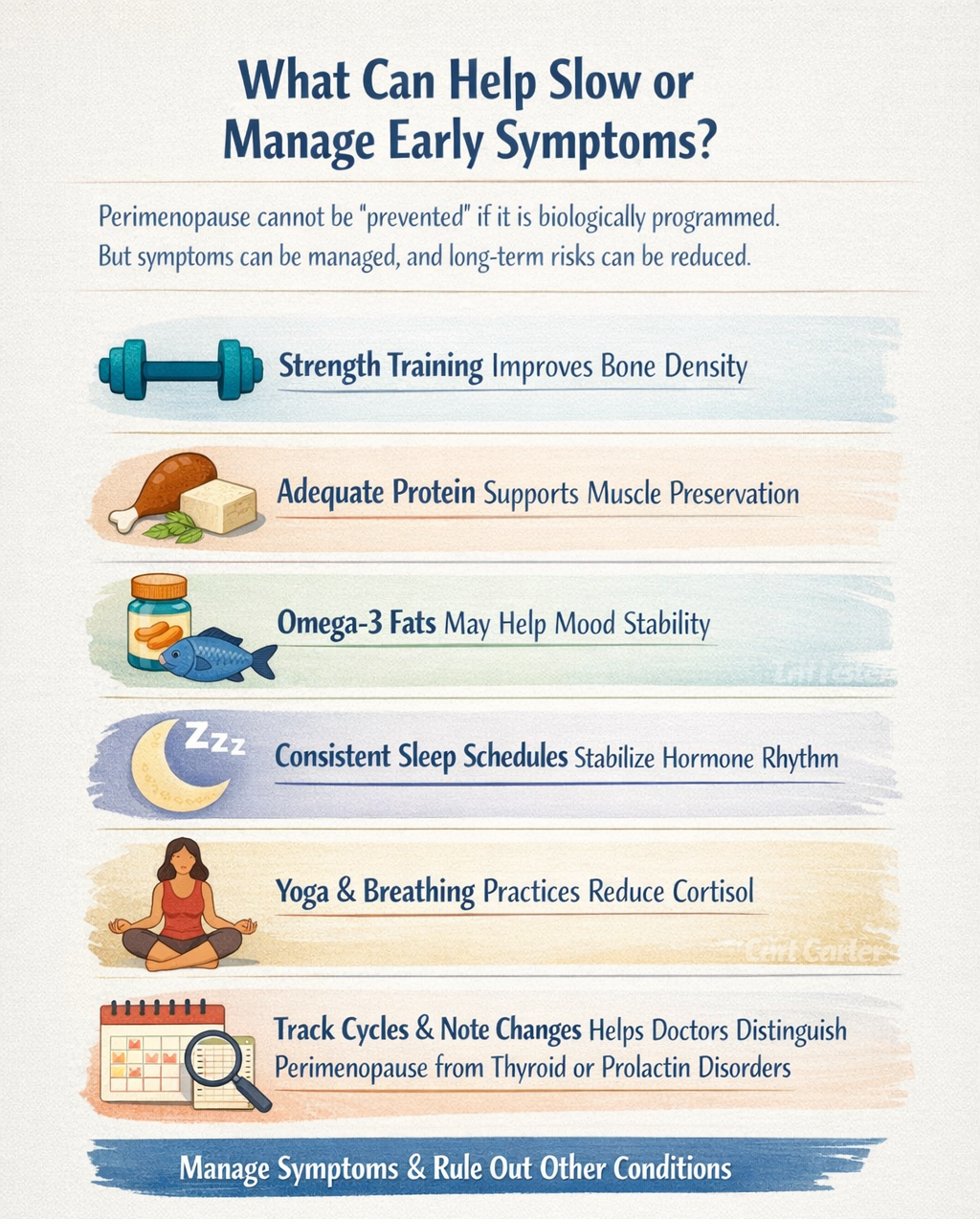
Evidence supports these measures:
-
Strength training improves bone density
-
Adequate protein supports muscle preservation
-
Omega-3 fats may help mood stability
-
Consistent sleep schedules stabilize hormone rhythm
-
Yoga and breathing practices reduce cortisol
Tracking cycles and noting changes helps doctors distinguish perimenopause from thyroid or prolactin disorders, which can mimic similar symptoms.
When should medical advice be taken?
Medical evaluation becomes important if:
-
Periods stop suddenly before age 40
-
Bleeding becomes extremely heavy
-
Severe depression appears
-
Hot flashes disturb daily function
There is concern about fertility
Early medical review can identify premature ovarian insufficiency, a separate condition requiring prompt care.
Perimenopause is not a sign of weakness. It is a biological shift. But unexplained changes should not be ignored.
Women today juggle careers, caregiving, social pressures, and constant digital stimulation. The female body absorbs all of it.
Hormones reflect lifestyle. They mirror sleep patterns, stress levels, diet quality, and emotional load.
When symptoms appear in the late 30s, the body may be asking for a little bit adjustment rather than signalling decline.
Perimenopause is not the end of youth. It is the beginning of a new hormonal chapter. With knowledge, care, and medical guidance, this transition can be steady instead of chaotic.
This article includes expert inputs shared with TOI Health by:
Dr Archana Dhawan Bajaj, Gynaecologist and IVF Expert at Nurture
Inputs were used to explain the signs, symptoms, and health considerations of early perimenopause in women in their late 30s, and to highlight the importance of consulting a doctor for personalised evaluation and guidance.