28.1 C
Delhi
Sunday, February 22, 2026

Earth behaved strangely during two massive solar events. Aditya-L1 reveals why

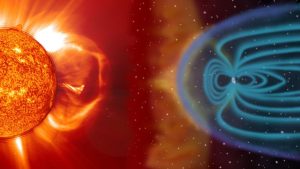
Earth is protected by an invisible magnetic shield called the magnetosphere, which guards us against the constant stream of particles from the Sun. However, even this shield can be pushed to its limits during powerful solar storms.

Recent findings from the Indian Space Research Organisation (Isro)’s Aditya-L1 mission have helped scientists solve a puzzle about why certain parts of our planet reacted strangely during two massive solar events in 2024.

WHAT HAPPENED DURING THE 2024 SOLAR EVENTS?

On May 10 and October 10, 2024, the Sun unleashed intense energy that triggered spectacular auroras across the globe.

Think of an aurora as a giant cosmic neon sign. The Sun constantly releases a stream of charged particles called the solar wind.

Occasionally, it lets out a massive burp of plasma known as a Coronal Mass Ejection.
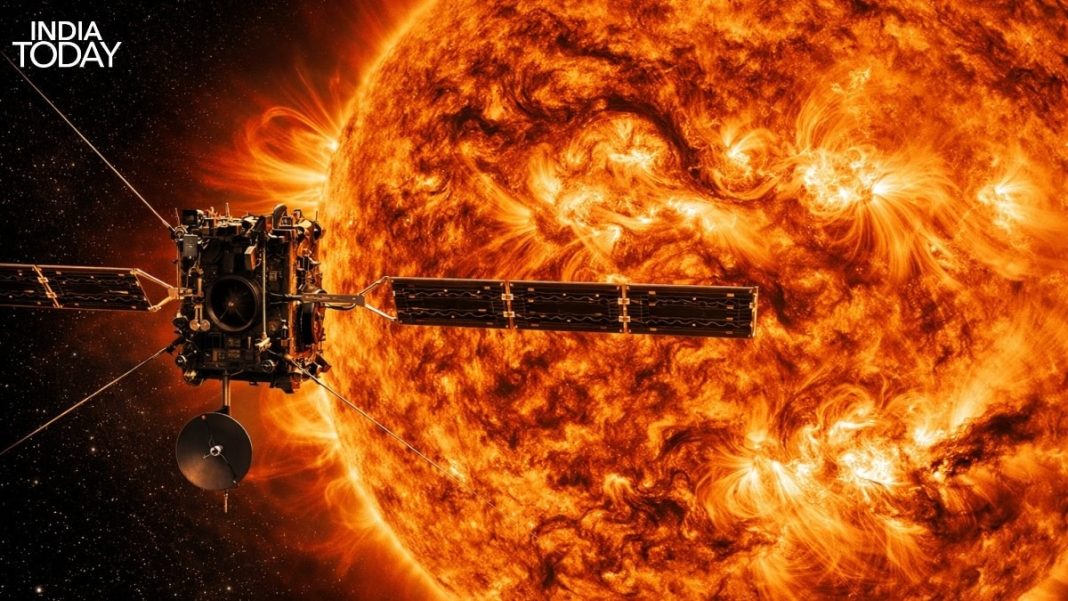
Solar wind pressure measurements from Aditya-L1 confirmed the cause of ground-level disturbances during two massive solar events in 2024. (File Photo)

Solar wind pressure measurements from Aditya-L1 confirmed the cause of ground-level disturbances during two massive solar events in 2024. (File Photo)

When these particles hit Earth’s magnetic field, they are funnelled towards the poles. As they crash into gases like oxygen and nitrogen in our atmosphere, they release energy as light.

While these light shows were beautiful, they were accompanied by unusual magnetic disturbances.

To understand this, think of Earth’s magnetic shield like a balloon being squeezed. When the solar wind blows harder, or has high pressure, it squashes the balloon, making the magnetic strength increase.

When the wind dies down, or has low pressure, the balloon expands, and the magnetic strength decreases.
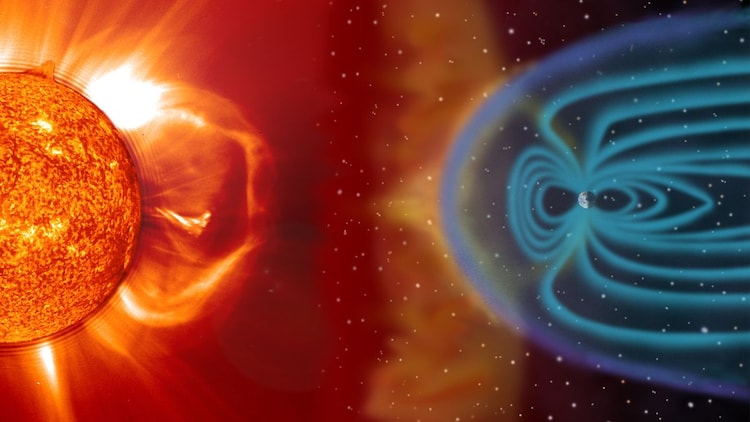
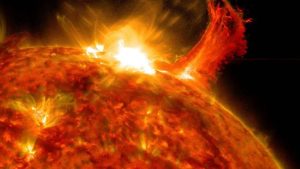
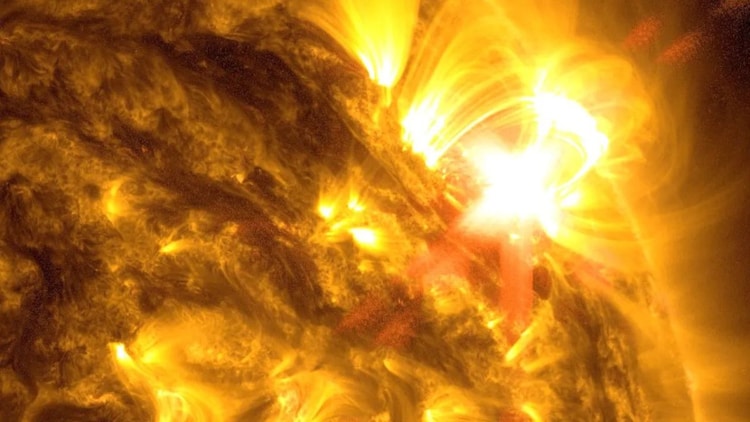
Coronal mass ejections trigger auroras. (File Photo)

Coronal mass ejections trigger auroras. (File Photo)

However, during these 2024 storms, the dawn sector, or the area of Earth’s magnetosphere just waking up to sunrise, behaved like a mirror.

When the rest of the world saw the magnetic field get stronger, the dawn side saw it get weaker.

When the rest of the world saw it weaken, the dawn side saw it get stronger.

In other words, the dawn sector witnessed the exact opposite of what was happening everywhere else.

HOW DID ADITYA-L1 SOLVE THE MYSTERY?

Researchers from the Indian Institute of Geomagnetism in Colaba and Isro used data from the ASPEX (Aditya Solar wind Particle EXperiment) instrument on board Aditya-L1 to track these changes.

By comparing space measurements with ground-based data, they discovered that the culprit was a high-altitude electric current.

Normally, intense electrical currents in space stay far away, near the North and South Poles.

But these 2024 storms were so violent that they pushed these polar currents towards the equator.
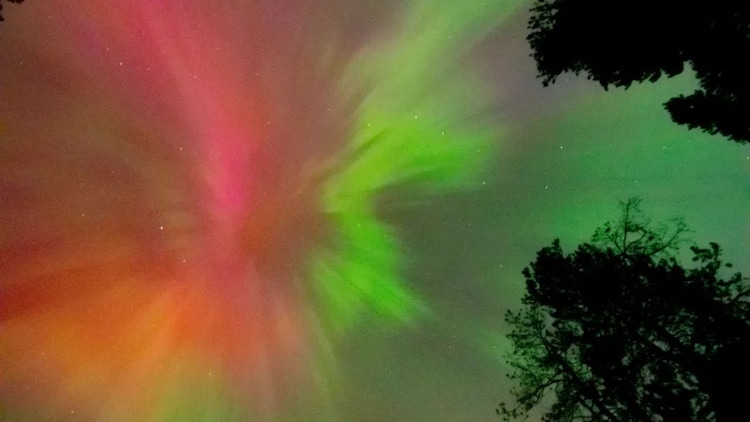
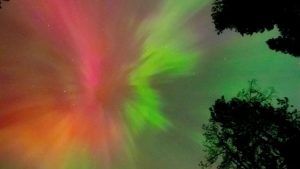
Auroras, commonly known as the northern lights in the Northern Hemisphere, are shimmering displays of colourful light in the night sky caused by charged particles from the Sun colliding with gases in Earth's atmosphere. (File Photo)

Auroras, commonly known as the northern lights in the Northern Hemisphere, are shimmering displays of colourful light in the night sky caused by charged particles from the Sun colliding with gases in Earth’s atmosphere. (File Photo)

During the 2024 storms, these currents crowded into the dawn side of Earth like uninvited guests. Once they arrived, they created their own magnetic force that fought against Earth’s normal field and flipped the readings backwards.

This means that while the magnetic field should have increased, it actually decreased, and when it should have decreased, it actually increased.

The Indian spacecraft provided a front-row seat to the solar wind behaviour. When the October storm hit, Aditya-L1 recorded a sudden drop in solar wind pressure.
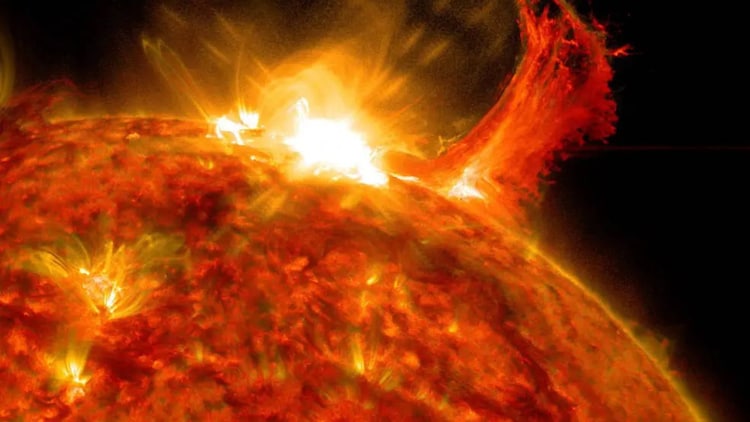
The dawn sector of Earth experienced unique magnetic shifts due to encroaching polar currents occurring as a result of powerful solar storms. (File Photo)

The dawn sector of Earth experienced unique magnetic shifts due to encroaching polar currents occurring as a result of powerful solar storms. (File Photo)

While most of the world saw a corresponding dip in magnetic strength, the dawn side saw an increase.

This confirmed that the Earth’s magnetic environment becomes highly unpredictable during peak solar cycles.

WHY SHOULD WE CARE ABOUT MAGNETIC DISTURBANCES?

These fluctuations are not just academic curiosities. Because we rely so much on technology, these magnetic flips are dangerous. They can scramble GPS for pilots, mess up satellite signals, and even cause power outages by overloading electricity grids.

By understanding how these auroral currents move during a crisis, scientists can better protect our modern technology. The research, published in the journal Geophysical Research Letters, marks a significant milestone for India’s first solar mission in its quest to understand the temperamental nature of our star.
Latest

Total lunar eclipse to grace skies in March. How is it different from a partial one?

Ever wondered why some eclipses turn the Moon red while others just make it look bitten? Here is the science behind total and partial lunar eclipses.

NASA moon rocket hits another snag – will it impact March launch? Here’s what the space agency said

Officials said the flow of helium to the rocket’s upper stage was disrupted overnight, disrupting the launch as solid helium is a critical requirement for lif

Moon launch postponed: Nasa to remove Artemis-2 rocket from pad due to new leak

Nasa is preparing to roll the Artemis-II rocket back to the Vehicle Assembly Building after a helium flow issue. This technical glitch will likely cancel the pl

Floating effortlessly: Shubhanshu Shukla shares what weekend looks like in space

Astronaut Shubhanshu Shukla describes the surreal experience of floating effortlessly during a busy day on the International Space Station. He shares how microg

Meet Roman Space Telescope: Nasa’s eye in sky that will look for 1 lakh alien worlds

Nasa has completed the assembly of the Nancy Grace Roman Space Telescope. This mission will map the universe 100 times faster than Hubble.

Topics

US moving troops across Middle East bases amid escalating tensions with Iran

Similar troop movements have been observed at multiple US installations across the Middle East, including Bahrain, home to the Navy’s 5th Fleet, as well as in

‘Decision made to attack Iran’: Former CIA officer John Kiriakou claims US strike imminent

Former CIA officer John Kiriakou has claimed that a final decision has been reached by the United States to initiate a military strike against Iran early next w

Ram Gopal Varma says Toxic-Dhurandhar 2 clash isn’t north vs south, but ‘treating audience like dumb vs respecting them’

Ram Gopal Varma took to social media to share a note addressing the big-screen clash between Yash’s Toxic and Ranveer Singh’s Dhurandhar: The Revenge.

Is Trump eying to assassinate Khamenei? US troops’ movement intensifies in Portugal and Gulf bases

US-Iran tensions escalate with Trump’s 10-15 day uranium enrichment ultimatum nearing deadline, as reports claim US eyes assassinating Supreme Leader Ayatolla

Cover Story newsletter: Putin’s forever war

Deputy editor Edward Carr reveals how The Economist crafts weekly covers on Putin, Ukraine, and the modern Robin Hood state

Erika Kirk ‘affair’: Debunking bizarre cheating rumors and boyfriend buzz; ‘Candace Owens needs to…’

Erika Kirk has faced intense public scrutiny ever since she became the Turning Point USA CEO and now bizarre claims have been made about her having an affair.

Indian Matchmaking’s Sima Taparia shares dating advice for Indian couples: ‘In 2-3 months, give a yes or no’

Sima Taparia advises Indian couples to decide on a match within 2-3 months, saying it's enough time to determine compatibility.

IND vs SA Super 8 weather & pitch report from Ahmedabad: Advantage South Africa

IND vs SA pitch and weather report: Ahmedabad set for a high-scoring clash with heavy dew likely to influence the result.
spot_img

Related Articles

Popular Categories

spot_imgspot_img