Hong Kong’s Deadly High-Rise Fire: Bamboo Scaffolding vs Chinese Nets
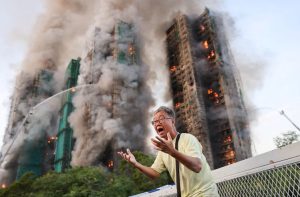
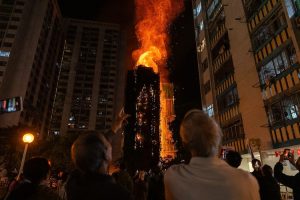
A devastating fire in a Hong Kong residential tower has killed at least 75 people, with hundreds more missing, marking the deadliest blaze in the region’s history. The tragedy has ignited a fierce debate over whether the cause was the city’s traditional bamboo scaffolding or flammable Chinese construction nets.
Key Takeaways:
- At least 75 dead, ~300 missing in Hong Kong’s deadliest fire.
- Police arrested three for manslaughter over “gross negligence” and substandard materials.
- Debate centers on bamboo scaffolding versus cheap Chinese construction nets as primary fuel.
The Incident: What Happened?
The fire erupted on Wednesday afternoon at a public housing estate undergoing renovation. The complex was wrapped in bamboo scaffolding and green construction mesh, which quickly became engulfed. Firefighters battled for hours to rescue hundreds trapped inside the 31-story towers.
Authorities have arrested three individuals from the construction company, citing the use of flammable nets and polystyrene boards blocking windows. Police found the company’s name on these flammable materials, which the fire services director described as “unusual.”
Is Bamboo Scaffolding the Main Risk?
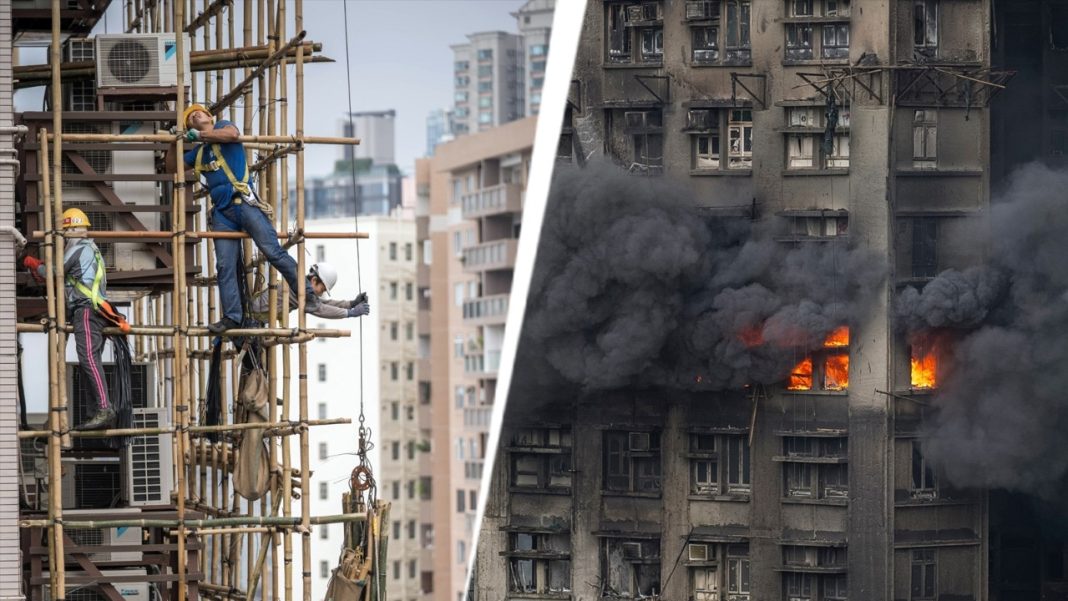
Bamboo scaffolding, a hallmark of Hong Kong’s skyline for its flexibility and low cost, is now under scrutiny for its flammability. Similar to practices in India, bamboo remains widely used except for commercial structures in metro cities.
“Bamboo is definitely a flammable material. In a very dry season, once it’s ignited, the fire spread will be superfast,” said Xinyan Huang, Associate Professor at Hong Kong Polytechnic University.
Vertically oriented bamboo poles can act as fire ladders, allowing flames to race upward. Industrial accidents involving bamboo scaffolding have caused 22 deaths in Hong Kong between 2019 and 2024.
Were Chinese Construction Nets the Hidden Fuel?
Many experts and locals argue bamboo alone wasn’t to blame. The fire’s intensity appeared linked to cheap, flammable nets, plastic sheeting, and foam insulation.
Hong Kong’s Secretary for Security confirmed the fire department discovered “unusual” situations with protective netting and plastic sheets on the building’s exterior.
Photographer Galileo Cheng noted on X that bamboo scaffolding withstood 14 hours of fire, while videos showed non-fire-retardant netting burning fiercely within seconds.
“The fire is likely due to a combination of factors, including the plastic scaffolding encapsulation, plastic sheeting, polystyrene, the bamboo structural scaffolding, and any other flammable components,” said Australian fire safety engineer Alex Webb.
Former Hong Kong firefighter Raymond Cheung emphasized that the tragedy shouldn’t be attributed to a single material before a full investigation is completed.
Government Response and Ongoing Investigation
The Hong Kong government has launched a criminal investigation and ordered immediate inspections of ongoing projects using bamboo scaffolding and mesh. Earlier this year, it mandated that at least 50% of new public-works contracts switch to metal scaffolding, though it stopped short of banning bamboo entirely.
The tragedy highlights a dangerous combination of flammable materials, cheap imports, and enforcement lapses in a region otherwise known for strict standards.