Key Takeaways
- Blue Origin successfully launched its second New Glenn rocket, deploying twin NASA Mars orbiters.
- The mission marked the first successful booster recovery for Blue Origin, a crucial cost-saving milestone.
- The Escapade orbiters will study Mars’ atmosphere and magnetic fields, arriving in 2027.
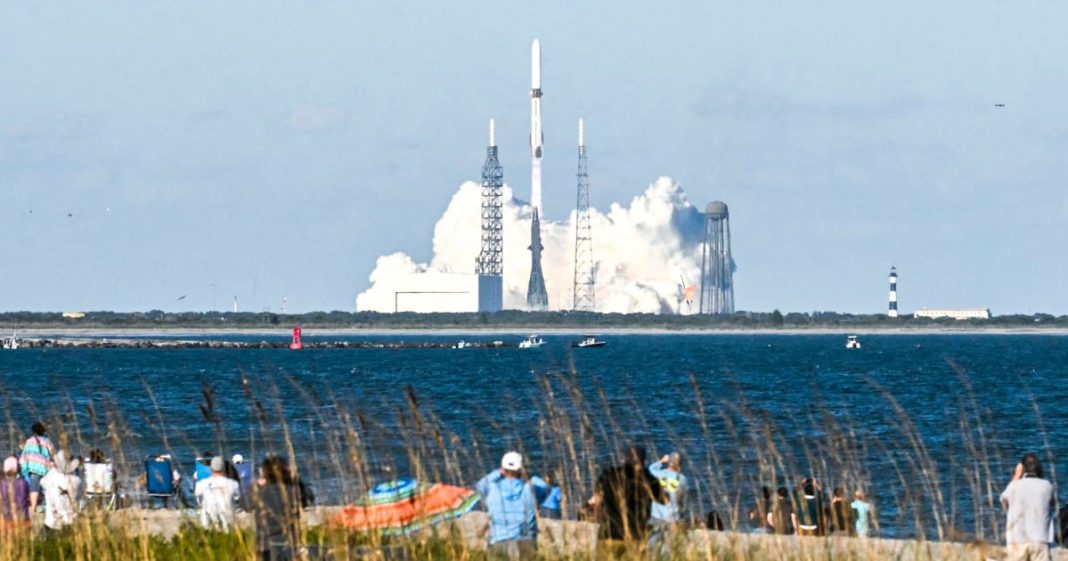
Blue Origin’s massive New Glenn rocket has successfully launched from Cape Canaveral, carrying NASA’s twin Escapade spacecraft on a mission to Mars. This second-ever flight of the Jeff Bezos-founded company’s flagship rocket also achieved a critical first: the successful recovery of the booster after separation.
The 321-foot (98-meter) rocket blasted off after a four-day delay caused by poor weather and intense solar storms. Cheers erupted at Launch Control as the booster landed upright on an offshore barge 375 miles away, with an ecstatic Bezos watching. “Next stop, moon!” chanted company employees.
Mars Mission Details
The identical Escapade orbiters will now position themselves 1 million miles from Earth for approximately one year. Once Earth and Mars align favorably next fall, they will use a gravity assist to begin their journey to the red planet, with arrival expected in 2027.
Once in Martian orbit, the spacecraft will conduct stereo observations of the planet’s upper atmosphere and scattered magnetic fields. This research aims to uncover how Mars transitioned from a warm, wet world to the dry, dusty planet we see today. The data will also help scientists understand how to protect future astronauts from Mars’ harsh radiation environment.
“We really, really want to understand the interaction of the solar wind with Mars better than we do now,” said Escapade’s lead scientist Rob Lillis of UC Berkeley. “Escapade is going to bring an unprecedented stereo viewpoint because we’re going to have two spacecraft at the same time.”
Budget and Competition
The mission represents a cost-effective approach for NASA, coming in under $80 million and managed by UC Berkeley. NASA secured savings by booking an early New Glenn flight, though the orbiters missed their ideal launch window last fall due to concerns about rocket readiness.
New Glenn, named after astronaut John Glenn, is five times larger than Blue Origin’s New Shepard suborbital rocket. The company plans to launch a prototype Blue Moon lunar lander on New Glenn in the coming months.
In the ongoing competition, Blue Origin holds the NASA contract for the third crewed moon landing, while SpaceX secured the first two landings using its larger Starship vehicles. However, NASA recently reopened the contract for the first crewed landing due to concerns about Starship’s development pace.
NASA continues to push toward its goal of returning astronauts to the lunar surface by the end of the decade, partly driven by competition with China’s space ambitions.