
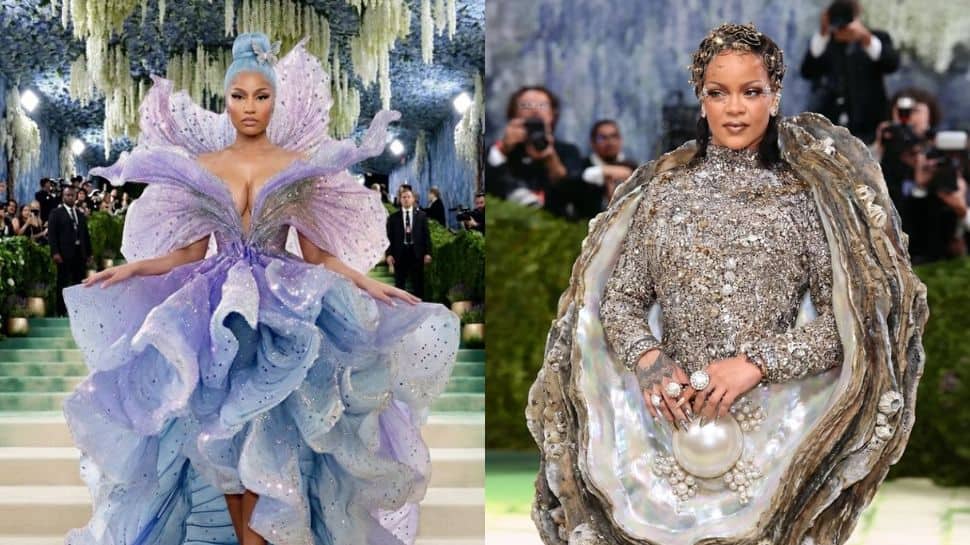
Met Gala 2026 AI photos, videos: On May 5, 2026, while millions of people scrolled their feeds to catch Met Gala highlights, AI-generated deepfakes of celebrities flooded X (formerly Twitter) and Instagram, and many viewers had no idea they were fake. The Met Gala’s “Costume Art” theme, which asked guests to treat the body as a canvas, made it the perfect event to exploit: elaborate, over-the-top fashion is exactly what AI image generators do best. The result was a viral wave of Met Gala deepfakes that blurred the line between real red-carpet moments and pure fabrication.
Fake looks of Nicki Minaj, Lady Gaga and Dua Lipa
A fake image of Nicki Minaj — who did not attend the 2026 gala — showed her in a sculptural lavender-to-blue gown dripping with glitter. It racked up 4 million views on X before enough people flagged it as AI-generated. A fake Kendall Jenner post showing her in a hyper-literal Greek statue look hit over 3 million views, while her real GapStudio look went comparatively unnoticed.
According to Deadline, Lady Gaga was placed at the gala in an iconic Thierry Mugler design — she was not there. Dua Lipa was shown holding Botticelli’s The Birth of Venus. Entirely fabricated. Cardi B’s “small intestine dress” was also posted, fabricated by many users.
When AI fooled millions
The problem ran deeper than social media confusion, as many users posted AI photos and videos of celebrities, calling them real. AI-generated content was being validated by another AI tool and then amplified by credible news infrastructure. Deadline traced many of the viral fakes to a single account called RickDick, which had already built an audience within fashion circles, giving the fabrications a false layer of legitimacy.
Why this is a problem beyond celebrity gossip
Experts on social media warn this as more than just entertainment mischief. The same AI tools that fabricated Met Gala outfits are the ones being used in financial scams, election interference, and identity fraud. When platforms fail to label synthetic content and AI search tools authenticate fakes, ordinary users pay the price — in eroded trust, manipulated public opinion, and real-world financial scams that use deepfake videos of public figures to steal money.
The 2026 Met Gala exposed a glaring gap in how platforms, search engines, and users detect AI-generated content. The deepfakes looked spectacular. That is precisely the problem. Unless social media platforms clearly label AI content and search tools stop treating fake images as real, events like the Met Gala will keep becoming testing grounds—where AI keeps winning and the truth keeps losing.


