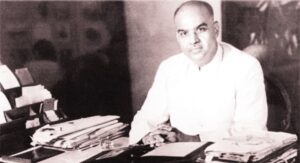
“We shall not get Kashmir through the efforts of the United Nations, we shall not get it through peaceful methods, by negotiations with Pakistan. That means we lose it, unless we use force and the Prime Minister is unwilling to do so”.
On August 7 1952 in the Lok Sabha, Shyama Prasad Mukherjee, founder of Jan Sangh, raised concerns about the direction of India’s policy on Jammu and Kashmir. He referred to the approach taken at the United Nations and the provisions under Article 370, and said that such a framework could lead to what he described as the “Balkanisation” of India.
This month, the Bengal elections delivered a result that few had expected, a clear mandate for the Bharatiya Janata Party, a party that traces part of its early political roots to Bengal.
The story links back to Shyama Prasad Mukherjee, a leader who opposed the special status of Jammu and Kashmir, founded the Bharatiya Jana Sangh, and died in detention in Srinagar.
The political journey of Mukherjee followed the positions he chose to take, often at moments of disagreement.
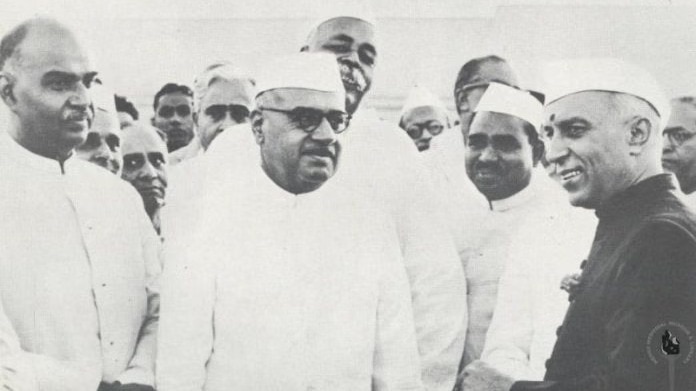
Those differences became clear in the years after Independence, particularly in his exchanges with Jawaharlal Nehru.
The immediate issue was the condition of the Hindu minority in East Bengal. Mukherjee stepped down from the Nehru Cabinet over the matter.
Political observers over the decades have often linked this break to the Nehru–Liaquat Pact, which shaped the direction he took afterwards, eventually leading to the formation of the Jana Sangh.
More than seven decades later, that political line has returned to Bengal in a different form.
Over the past decade, BJP expanded its presence in the state, building its organisation step by step. The 2026 election result marks a shift, one that connects present-day politics with a longer history that began in the early years after Independence.
FROM THE YOUNGEST VICE-CHANCELLOR TO THE FOUNDER OF JAN SANGH
He was the youngest Vice-Chancellor of the University of Calcutta, trained as a barrister, and, for a while, more at ease with books than with ballots. Born in Bengal in 1901, Shyama Prasad Mukherjee did not remain in the silent lanes of academia for long.
Politics, in the Bengal of his time, had a way of finding those who tried to stay away.
Mukherjee’s political career began in 1929 when he entered the Bengal Legislative Council as an Indian National Congress (INC) candidate representing Calcutta University.
The 1930s were not calm years. Bengal was dealing with tension on the streets, pressure on livelihoods, and debates over who spoke for whom.
It was in this churn that Mukherjee stepped in. What began as interest soon turned into participation.
By the early 1940s, he was working with the Hindu Mahasabha and later became its working president. It was in those years that the Hindu Mahasabha ran a coalition government with the Muslim League in Sindh and NWPF.
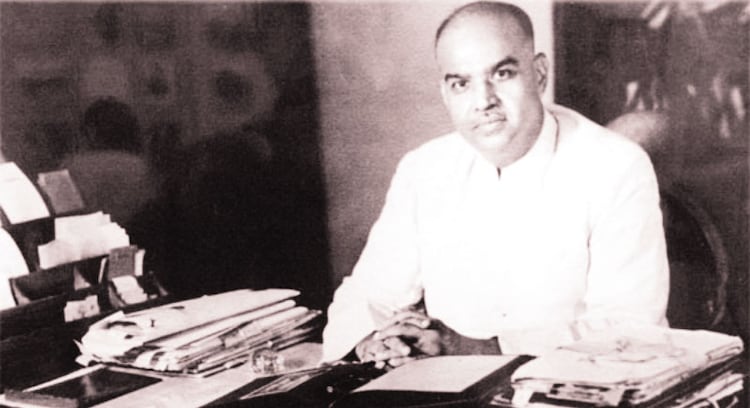
Acting as the president of the Akhil Bharatiya Hindu Mahasabha from 1943 to 1946, Mukherjee built a base for an ideology that would later shape the existence of the Bharatiya Janata Party.
Then came 1947. The cries of Partition also affected Shyama Prasad Mukherjee’s vision for the Hindus; it was then that he launched the Bengali Hindu Homeland Movement.
After Independence, he joined the first Union Cabinet led by Jawaharlal Nehru as Minister for Industry and Supply.
The Cabinet was a mix of leaders with different ideas, trying to set up a new system. Mukherjee focused on industry and institutions, steady work, away from daily noise.
But the differences did not stay quiet for long. Issues tied to partition and minority protection began to surface inside the Cabinet.
These minor disagreements changed the situation and pointed to deeper divides.
The break came in 1950 with the Nehru–Liaquat Pact. The agreement promised safeguards for minorities in both countries, rights, property, and the return of refugees.
Jawaharlal Nehru and Liyaqat Ali Khan of Pakistan signed the agreement.
Mukherjee questioned whether those promises matched reality. He pointed to reports from East Pakistan that suggested otherwise.
He raised these concerns inside the Cabinet and in Parliament.
The disagreement widened, turning into a broader difference on how India should respond across the border. In April 1950, he resigned.
That moment marked a clear turn. Outside the government, he began building something new.
Over the next year, with support from colleagues and networks that included members of the RSS, he founded the Bharatiya Jana Sangh in 1951.
The Jana Sangh entered the first general elections of 1951–52 with limited structure.
THE LATER YEARS OF MUKHERJEE
In Parliament in 1952, Shyama Prasad Mukherjee spoke on the issue of Kashmir, which had been taken to the United Nations. He opposed a conciliatory approach towards Pakistan and advocated the recovery of Indian territory under Pakistani control.
The party slowly built its base in parts of northern and central India.
By the early 1950s, one issue stood at the centre of Mukherjee’s politics: Jammu and Kashmir. He opposed the provisions that allowed separate symbols and administrative systems for the state.
His position rested on a single idea, one constitutional framework across the country.
In 1953, he set out for Jammu and Kashmir to support a movement calling for closer integration with the Union. Entry into the state required a permit at the time.
He chose to enter without one. He was arrested and taken to Srinagar and was held in detention.
In June 1953, Mukherjee died in custody. Questions followed. His mother, Jogamaya Devi, wrote to the Prime Minister seeking an inquiry. No formal investigation took place then.
After his death, the Bharatiya Jana Sangh continued under new leadership.
Over the years, it expanded its reach, became part of the Janata Party government in 1977, and in 1980, the Bharatiya Janata Party emerged, drawing from the Jana Sangh’s base and network.